This product is like new. At NexWave Games, like new means:
Additionally, all discs at NexWave Games are carefully inspected and assessed for quality. When discs arrive, we do not accept any that are so badly damaged that they are unlikely to work. We only accept discs with light scratches at most. Discs with scratches are then treated in our professional disc repair machine. By warming the disc and polishing it with soft brushes, these machines can remove a very thin layer from the disc. This removes the layer containing surface scratches and improves the disc’s readability. This ensures the disc works properly, even on consoles with ageing lasers that have difficulty reading games! Great news for the player.
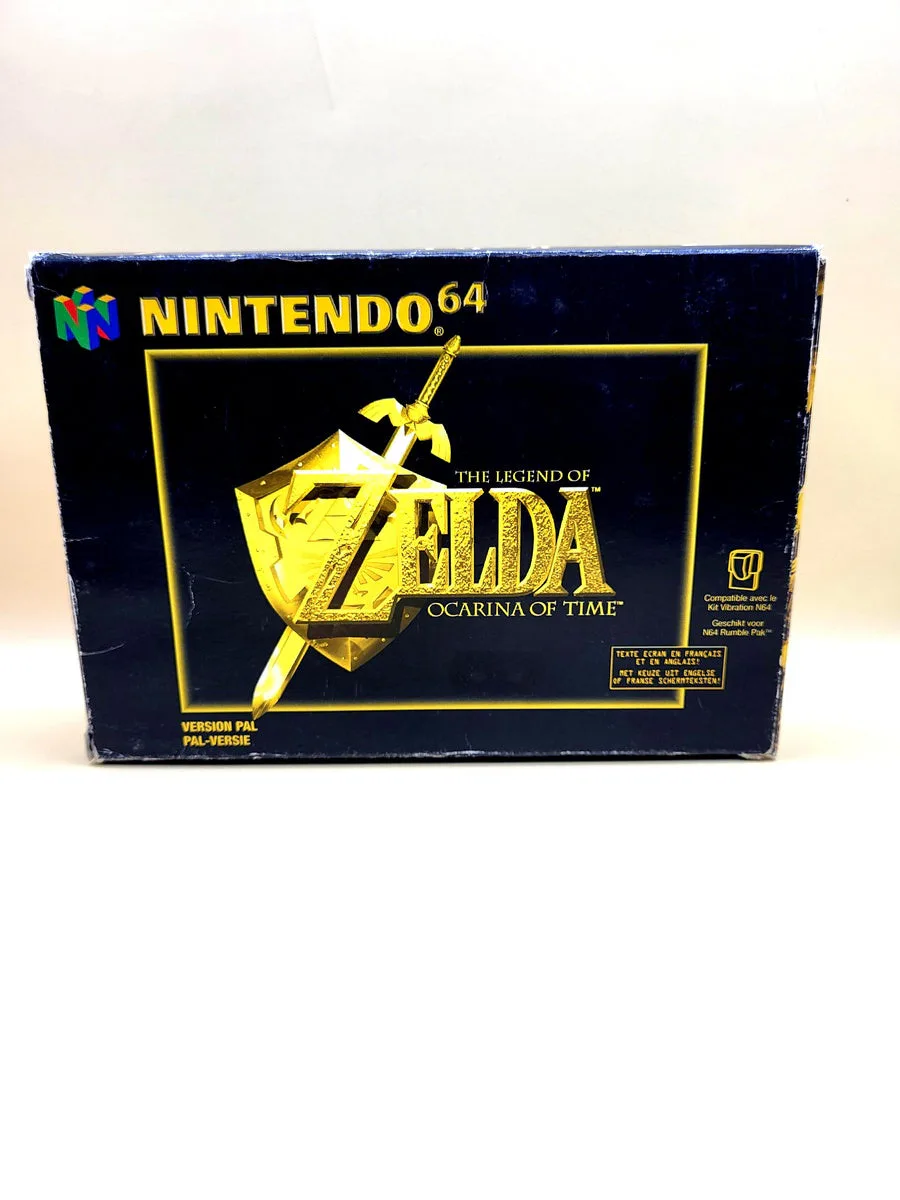
The Legend of Zelda: Ocarina of Time for Nintendo 64
The Legend of Zelda: Ocarina of Time for Nintendo 64 is an action adventure in which Link leaves Kokiri Forest on a journey to protect Hyrule from Ganondorf. You explore villages, plains and dungeons, talk to their inhabitants and work out which item opens a blocked route. The Z Button focuses Link's attention on an enemy. You can then move around that opponent, use your shield and wait for an opening. The fairy Navi points out important places and provides information about enemies.
A slingshot, bow, bombs and the Hookshot are useful both in combat and in puzzles. You look up towards a switch, investigate a suspicious wall or pull yourself onto a higher platform. New equipment gives you reasons to revisit areas you have already explored. Music plays a part too: you perform melodies on the ocarina that affect events and later enable fast travel. Between the main objectives, you can fish, search for Pieces of Heart and ride Epona across Hyrule Field.
The story connects young Link's world with Hyrule seven years later. The same place can therefore take on a different meaning. This original Nintendo 64 game is for one player; an Expansion Pak is not required. You play with the original controls and graphics, without the changes made for Ocarina of Time 3D.
Region and language
Our Nintendo 64 games are PAL editions and come with a Dutch or English box, unless stated otherwise. By default, you receive the version for the European market. We note it in the product details if the region is different or the box is in another language. In almost all cases, the game is playable at least in English, and often in the other five common European languages too.
Manual
The Legend of Zelda: Ocarina of Time for Nintendo 64 includes the manual unless the product title states otherwise. If the booklet is missing, the title says “No Manual”. This lets you see before ordering whether the game comes with a manual.
The manuals included with our games usually contain at least English and often around six European languages. The exact languages vary by edition, so Dutch is not always included. The booklet explains the controls and the main rules. You can use it to check how to control the game, which actions are available and how its different features work.
The history of The Legend of Zelda: Ocarina of Time
Nintendo EAD developed Ocarina of Time, and Nintendo released it in 1998. The European launch followed in December, after its Japanese appearance in November. It was the Zelda series' first three-dimensional adventure. The transition required more than a different camera angle: players had to understand changes in height, distances and enemies around Link, while the familiar combination of exploration, dungeons and new items remained recognisable. Several directors worked on different parts of that world.
In Nintendo's retrospective on the original development, Yoshiaki Koizumi describes how a staged sword fight helped him think about combat in three dimensions. Z-targeting kept Link and his target facing each other and gave the camera a clear role. Navi made that system visible within the game world. Meanwhile, the action button changed with the situation: the same button could, for example, start a conversation or perform an action beside an object. This made many actions available without a separate button for every movement.
Travel between locations also received attention. Epona made Hyrule Field a place where speed and distance could be felt; carrot icons limited her acceleration. Alternating between young and adult Link connected progress with changes in the environment. The sequel Majora's Mask then used parts of this technical foundation for a different time structure. The later Nintendo 3DS remake updated elements including presentation and controls, but those changes are not part of this Nintendo 64 release.
Similar games for Nintendo 64
The Legend of Zelda: Majora's Mask uses the same foundation of sword fighting, targeting and item puzzles on Nintendo 64. In Ocarina of Time, you travel between Link's childhood and a world seven years later. Majora's Mask has you repeatedly experience three days in Termina and help residents at specific times. Progress there therefore revolves more often around schedules and masks, while Ocarina spreads its main storyline across a changing Hyrule.
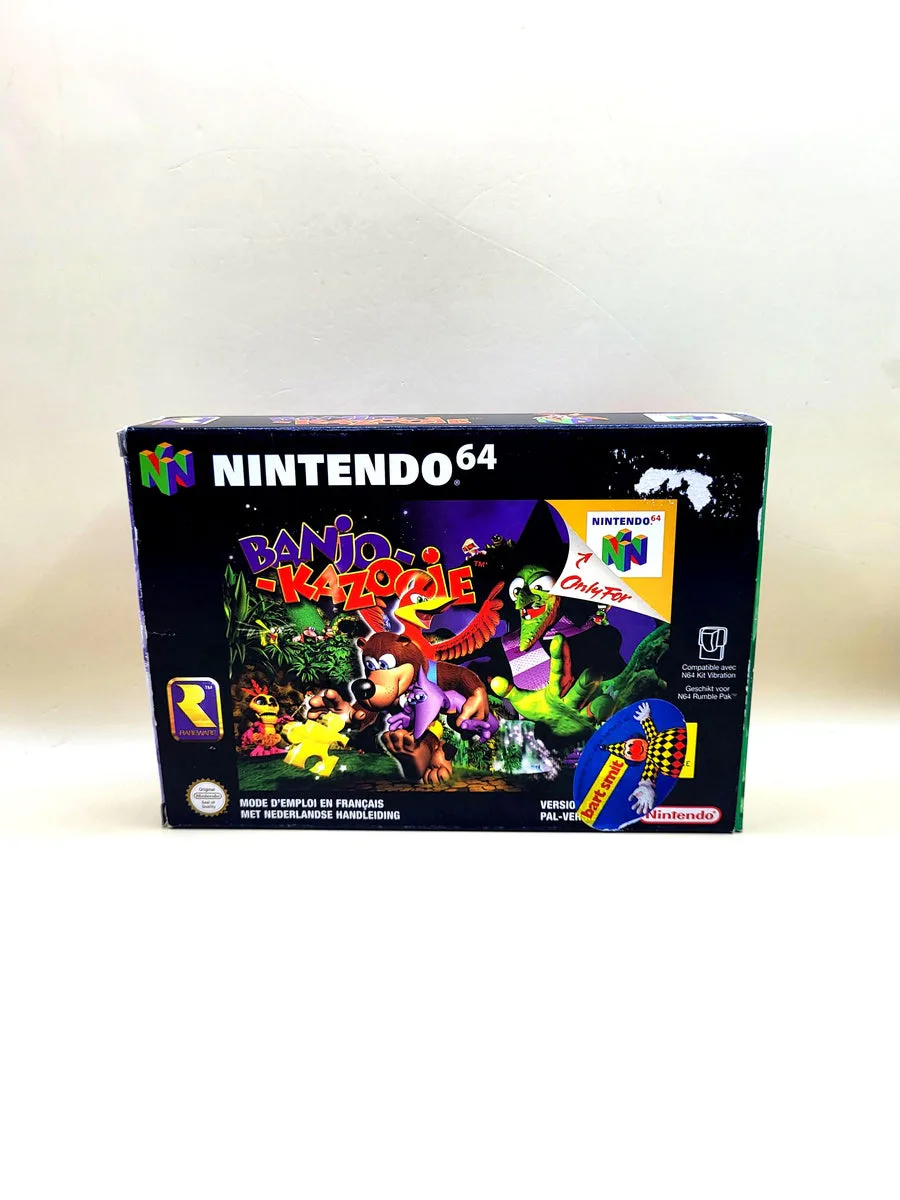
Banjo-Kazooie also has you search colourful three-dimensional areas on Nintendo 64 and return once you have learnt a new ability. The bear and bird use their combined moves to collect puzzle pieces and musical notes. Ocarina of Time links new equipment more closely to dungeons and sword fighting. Where Banjo has you plan a route past collectibles, Link more often investigates how rooms, keys and switches fit together.
Donkey Kong 64 shares the combination of large areas, hidden passages and new abilities on Nintendo 64. You rescue five Kongs and switch between them to complete character-specific objectives. Ocarina of Time keeps Link as its central hero and changes his capabilities through equipment and age. Donkey Kong divides collecting explicitly between different colours and characters; Zelda builds longer puzzle sequences around a single new item.
Super Mario 64 likewise has you learn to read three-dimensional spaces, but makes jumping, climbing and landing the core of almost every objective. Paintings open separate worlds in which you search for stars. Ocarina of Time gives more room to conversations, item puzzles and combat in which you lock onto an opponent. Hyrule also forms a continuous world to travel through, rather than using the castle as the central entrance to separate objectives.
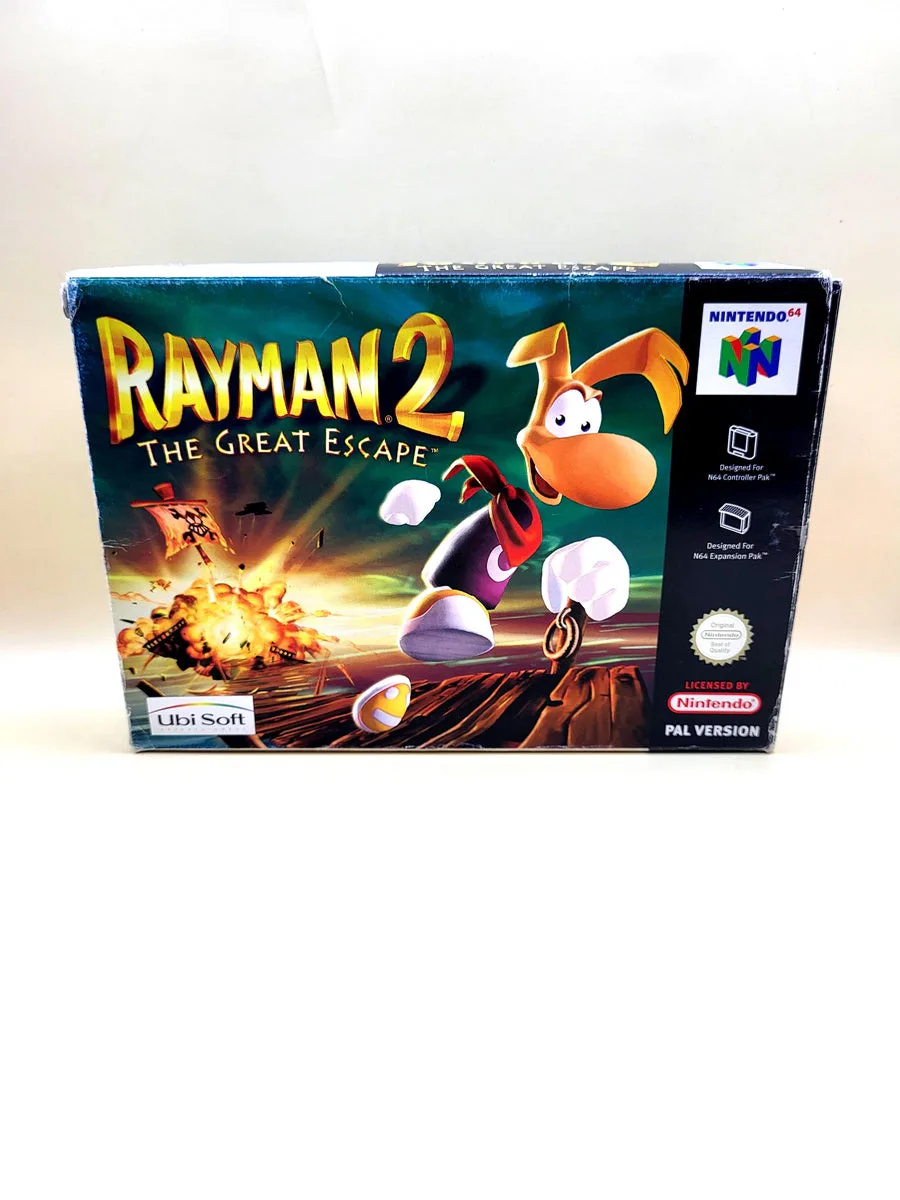
Rayman 2: The Great Escape combines exploration with combat and three-dimensional obstacles on Nintendo 64. Its route usually takes you through successive platforming sections, Lums and captive friends; Rayman's hovering move helps him cross large gaps. Ocarina of Time more often asks you to return to a village or dungeon with different equipment. Both involve examining your surroundings, but Rayman places greater emphasis on a continuing platforming route than on Link's inventory and time jump.