This product is like new. At NexWave Games, like new means:
Additionally, all discs at NexWave Games are carefully inspected and assessed for quality. When discs arrive, we do not accept any that are so badly damaged that they are unlikely to work. We only accept discs with light scratches at most. Discs with scratches are then treated in our professional disc repair machine. By warming the disc and polishing it with soft brushes, these machines can remove a very thin layer from the disc. This removes the layer containing surface scratches and improves the disc’s readability. This ensures the disc works properly, even on consoles with ageing lasers that have difficulty reading games! Great news for the player.
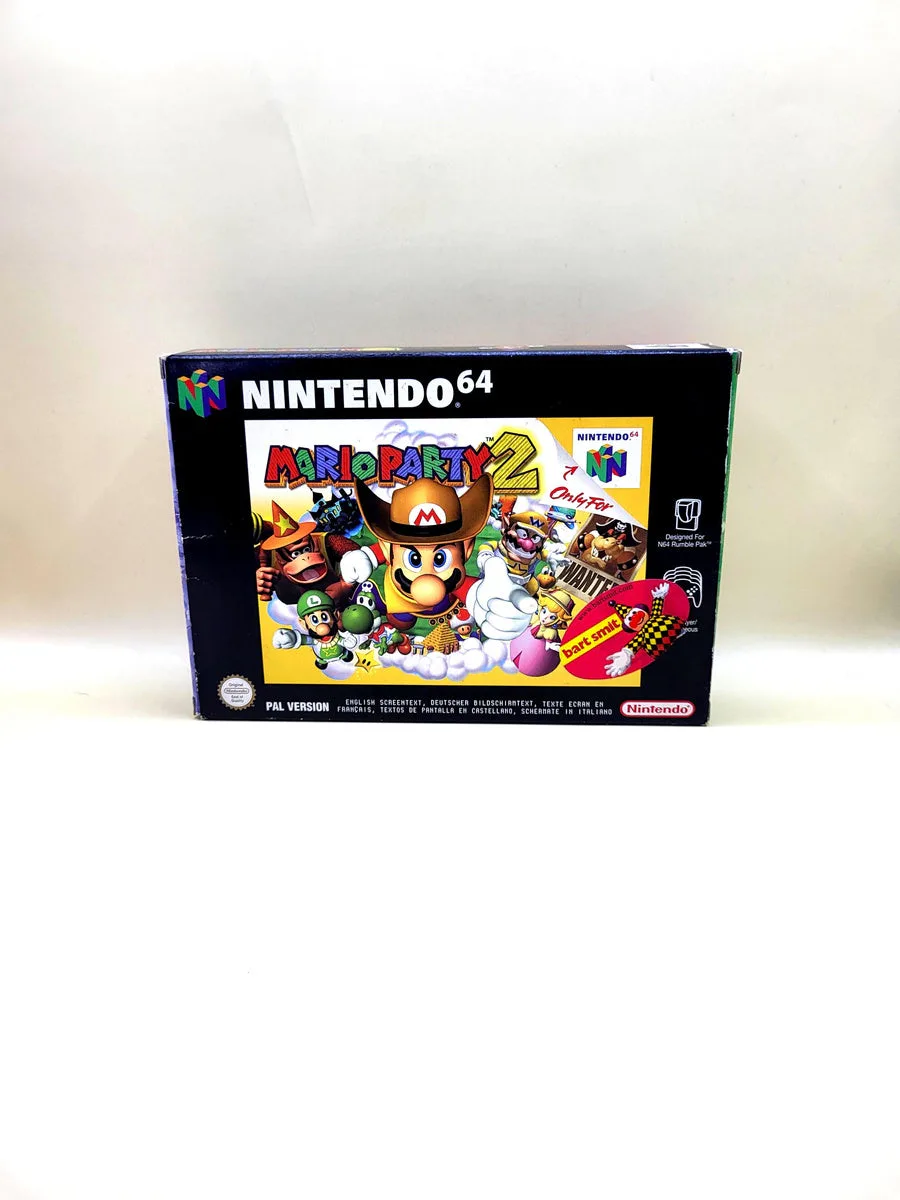
Mario Party 2 for Nintendo 64
Mario Party 2 for Nintendo 64 has Mario and his friends compete for stars again on an event-filled game board. You choose a character, roll the die and find a route to the next star. You earn the necessary coins in mini-games after the shared round, among other ways. The six adventure boards have their own themes and events, from a pirate setting to the Wild West. Matching costumes show which stage is hosting the contest.
Items give you more influence over a board turn. A mushroom, for example, lets you use extra dice, while a key opens a locked passage. Because you carry only one item at a time, you must choose what to keep and when to use it. Cooperation changes continually in the mini-games: everyone against everyone, two teams or one against three. You can practise the controls from the explanation screen before the real competition begins.
You can play alone against computer characters or gather up to four people at the same console. Every human player needs their own Nintendo 64 controller. Besides board contests, there are separate mini-games and the solo challenge Mini-Game Coaster. There you tackle successive tests instead of competing for stars on a board. The cartridge thus combines a longer shared match with focused practice of short challenges.
Region and language
Our Nintendo 64 games are PAL editions and come with a Dutch or English box, unless stated otherwise. By default, you receive the version for the European market. We note it in the product details if the region is different or the box is in another language. In almost all cases, the game is playable at least in English, and often in the other five common European languages too.
Manual
Mario Party 2 for Nintendo 64 includes the manual unless the product title states otherwise. If the booklet is missing, the title says “No Manual”. This lets you see before ordering whether the game comes with a manual.
The manuals included with our games usually contain at least English and often around six European languages. The exact languages vary by edition, so Dutch is not always included. The booklet explains the controls and the main rules. You can use it to check how to control the game, which actions are available and how its different features work.
The history of Mario Party 2
Hudson Soft again developed Mario Party 2 for Nintendo after the first instalment from 1998. The Japanese version appeared in 1999; Europe received the Nintendo 64 edition on 13 October 2000. The sequel kept the basic structure: dice turns and mini-games together create a contest for stars. The boards gained a more theatrical character, however. Characters wear pirate clothing or Western costumes, for example, matching the chosen adventure and the events along the way.
The 64 mini-games include new challenges and revised games from the first instalment. A familiar action can therefore remain recognisable while another setting or rule changes how you perform it. Items represent an important shift on the board. You can now keep something in reserve for your own turn. This makes timing more significant: use an advantage immediately or save it until a rival gets closer to a star.
Mario Party 3 later expanded the inventory to three items and added separate duel maps with helpers. Mario Party 2 sits between the simpler first instalment and that more elaborate successor. Its original manual explains the board game as well as practice and separate mini-games. This cartridge uses the Nintendo 64 controllers and local connections of its time. Save states, online matches or other facilities from later digital reissues are not part of this original version.
Similar games for Nintendo 64
Mario Party and Mario Party 2 combine dice-based turns with mini-games for coins and stars on Nintendo 64. The sequel also lets you carry an item and use it during your board turn, for example to move further or open a route. The first game lacks that personal inventory. Decisions there depend more on your chosen route, board events and your performance in the next challenge.
Mario Party 3 and Mario Party 2 share stars, board items and alternating individual and team mini-games on Nintendo 64. The second game’s inventory holds only one item; the third raises that to three and adds separate duels with paid helpers. Mario Party 2 stands out through the costumes and theatre surrounding its boards. The choice is between simpler inventory management and more opportunities to keep several resources in reserve.
Mario Kart 64 and Mario Party 2 use items to change a lead on Nintendo 64. In the kart race, you must steer, take corners and watch rivals at the same time. Mario Party 2 gives you a separate board turn to decide about an item, after which an entirely different mini-game may follow. The difference is in the pace: continuous reactions on the track versus brief planning followed by switching to a new challenge.
Super Smash Bros. lets up to four players fight each other directly on Nintendo 64, each with their own controller. Mario Party 2 uses the same local group size but links its short contests to a board game. In Smash you keep using your character’s attacks and jumps; each Mario Party 2 mini-game demands a different combination. One cartridge focuses on improving within a consistent fight, the other on switching between board planning and varied tests.
Pokémon Stadium and Mario Party 2 both offer separate mini-games with their own brief explanations on Nintendo 64. Stadium places these alongside Pokémon battles, whereas in Mario Party 2 they also determine income for a board contest. Winning a test there can later pay for a star. Mario Party 2 therefore asks not only that you win the current little game, but also that you use its reward during the next turn.