This product is like new. At NexWave Games, like new means:
Additionally, all discs at NexWave Games are carefully inspected and assessed for quality. When discs arrive, we do not accept any that are so badly damaged that they are unlikely to work. We only accept discs with light scratches at most. Discs with scratches are then treated in our professional disc repair machine. By warming the disc and polishing it with soft brushes, these machines can remove a very thin layer from the disc. This removes the layer containing surface scratches and improves the disc’s readability. This ensures the disc works properly, even on consoles with ageing lasers that have difficulty reading games! Great news for the player.
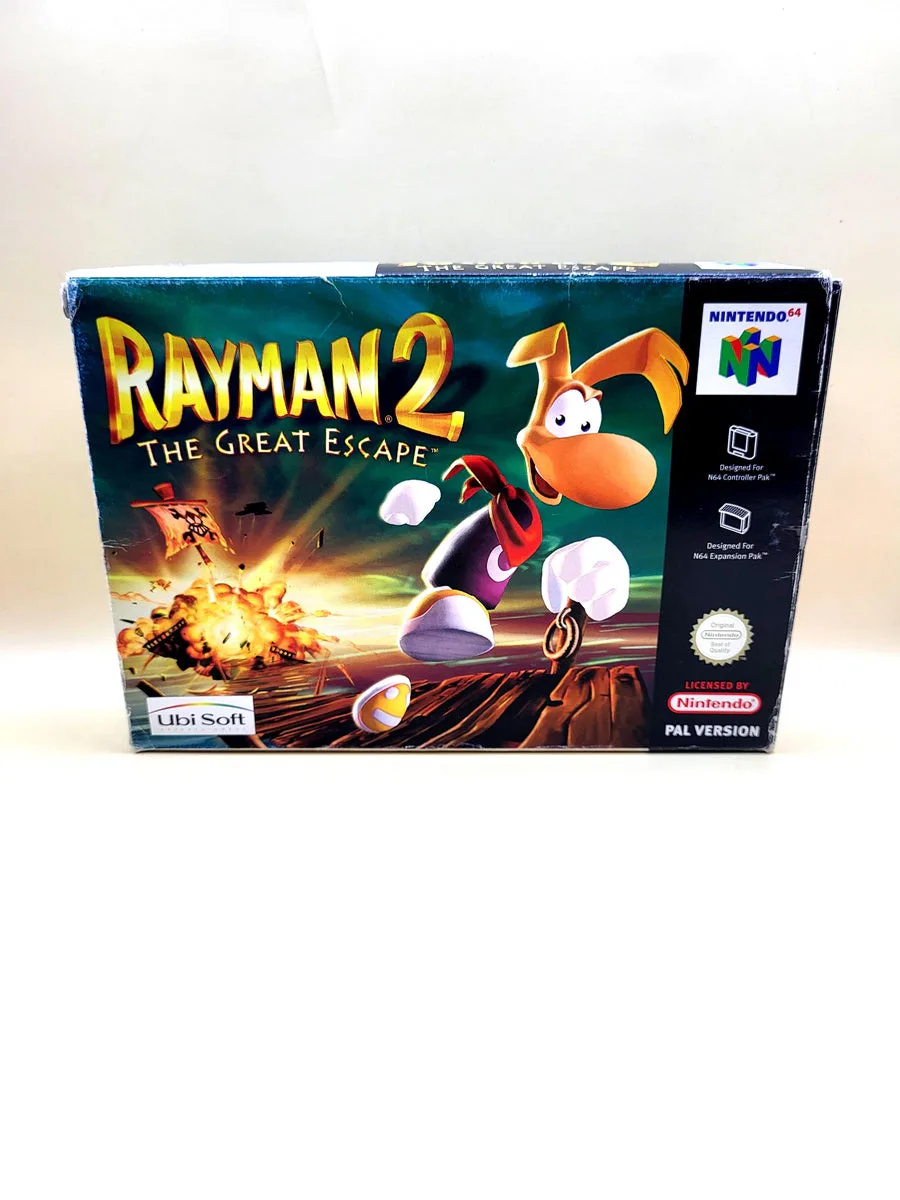
Rayman 2: The Great Escape for Nintendo 64
Rayman 2: The Great Escape for Nintendo 64 is a three-dimensional platform adventure in which you liberate a world from robot pirates. Rayman escapes captivity and searches for four magical masks to seek Polokus’s help. Along the way, you free imprisoned inhabitants and collect yellow Lums, the scattered energy of the world. These also grant access to later areas. The journey passes through forests, swamps and pirate installations, each placing different obstacles between you and the exit.
You fire energy balls, climb walls and spin Rayman’s hair like a helicopter to descend more slowly. Purple Lums later provide points to swing from. Puzzles use the environment: an explosive barrel can clear a barrier, while a plum is more than a simple throwing object. During combat, you can move sideways while keeping the enemy in view. Jumping, aiming and working out a route therefore continually alternate.
This is a single-player adventure. You save from the Hall of Doors to a separate Controller Pak, not to the cartridge itself. That memory card is not supplied as standard. With an optional Expansion Pak, the Nintendo 64 version can use a higher display resolution; you can also play without that memory expansion. The two accessories therefore have different functions.
Region and language
Our Nintendo 64 games are PAL editions and come with a Dutch or English box, unless stated otherwise. By default, you receive the version for the European market. We note it in the product details if the region is different or the box is in another language. In almost all cases, the game is playable at least in English, and often in the other five common European languages too.
Manual
Rayman 2: The Great Escape for Nintendo 64 includes the manual unless the product title states otherwise. If the booklet is missing, the title says “No Manual”. This lets you see before ordering whether the game comes with a manual.
The manuals included with our games usually contain at least English and often around six European languages. The exact languages vary by edition, so Dutch is not always included. The booklet explains the controls and the main rules. You can use it to check how to control the game, which actions are available and how its different features work.
The history of Rayman 2: The Great Escape
Ubisoft released Rayman 2: The Great Escape in 1999, four years after the first Rayman adventure. Under Michel Ancel’s direction, the series moved from side-view platform action to three-dimensional worlds. The detached hands, feet and helicopter hair remained recognisable, but now had a different space to move through. The camera and sideways aiming formed part of that change. You had to judge the depth of a route as well as time a jump.
The robot pirates give the new world an ongoing conflict. They shatter the world’s energy source and imprison its inhabitants, connecting collecting and rescuing directly to the story. The Hall of Doors links the separate areas. A level can therefore have its own structure, with quiet stretches, chases or a battle at the end, without making the whole journey one open landscape. Variety comes from what you need to do along the way.
Nintendo 64 and PC were among the original releases. Other adaptations followed later, including Rayman 2 Revolution for PlayStation 2. That later name does not refer to the same cartridge. This Nintendo 64 edition retains the original area structure and Controller Pak saving. Optional high resolution reflects the console’s technical possibilities at the end of the 1990s without making an expansion mandatory for normal play.
Similar games for Nintendo 64
Super Mario 64 shares precise jumping and the need to judge depth carefully on Nintendo 64. Mario revisits worlds for different stars, using numerous acrobatic jumps. Rayman 2 follows a more continuous route through each environment and builds variety around helicopter hair, energy balls and objects from the scenery. It therefore places less emphasis on repeating one world for several separate missions.
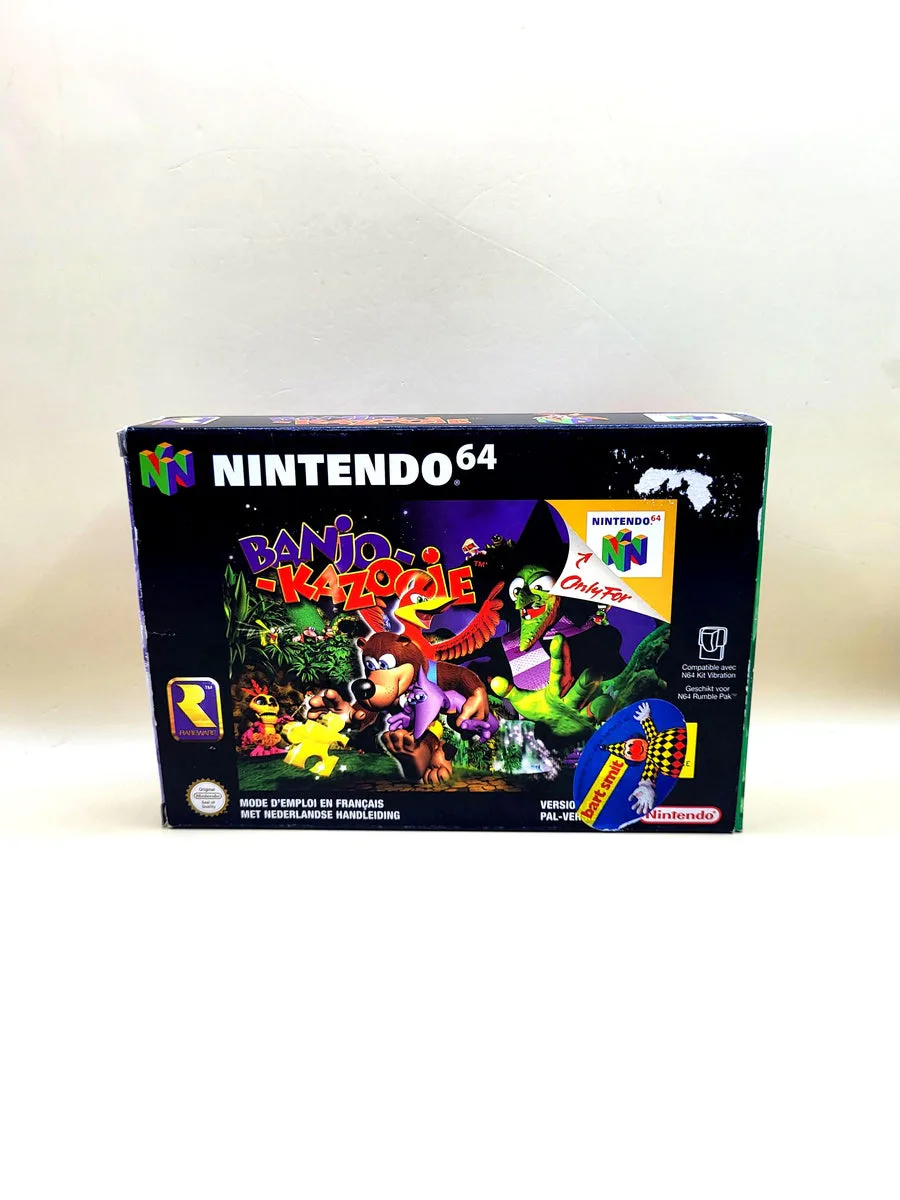
Banjo-Kazooie likewise combines fantasy worlds, collecting and learning new moves on Nintendo 64. You search broad areas for puzzle pieces, musical notes and other objectives. Rayman 2 uses Lums and cages along a more clearly progressing route. Banjo and Kazooie share the controls as a single duo; Rayman performs his actions alone. Both demand attentive exploration, but create a different rhythm between searching and travelling onwards.
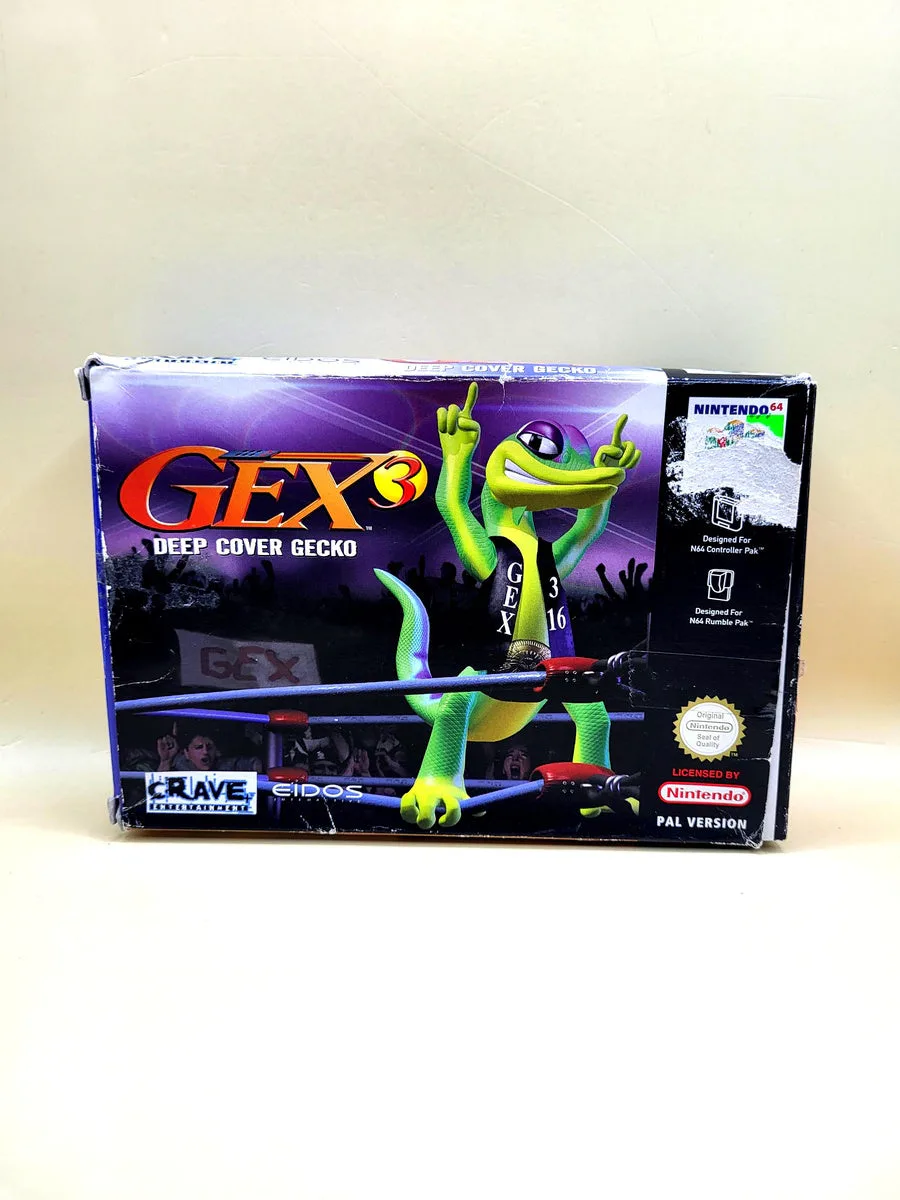
Gex 3: Deep Cover Gecko also offers three-dimensional jumping, swimming and climbing with an agile cartoon hero on Nintendo 64. Gex collects remotes in television parodies and returns to his GexCave. Rayman’s areas form a world threatened by the same pirates. His new powers connect to that rescue story. Gex mainly changes the programme you enter; Rayman changes how you travel through a coherent adventure.
Donkey Kong 64 also asks you to use new abilities to open previously closed routes on Nintendo 64. You switch between five Kongs, each with their own weapons and capabilities. Rayman 2 keeps one protagonist and uses his growing powers for later obstacles. There is also a practical difference: Donkey Kong 64 requires an Expansion Pak, whereas Rayman 2 uses it only as an optional visual enhancement.
The Legend of Zelda: Ocarina of Time likewise combines exploration, combat and items that open new routes on Nintendo 64. Link visits villages and dungeons, obtains equipment and uses his sword in targeted encounters. Rayman 2 places more weight on jumping and movement itself, using energy balls rather than comparable sword equipment. The similarity lies in gradually gaining abilities, not in sharing the same dungeon and side-story structure.