This product is in good condition. At NexWave Games, good means:
Additionally, all discs at NexWave Games are carefully inspected and assessed for quality. When discs arrive, we do not accept any that are so badly damaged that they are unlikely to work. We only accept discs with light scratches at most. Discs with scratches are then treated in our professional disc repair machine. By warming the disc and polishing it with soft brushes, these machines can remove a very thin layer from the disc. This removes the layer containing surface scratches and improves the disc’s readability. This ensures the disc works properly, even on consoles with ageing lasers that have difficulty reading games! Great news for the player.
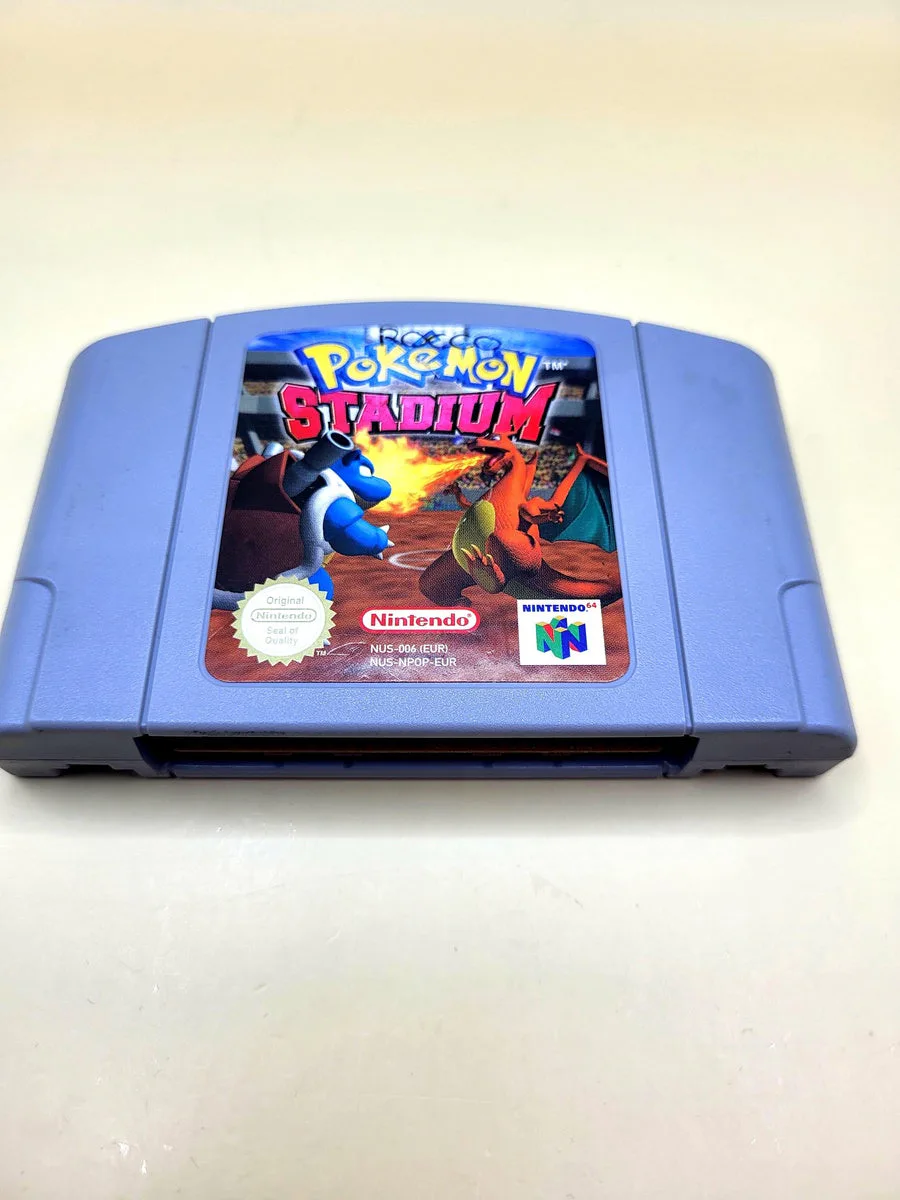
Pokémon Stadium for Nintendo 64
Pokémon Stadium for Nintendo 64 brings Pokémon's turn-based battles into a three-dimensional arena. You assemble a team, examine your opponents and choose which three Pokémon to use in a match. Moves, type advantages and switching a team member determine how a battle unfolds. The four Cups place different requirements on entrants. It therefore pays to look beyond your strongest attacker and also consider defence, speed and the moves available to your reserve Pokémon.
You can play immediately with the built-in rental Pokémon: no Game Boy game or Transfer Pak is required for this. To use your own Pokémon from Pokémon Red, Blue or Yellow, you do need a separate N64 Transfer Pak and a compatible original Game Boy cartridge. The accessory and those games are not included as standard with this loose cartridge. Gold, Silver and Crystal are not supported by this first European Pokémon Stadium.
Alongside the Cups, you can battle familiar leaders in Gym Leader Castle. Free Battle offers local battles, including team play, and Kids Club contains nine short minigames involving activities such as eating, jumping and rhythm. Every participant needs their own Nintendo 64 controller; these sections support up to four players. You play the Cups and Gym Leader Castle alone against the computer. This lets you alternate thoughtful team choices with head-to-head contests and short reaction games.
Region and language
Our Nintendo 64 games are PAL editions, unless stated otherwise. This product contains a loose cartridge for the European market. A box is only included if explicitly stated in the product details. We note any different region in the product details. In almost all cases, the game is playable at least in English, and often in the other five common European languages too.
Manual
With Pokémon Stadium for Nintendo 64, you receive a loose cartridge. A box and manual are not included unless we explicitly state otherwise in the product details. This is the standard way we supply this copy.
The history of Pokémon Stadium
Nintendo released Pokémon Stadium for Nintendo 64 in Europe on 7 April 2000. The Pokémon from the Game Boy games received larger, three-dimensional models and elaborate attack animations. The battle system nevertheless remained familiar: a trainer chooses a move or switches their active Pokémon, after which the turn is resolved. Stadium turned that existing system into a separate competition game, with tournament rules and opponents uninterrupted by a long journey along routes and through towns.
The technical connection with the handheld series had a history. In Nintendo's interview about HeartGold and SoulSilver, Satoru Iwata explained how he studied Red and Green's battle logic for the earlier Japanese Stadium project. No complete specification was available; the original program code had to reveal how everything fitted together. That recollection concerns Stadium's origins on Nintendo 64, not a European release in 1998. The European Pokémon Stadium offered here is also not the same product as that early Japanese game.
The Transfer Pak connected an original Game Boy cartridge to Nintendo 64 through the controller. Players could therefore use their trained teams and play the supported handheld game on a television through GB Tower. Rental Pokémon kept the arena playable without that connection. The later Pokémon Stadium 2 added support for a subsequent generation. Modern rereleases have different connection options; this description concerns the original cartridge and its local features, not online play through a subscription.
Similar games for Nintendo 64
Pokémon Stadium 2 builds on the same turn-based battles, rental teams and local minigames on Nintendo 64. The sequel adds Pokémon from the next generation and also supports Gold, Silver and Crystal through the Transfer Pak. The first European Pokémon Stadium limits its Game Boy connection to Red, Blue and Yellow. Those mainly wanting to battle with those original teams get the earlier arena and its tournament rules here.
Pokémon Snap also shows familiar Pokémon as moving three-dimensional characters on Nintendo 64, but uses them for photography. You follow a route and try to capture behaviour in a good picture. Pokémon Stadium instead asks you to choose a team and predict moves. Snap is a single-player game without transferred teams; Stadium combines computer contests with local opponents and an optional connection to original Game Boy games.
Paper Mario shares turn-based battles and the weighing up of different attacks on Nintendo 64. Mario also travels through a story world, talks to inhabitants and uses partners' abilities outside combat. Pokémon Stadium concentrates on individual matches and team line-ups. While Paper Mario adds timing during an attack, Stadium mainly requires knowledge of types, switching and the capabilities of the chosen Pokémon.
Super Smash Bros. also brings Pokémon into battles with familiar Nintendo characters on Nintendo 64. Pikachu moves directly around a platform and tries to knock opponents out of the arena. Pokémon Stadium lets the action unfold only after trainers have chosen their commands. Both offer local competition, but Smash rewards constant movement and reactions; Stadium allows time to consider a move or switch carefully.
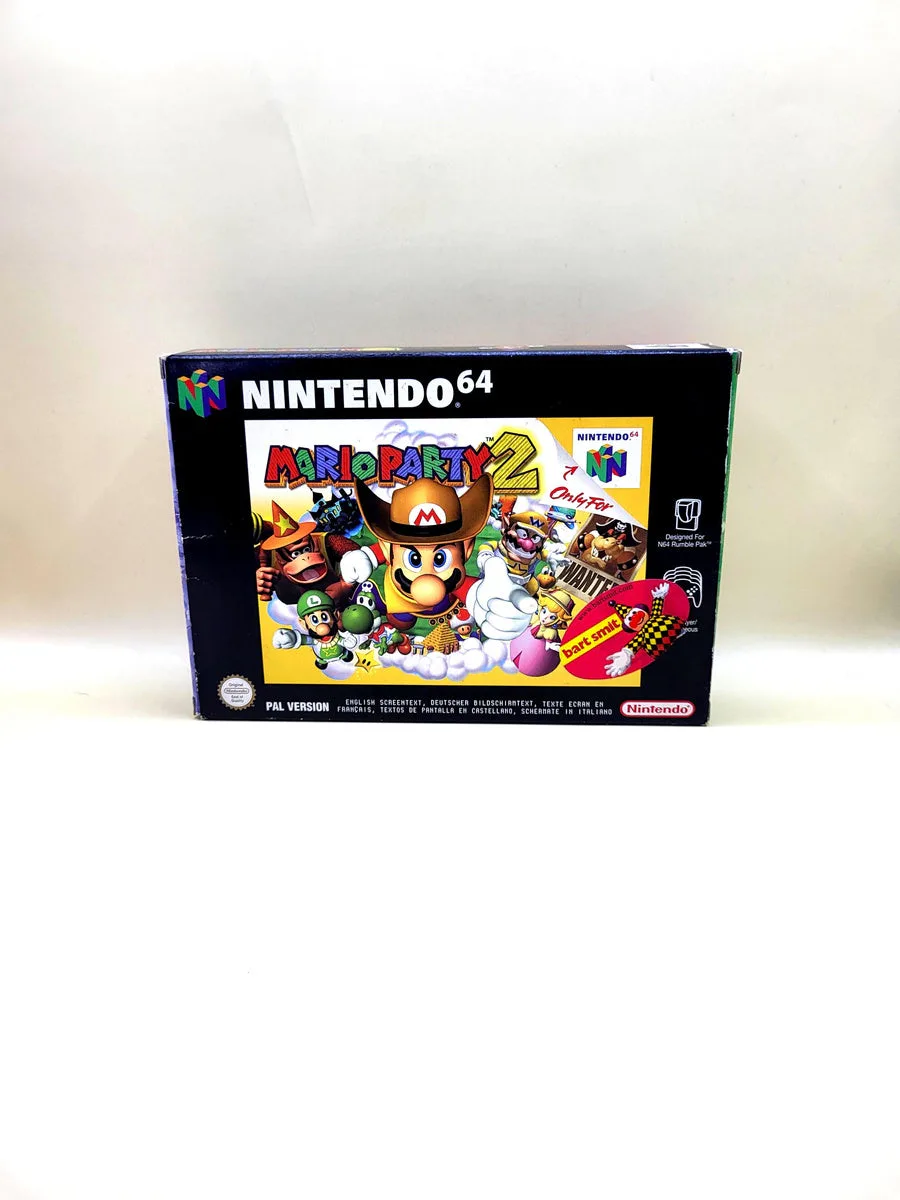
Mario Party 2 shares with Stadium's Kids Club the short contests on Nintendo 64 in which timing, rhythm and quick reactions matter. Mario Party links its minigames to a board game with dice, coins and stars. Pokémon Stadium keeps its nine Kids Club games separate from such a board circuit and also has its extensive Pokémon battles. The choice therefore depends on wanting a complete board-game evening or alternating between arena and minigames.