This product is like new. At NexWave Games, like new means:
Additionally, all discs at NexWave Games are carefully inspected and assessed for quality. When discs arrive, we do not accept any that are so badly damaged that they are unlikely to work. We only accept discs with light scratches at most. Discs with scratches are then treated in our professional disc repair machine. By warming the disc and polishing it with soft brushes, these machines can remove a very thin layer from the disc. This removes the layer containing surface scratches and improves the disc’s readability. This ensures the disc works properly, even on consoles with ageing lasers that have difficulty reading games! Great news for the player.
Paper Mario for Nintendo 64
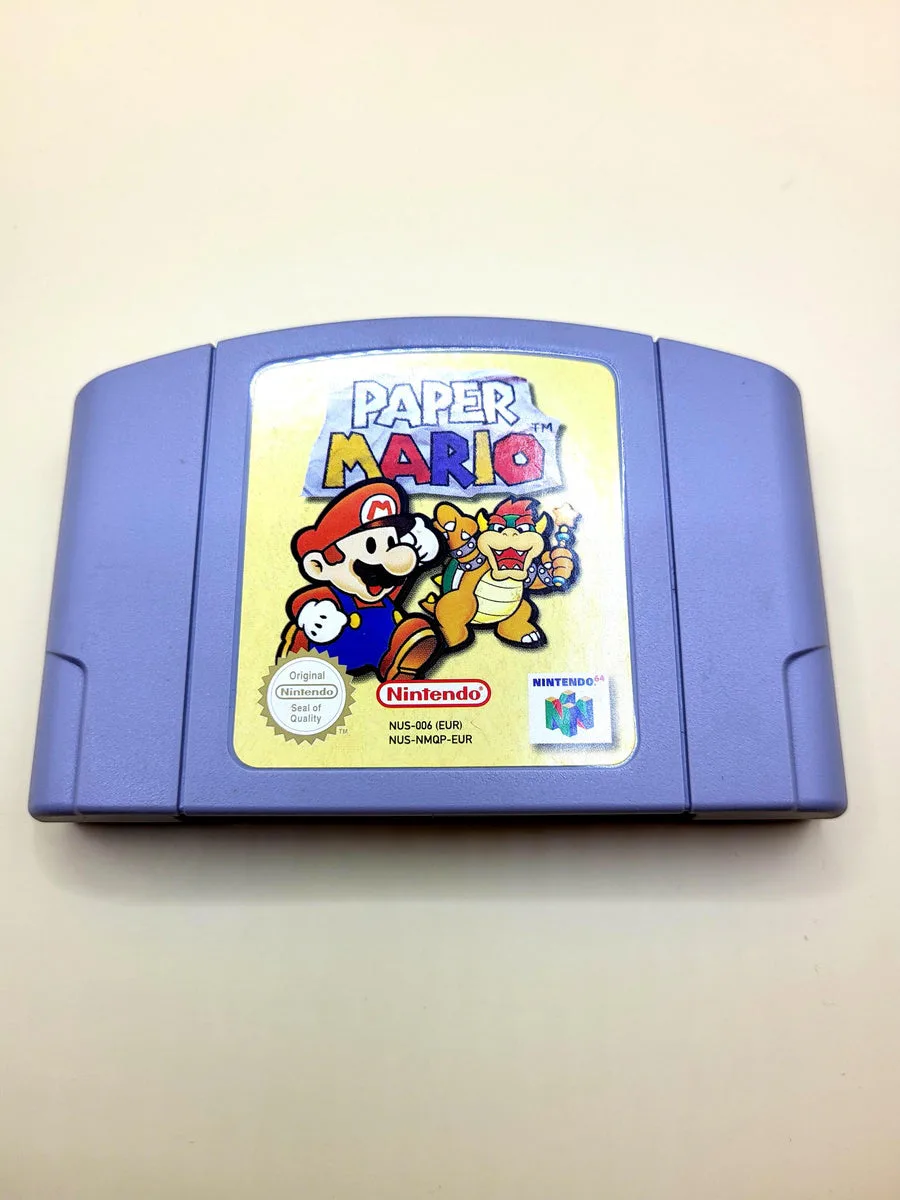
Paper Mario for Nintendo 64 is a role-playing game in which Mario must free the seven Star Spirits. Bowser has stolen their Star Rod and taken Princess Peach’s castle away. You travel through the Mushroom Kingdom, talk to residents and find your way through villages, deserts and dungeons. The characters look like thin paper drawings in a world with depth. Outside battles, you jump, swing your hammer and investigate bushes, blocks and other objects.
When you touch an enemy, a separate battle begins in which everyone takes turns. You choose a jump, hammer strike, item or another attack. With Action Commands, you press a button at the right moment or follow the on-screen instruction to strengthen an attack or reduce damage. A well-placed opening blow outside battle can already give you an advantage. Different enemies also require you to consider their position and defences.
Partners help both on your journey and in battles; only one companion is active at a time. Badges give Mario attacks and other benefits, but your available Badge Points limit what you can equip. When you gain a level, you choose which attribute grows. You save your adventure at Save Blocks. This is a single-player game played with a standard Nintendo 64 controller.
Region and language
Our Nintendo 64 games are PAL editions, unless stated otherwise. This product contains a loose cartridge for the European market. A box is only included if explicitly stated in the product details. We note any different region in the product details. In almost all cases, the game is playable at least in English, and often in the other five common European languages too.
Manual
With Paper Mario for Nintendo 64, you receive a loose cartridge. A box and manual are not included unless we explicitly state otherwise in the product details. This is the standard way we supply this copy.
The history of Paper Mario
Intelligent Systems developed Paper Mario for Nintendo. It appeared in Japan as Mario Story on 11 August 2000; the European Nintendo 64 edition followed on 5 October 2001. The project began with an assignment to create a new Super Mario RPG. In a later Nintendo interview, the developers explained that the visual direction raised particular questions: how could a Mario role-playing game find its own identity alongside the other games starring the same hero?
The team initially worked on around three different graphical proposals. Designer Naohiko Aoyama also made an image of his own that suggested a picture book brought into a game. This idea used three-dimensional technology specifically to emphasise thin, two-dimensional characters and backgrounds. The proposal helped determine the direction. The finished world therefore combines visible depth with characters that move like drawings, rather than simply giving Mario the same three-dimensional form as in Super Mario 64.
The rules connect that presentation with conversations, partners and clearly structured turn-based battles. Jumping and hammering remain recognisable Mario actions, but within a battle they become a chosen turn with timed input. Outside battles, partners’ abilities open up new ways to progress. The original Paper Mario became the first instalment in a series of its own. The Thousand-Year Door for GameCube and Sticker Star for Nintendo 3DS came later; their battle systems and additional features are not part of this Nintendo 64 cartridge.
Similar games for Nintendo 64
Super Mario 64 and Paper Mario let you jump, hit blocks and face Bowser on Nintendo 64. Super Mario 64 builds freely explored three-dimensional platforming tasks around those actions, with Power Stars as rewards. Paper Mario gives much more space to conversations, partners and turn-based battles. Here a jump is not only movement through an area, but also a chosen attack with timed input. Good preparation therefore matters alongside your immediate control skills.
Yoshi’s Story and Paper Mario give familiar Nintendo characters picture-book surroundings on Nintendo 64. Yoshi’s Story remains a side-scrolling platform game in which thirty pieces of fruit determine the end of a course. Paper Mario connects villages and dungeons with conversations and separate battles. Both reward close observation for hidden items, but Mario can also use his partners’ abilities. Their colourful presentation therefore does not mean that both games give you the same kind of tasks.
The Legend of Zelda: Ocarina of Time shares a journey through villages, dangerous areas and puzzles with Paper Mario on Nintendo 64. Link uses weapons and tools directly in a three-dimensional world; Mario switches to a separate turn-based battle when facing an enemy. In both adventures, new tools help overcome earlier obstacles. Paper Mario also places choices in badges, partners and the allocation of growing attributes, whereas Zelda keeps the action flowing continuously.
The Legend of Zelda: Majora’s Mask also has you talk to residents and work out how to solve their problems on Nintendo 64. There, a recurring three-day cycle and different masks determine how you organise the adventure. Paper Mario structures its journey around freeing Star Spirits and has no comparable three-day countdown. Both ask you to pay attention to characters’ clues, but during battles Mario gives you time to choose an attack or item from a menu.
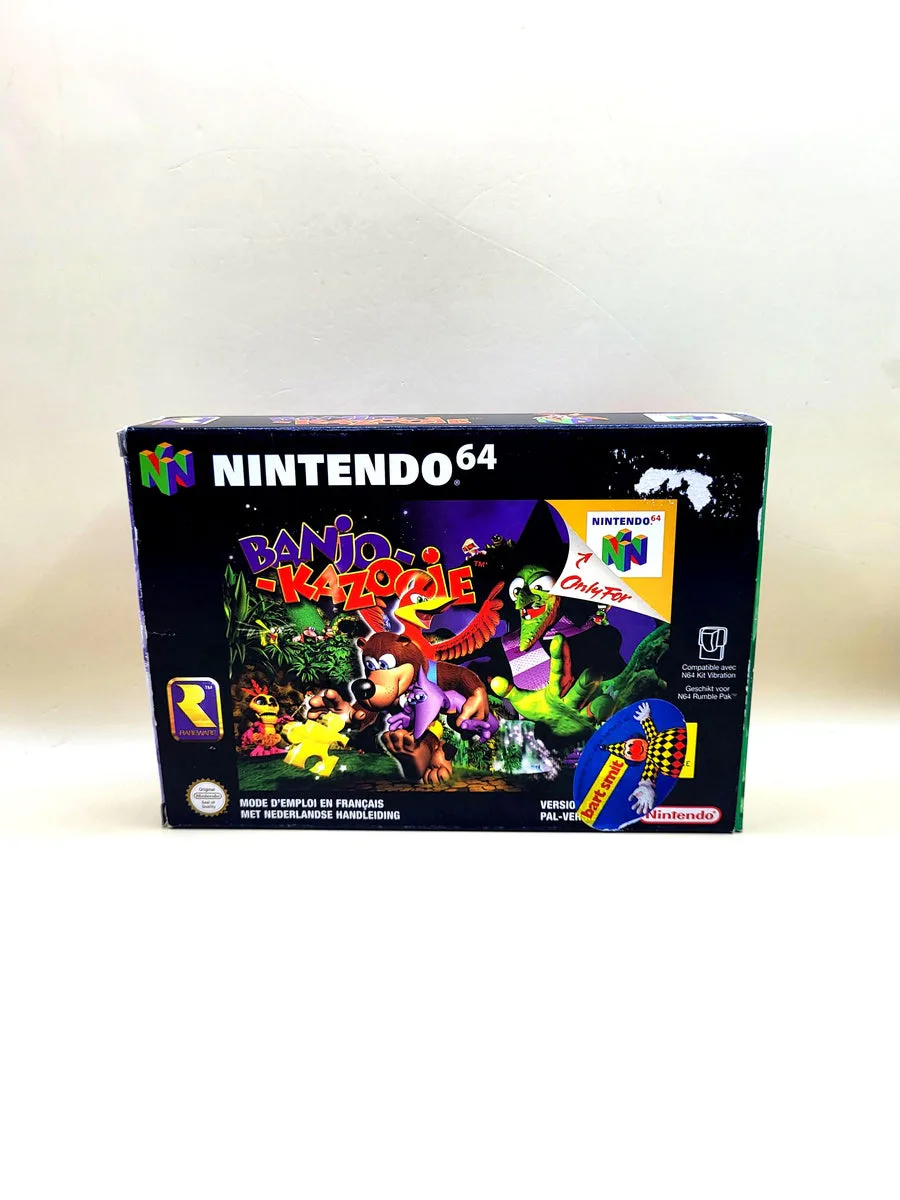
Banjo-Kazooie and Paper Mario combine colourful areas with eccentric characters and hidden rewards on Nintendo 64. The bear and bird cooperate as one controllable platforming duo and move freely through three-dimensional environments. Mario switches between different partners, one of whom accompanies him at a time and brings a particular ability. In Banjo-Kazooie, attacking and dodging happen directly during exploration; Paper Mario separates them into turn-based battles in which badges and the chosen companion help determine your approach.