This product is like new. At NexWave Games, like new means:
Additionally, all discs at NexWave Games are carefully inspected and assessed for quality. When discs arrive, we do not accept any that are so badly damaged that they are unlikely to work. We only accept discs with light scratches at most. Discs with scratches are then treated in our professional disc repair machine. By warming the disc and polishing it with soft brushes, these machines can remove a very thin layer from the disc. This removes the layer containing surface scratches and improves the disc’s readability. This ensures the disc works properly, even on consoles with ageing lasers that have difficulty reading games! Great news for the player.
Mission: Impossible for Nintendo 64
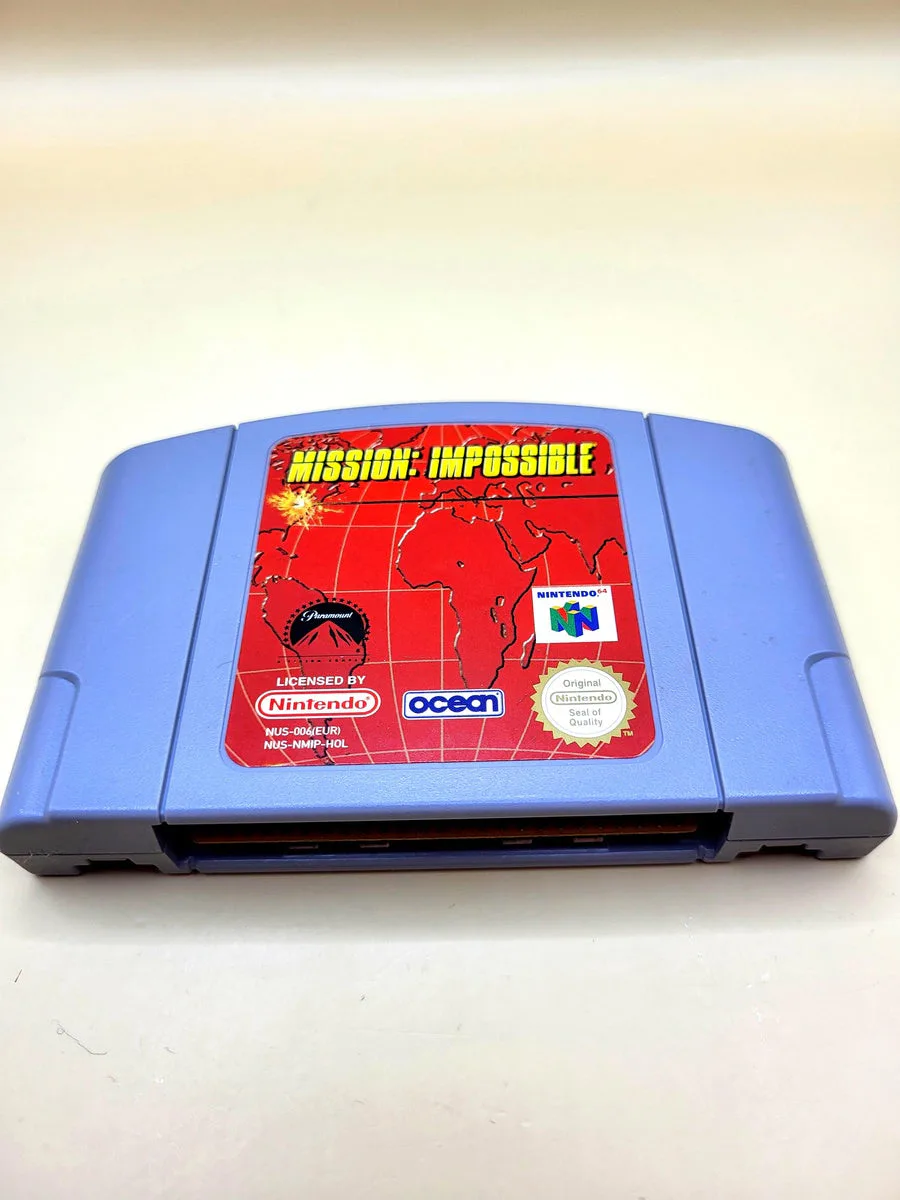
Mission: Impossible for Nintendo 64 is a spy adventure in which you guide Ethan Hunt through secured locations. You usually see him from behind as you hold conversations, avoid guards and use objects to carry out your assignment. Mission information explains what you must achieve, but not every solution is immediately obvious. You observe people and rooms to determine where you can proceed. A wrong action can cause the operation to fail even when Ethan still has plenty of health.
Ethan has devices such as the Face-Maker, which lets him assume another face, and a communicator for messages and clues. You switch between weapons and inventory objects according to the situation. Some sections call for calm investigation, others for precise aiming or movement around dangerous obstacles. The camera switches between an overview and a first-person aiming view. The game expects you to know when to shoot and when talking, waiting or acting unseen is a better step.
You play alone and choose between Possible and Impossible. The higher difficulty changes aspects including enemy behaviour and the complexity of assignments. Progress is stored on the cartridge in four files, each with separate progress for both difficulty levels. No Controller Pak is needed for this. This is the original Nintendo 64 game, not a later Mission: Impossible title with different missions.
Region and language
Our Nintendo 64 games are PAL editions, unless stated otherwise. This product contains a loose cartridge for the European market. A box is only included if explicitly stated in the product details. We note any different region in the product details. In almost all cases, the game is playable at least in English, and often in the other five common European languages too.
Manual
With Mission: Impossible for Nintendo 64, you receive a loose cartridge. A box and manual are not included unless we explicitly state otherwise in the product details. This is the standard way we supply this copy.
The history of Mission: Impossible
Mission: Impossible arrived on Nintendo 64 in 1998, following the 1996 film starring Tom Cruise. Infogrames developed the game and Ocean published it. It uses Ethan Hunt and familiar espionage elements, but turns them into assignments in which you must decide the next action yourself. It is therefore not a sequence of film clips with only shooting sections between them. Conversations, disguises and using an object in the right place give many situations the character of a practical espionage problem.
In a 1998 interview, project leader Benoit Arribart explained that Super Mario 64 had influenced development. The camera and main character controls in particular served as examples; the team even gave the outdoor camera an internal Mario reference. This is a concrete indication of the questions developers faced at the time: how do you move someone through a three-dimensional environment, and how do you keep their actions visible? Mission: Impossible applies those questions to a much more realistic-looking spy.
The result retains its own place among Nintendo 64 action games. Alternating observation, inventory use and short dangerous actions differs from a continuous first-person shooter. The two difficulty levels also set different demands within the same mission structure. A later PlayStation adaptation and other games under the same film name do not change this cartridge’s content. This release is defined by its original Nintendo 64 controls, assignments and saving on the game itself.
Similar games for Nintendo 64
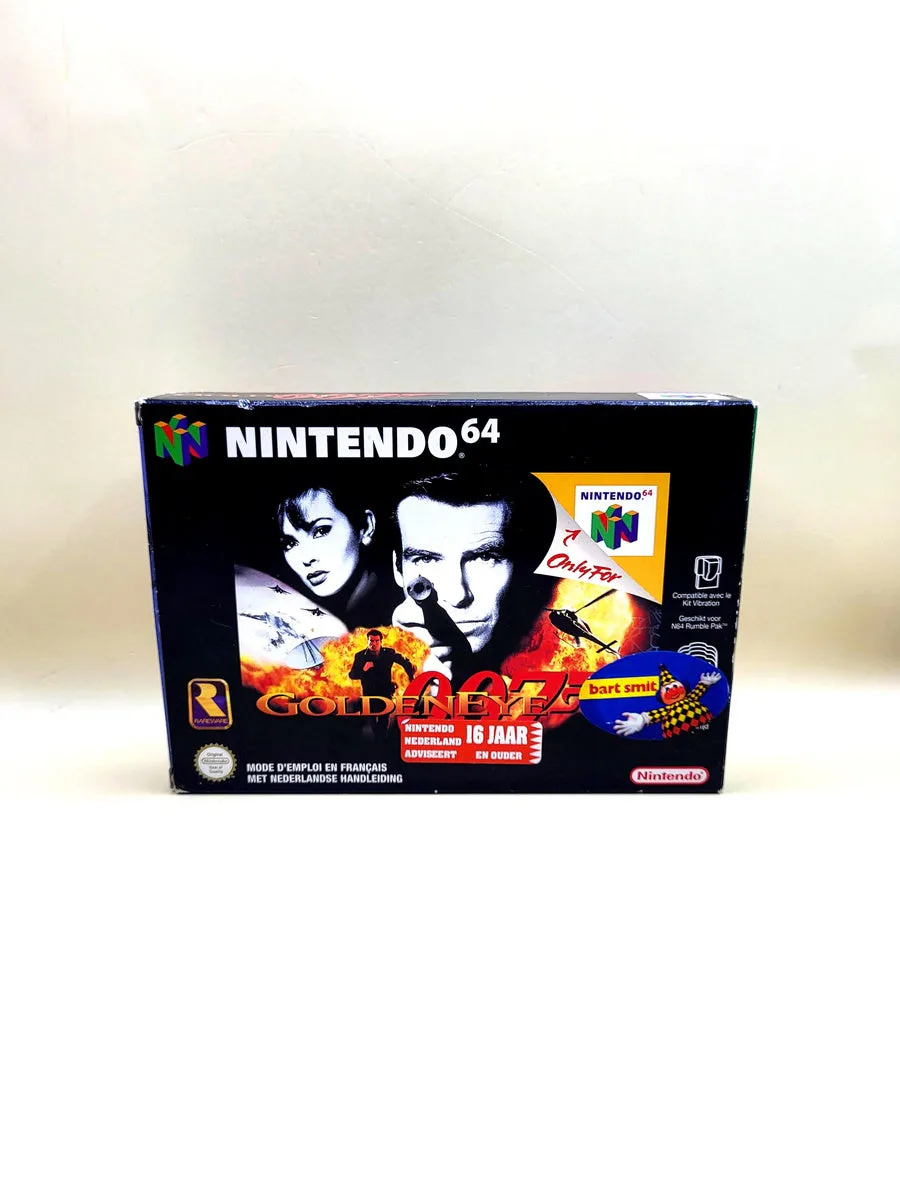
GoldenEye 007 on Nintendo 64 shares a film spy, gadgets and assignments where hitting the wrong person can have consequences. You experience Bond’s missions mainly through his eyes, however, with shooting as a continuous activity. Mission: Impossible usually shows Ethan from outside and gives conversations, disguises and inventory use more room. Both demand attention to mission objectives, but the action that gets you through a secured room can be very different.
Tom Clancy’s Rainbow Six on Nintendo 64 also demands a cautious approach to hostages, guards and secured buildings. There, you assemble a small team beforehand and plan routes on a map. Mission: Impossible more often finds its solution in what Ethan sees, hears and carries at the location. Rainbow Six revolves around executing a joint assault plan; Ethan can instead use an identity or conversation to avoid confrontation.
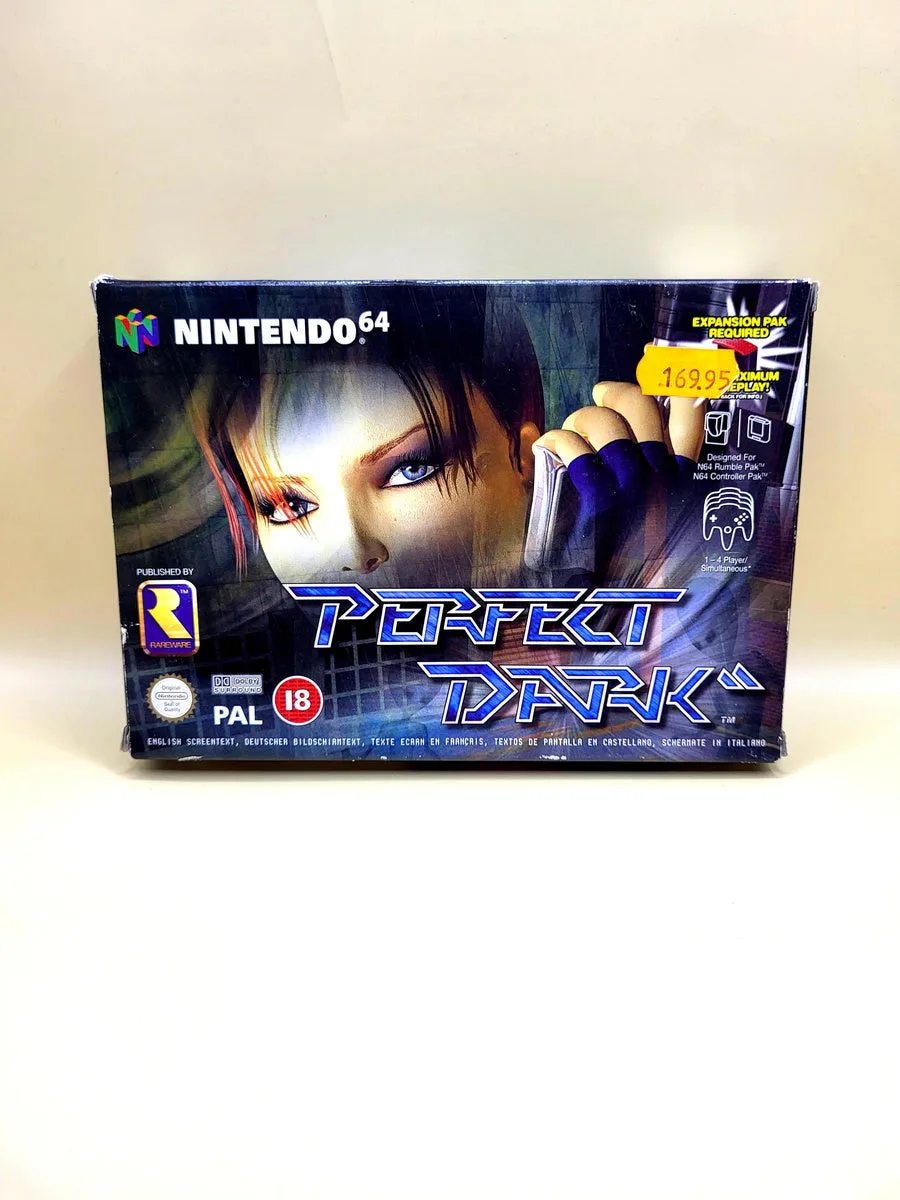
Perfect Dark on Nintendo 64 combines a spy story with technical devices and assignments in guarded complexes. Joanna Dark views the action in first person and uses devices including a remotely controlled camera. Mission: Impossible centres on Ethan’s visible body, disguises and interactions with environmental objects. Both involve using information and tools; the difference becomes apparent when a situation calls for conversation or a physical action rather than a shot.
Super Mario 64 on Nintendo 64 shares control of a visible character in a three-dimensional environment. According to project leader Arribart, its camera and movement even served as examples for Mission: Impossible. Mario uses that freedom to find stars, jump and explore worlds. Ethan works within separate espionage assignments involving guards and gadgets. Their shared spatial foundation therefore leads to different questions: where is a star, or how can you get further unseen?
Command & Conquer on Nintendo 64 also uses military objectives and assignments where you sometimes work with limited resources. There, you oversee the battlefield and give units orders instead of walking through rooms yourself. Mission: Impossible makes execution physical: Ethan talks, aims, climbs and uses an object at a particular location. Both reward understanding what an assignment really demands, but have you make decisions on a different scale.