This product is in good condition. At NexWave Games, good means:
Additionally, all discs at NexWave Games are carefully inspected and assessed for quality. When discs arrive, we do not accept any that are so badly damaged that they are unlikely to work. We only accept discs with light scratches at most. Discs with scratches are then treated in our professional disc repair machine. By warming the disc and polishing it with soft brushes, these machines can remove a very thin layer from the disc. This removes the layer containing surface scratches and improves the disc’s readability. This ensures the disc works properly, even on consoles with ageing lasers that have difficulty reading games! Great news for the player.
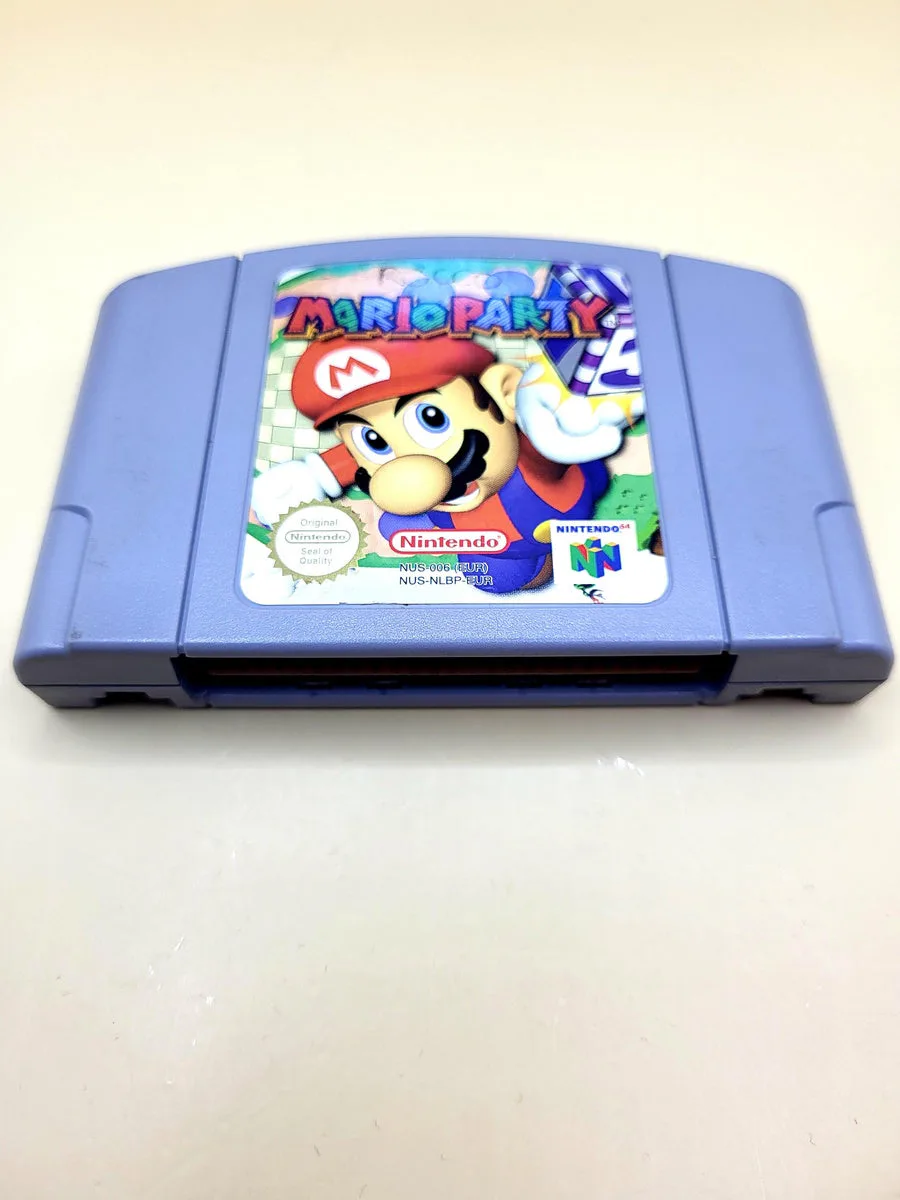
Mario Party for Nintendo 64
Mario Party for Nintendo 64 turns a board game into a series of short competitions with Mario and his friends. You roll a die, move across spaces and try to collect stars. You need coins for these, earning them in mini-games among other ways. At junctions you choose a direction, while special spaces can change your plans. A route towards a star therefore also involves deciding whether to save money, take risks or hinder other players.
A mini-game follows once all four characters have taken their turns. Sometimes everyone competes individually, sometimes you work with a partner, and sometimes one player faces the other three. You jump, steer, dodge or respond to instructions. Board positions help determine how teams are divided. Someone who has just cost you coins can therefore suddenly become your ally in the next challenge.
One to four people can play on the same console, with each participant needing their own Nintendo 64 controller. The computer fills empty places. You can also tackle challenges alone on Mini-Game Island. Some original mini-games require rapid rotation of the control stick. Never use your palm for this: Nintendo warns of skin irritation and damage to the stick. Rules and controls appear on screen for the individual competitions.
Region and language
Our Nintendo 64 games are PAL editions, unless stated otherwise. This product contains a loose cartridge for the European market. A box is only included if explicitly stated in the product details. We note any different region in the product details. In almost all cases, the game is playable at least in English, and often in the other five common European languages too.
Manual
With Mario Party for Nintendo 64, you receive a loose cartridge. A box and manual are not included unless we explicitly state otherwise in the product details. This is the standard way we supply this copy.
The history of Mario Party
Hudson Soft developed Mario Party, and Nintendo first released it in Japan in December 1998. The European Nintendo 64 edition followed on 19 March 1999. This gave Mario a different role from his platform adventures. Reaching an endpoint gave way to a contest for stars, with dice and short tests of dexterity jointly determining the result. The game marked the beginning of the Mario Party series.
The eight boards, some of which must first be unlocked, use familiar characters and different environmental rules. A changing route or a special encounter can become more important than the distance rolled. Between turns, the game constantly changes the challenge and group arrangement. That rhythm explains this first instalment’s distinctive character: you practise many small actions while also keeping track of the overall progress of the board competition.
The next two Nintendo 64 instalments developed that variety further. Mario Party 2 added portable items for use on the board; Mario Party 3 expanded this and introduced separate duel maps. These later features are not present in this first cartridge. Nor does it include the online connections of modern reissues. What remains here is the original combination of local interaction, shifting teams and a result shaped by both luck and execution.
Similar games for Nintendo 64
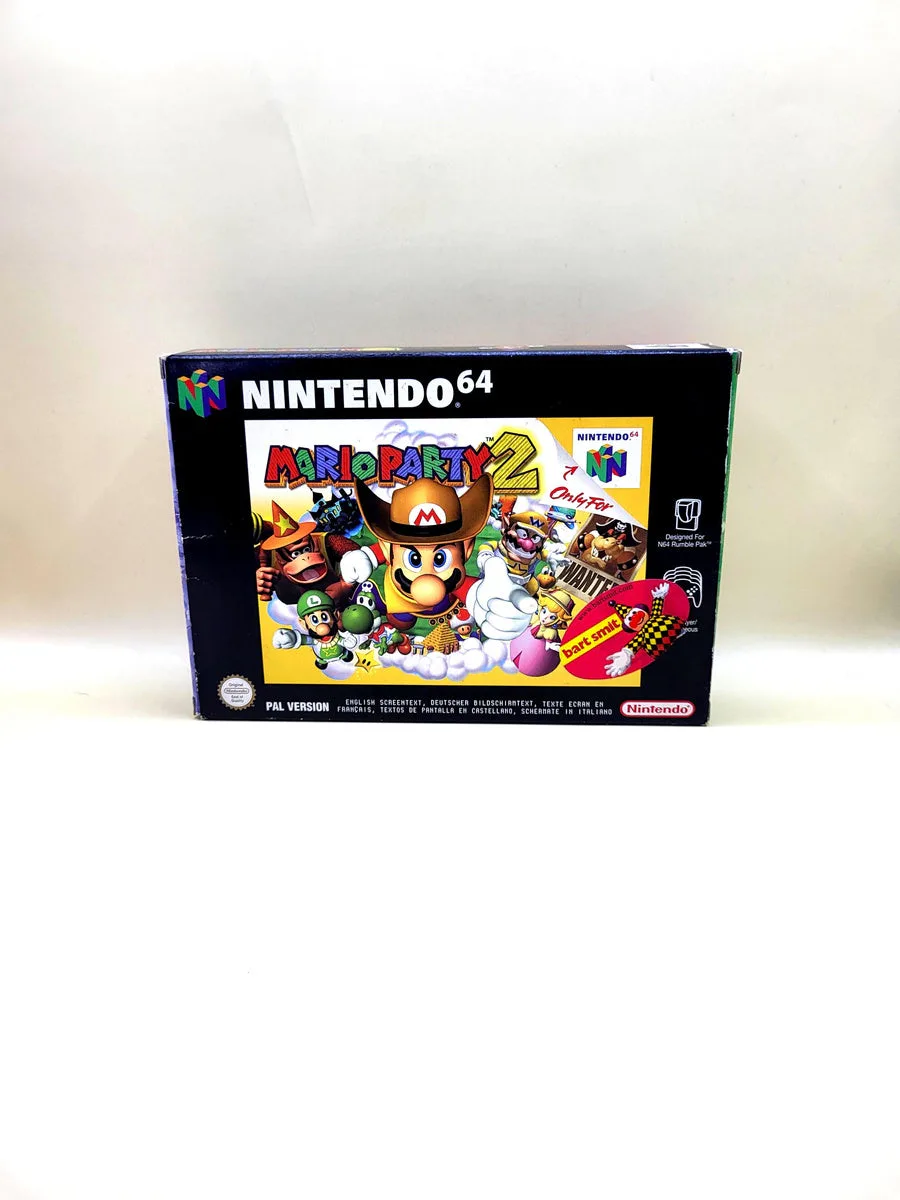
Mario Party and Mario Party 2 combine dice-based turns with mini-games for coins and stars on Nintendo 64. The sequel also lets you carry an item and use it during your board turn, for example to move further or open a route. The first game lacks that personal inventory. Decisions there depend more on your chosen route, board events and your performance in the next challenge.
Mario Party 3 retains Mario Party’s star hunt on Nintendo 64 but lets you keep three board items and adds duels with hired helpers. It also has a separate solo story. The first game ties its solo challenges to Mini-Game Island and keeps the board rules simpler. Both constantly change mini-games, but the third instalment gives you more tools to deliberately alter the balance on the board between competitions.
Mario Kart 64 shares the familiar characters and item-based interference on Nintendo 64, but you continuously control the same kart. Corners, speed and rivals’ positions shape your decisions there. Mario Party divides its action between dice turns and constantly changing mini-games. Whereas a mistake in Mario Kart immediately costs distance, losing a mini-game in Mario Party may only later determine whether you have enough coins for a star.
Super Smash Bros. and Mario Party bring up to four people together on Nintendo 64, each with their own controller. Smash has you use a fixed set of attacks to knock opponents out of an arena; Mario Party regularly changes both the action and the teams. In Smash you build knowledge of one fighter. Mario Party also tests how quickly you grasp another rule and connect the result to your board position.
Pokémon Stadium includes short dexterity games alongside its turn-based Pokémon battles on Nintendo 64. Those separate competitions resemble Mario Party’s mini-games: you respond to a simple challenge and compare performances directly. Mario Party places an extensive board contest around them, with stars as the final goal. Stadium keeps its mini-games separate. The choice is therefore between an ongoing dice-based rivalry and a standalone series of challenges within a Pokémon package.