This product is like new. At NexWave Games, like new means:
Additionally, all discs at NexWave Games are carefully inspected and assessed for quality. When discs arrive, we do not accept any that are so badly damaged that they are unlikely to work. We only accept discs with light scratches at most. Discs with scratches are then treated in our professional disc repair machine. By warming the disc and polishing it with soft brushes, these machines can remove a very thin layer from the disc. This removes the layer containing surface scratches and improves the disc’s readability. This ensures the disc works properly, even on consoles with ageing lasers that have difficulty reading games! Great news for the player.
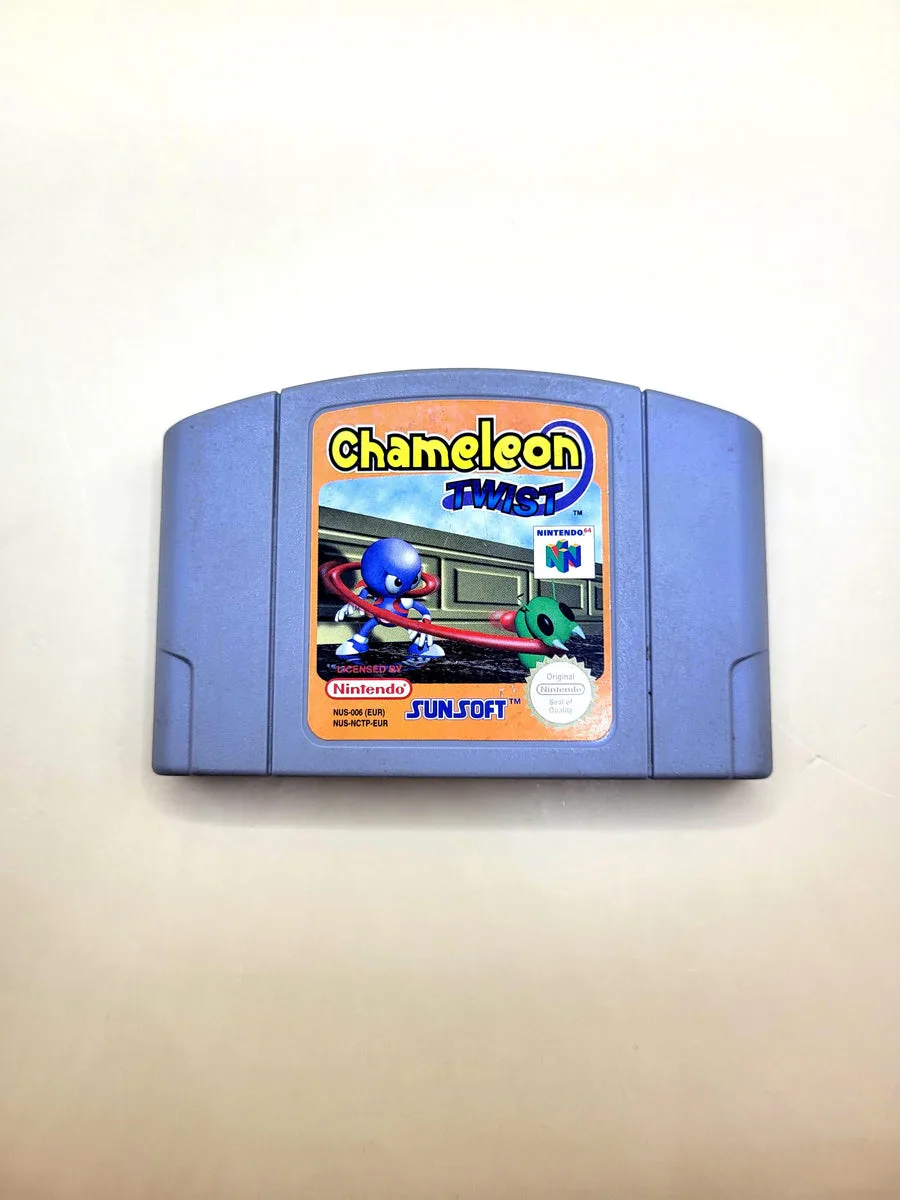
Chameleon Twist for Nintendo 64
Chameleon Twist for Nintendo 64 is a platform adventure with a tongue that does much more than catch enemies. Davy follows a white rabbit into a strange world, where he stands on two legs and wears a backpack. To return home, he must cross areas filled with narrow platforms, posts and obstacles. His tongue is his main tool. You guide it towards a target with the analogue stick, while choosing the wrong angle can make you miss a support point.
You can wrap the tongue around a post and pull yourself towards it or swing around it. Standing on the tongue and then jumping lets you reach higher places. You can collect small enemies and then spit them out as projectiles, individually or in a stream. The same action therefore helps both in a fight and when clearing a route. A training area lets you try these moves first; you can also adjust the camera yourself at important moments.
You play the campaign alone. Battle also offers eight arenas for two to four players on the same Nintendo 64, each with their own controller. In Battle Royal, you try to be the last one left on the platform. Time Trial lets you return after falling and counts who has spent the least time away from the playing field during the match. The optional Rumble Pak provides vibration; a Controller Pak is not intended for this game.
Region and language
Our Nintendo 64 games are PAL editions, unless stated otherwise. This product contains a loose cartridge for the European market. A box is only included if explicitly stated in the product details. We note any different region in the product details. In almost all cases, the game is playable at least in English, and often in the other five common European languages too.
Manual
With Chameleon Twist for Nintendo 64, you receive a loose cartridge. A box and manual are not included unless we explicitly state otherwise in the product details. This is the standard way we supply this copy.
The history of Chameleon Twist
Japan System Supply developed Chameleon Twist for Nintendo 64, with Sunsoft handling its Western release. The game originally appeared in 1997, during a period when platform games were further exploring the use of three-dimensional space. The credits name Hideyuki Nakanishi for the original game design and Masaki Kimura as director. Rather than a large arsenal of unrelated moves, the controllable tongue became the tool that linked movement, defence and attacking.
The original manual devotes several pages to swinging around posts, jumping high using the tongue and spitting out enemies. This also explains the separate training area: walking and jumping alone do not teach you how to cross a gap. A line of small opponents can become ammunition, while a post offers both a pivot and an attacking opportunity. The levels therefore build on learning to read support points and the direction in which you unroll the tongue.
Alongside the solo adventure, the studio developed the same tool into local battles. The eight arenas use elimination or a time limit to judge staying on the platform in different ways. This gave the cartridge a separate group activity without turning the campaign into cooperative play. Chameleon Twist 2 followed later, but this edition remains the first game. The umbrella and different saving requirements of the sequel do not belong to this original version.
Similar games for Nintendo 64
Chameleon Twist and Super Mario 64 ask you to judge distance and height in three-dimensional spaces on Nintendo 64. Mario uses a broad range of jumps to reach stars. Chameleon Twist builds many crossings around a different tool: you aim a tongue at posts, swing around them or use it as a support. Mario more often lets you investigate a larger environment, whereas Chameleon focuses more closely on the support points and obstacles of the current route.
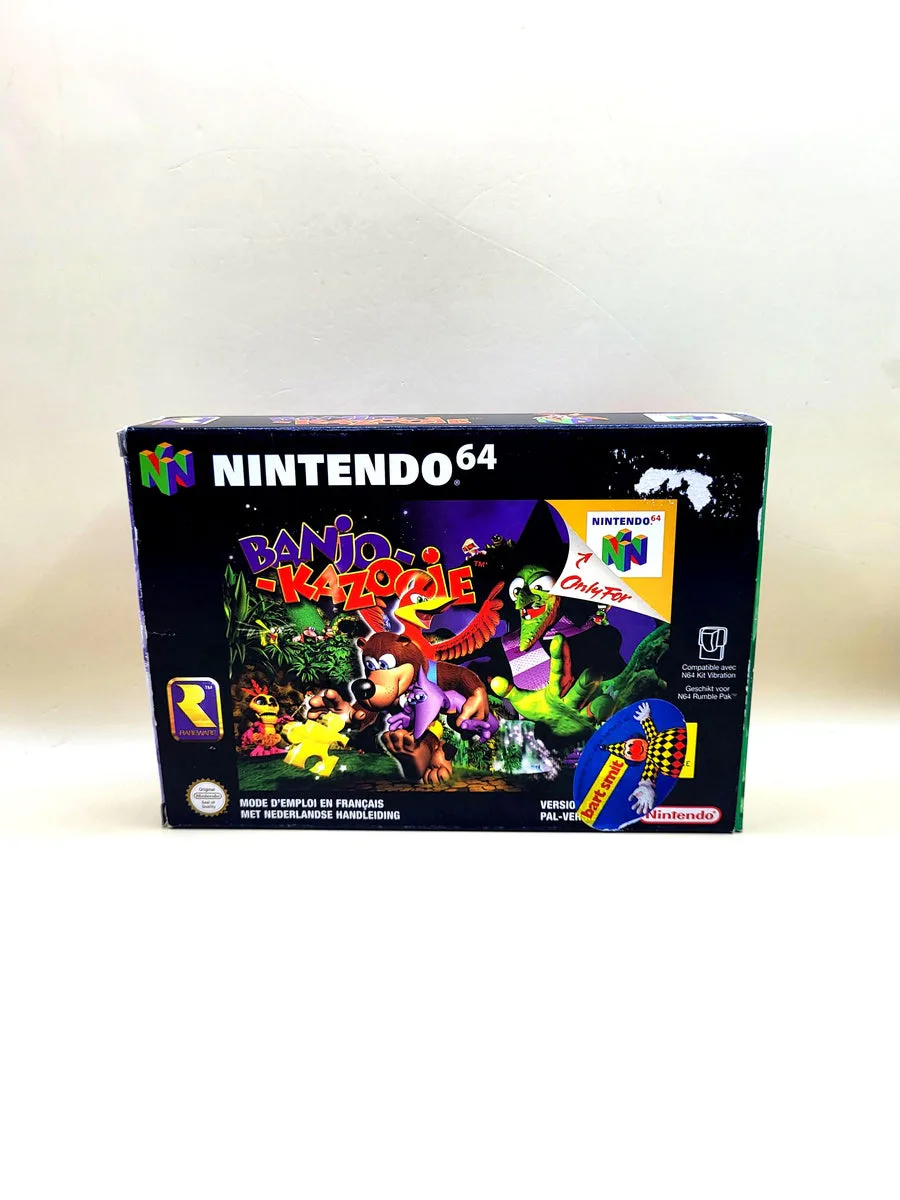
Banjo-Kazooie and Chameleon Twist give their animal characters moves beyond ordinary jumping on Nintendo 64. Banjo's possibilities grow through lessons from Bottles and transformations from Mumbo. Chameleon Twist mainly has you learn new uses for the tongue: aiming, attaching, turning and collecting enemies. Both reward attention to the surroundings, but Banjo places more emphasis on tasks and collectibles spread throughout a world than on executing one particular crossing.
Banjo-Tooie and Chameleon Twist combine a solo adventure with separate local competitions on Nintendo 64. Tooie builds its campaign around many abilities and problems connecting different areas. Chameleon Twist concentrates on using the tongue in different ways along a route or in an arena. In both games, the group activities remain separate from the story. Playing together therefore means competing against one another, not travelling through the campaign cooperatively.
Kirby 64: The Crystal Shards and Chameleon Twist let you put enemies to other uses on Nintendo 64. Kirby copies their powers and combines them to fight and search for crystal shards. Davy instead stores small enemies as projectiles to spit out. Kirby mainly moves sideways through his scenery; Chameleon Twist also asks you to aim a tongue into the depth of the scene and swing around posts to reach your next landing place.
Yoshi's Story and Chameleon Twist use a long tongue as part of their platforming on Nintendo 64. Yoshi swallows enemies and makes eggs that you aim at targets. In Chameleon Twist, the tongue itself also becomes a grappling hook and a support for high jumps. The difference is apparent when moving: Yoshi mainly follows sideways routes, while Davy swings around posts and finds the right angle to cross three-dimensional spaces.