This product is in good condition. At NexWave Games, good means:
Additionally, all discs at NexWave Games are carefully inspected and assessed for quality. When discs arrive, we do not accept any that are so badly damaged that they are unlikely to work. We only accept discs with light scratches at most. Discs with scratches are then treated in our professional disc repair machine. By warming the disc and polishing it with soft brushes, these machines can remove a very thin layer from the disc. This removes the layer containing surface scratches and improves the disc’s readability. This ensures the disc works properly, even on consoles with ageing lasers that have difficulty reading games! Great news for the player.
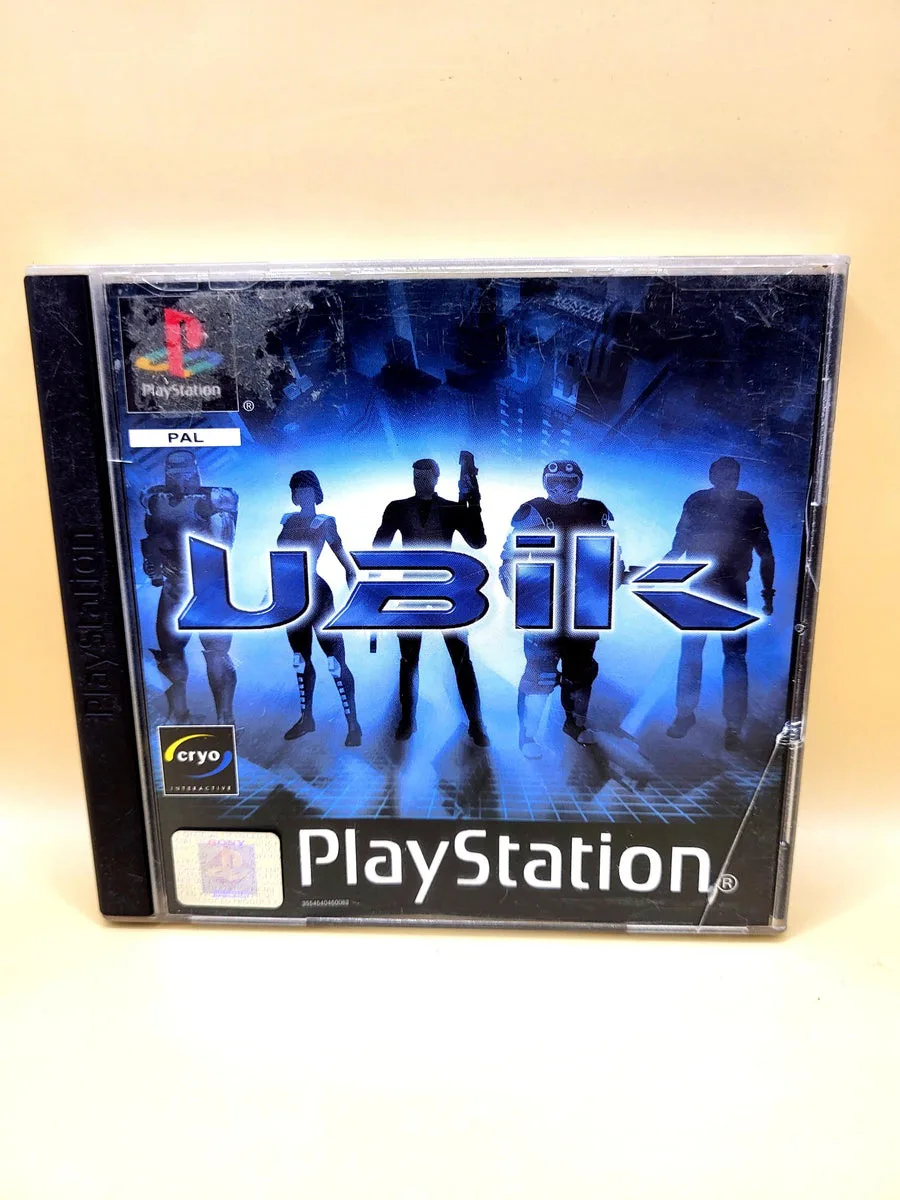
Ubik for PlayStation 1
Ubik for PlayStation 1 combines tactical action with writer Philip K. Dick's strange vision of the future. You follow Joe Chip, an employee of Runciter Associates who protects businesses against industrial espionage. His opponents use not only firearms but also paranormal powers. Behind the first assignments lies a story in which time and reality become increasingly unreliable. You take a small group of agents through offices and other locations, while fixed camera positions determine how much of the surroundings you can see.
For various assignments you assemble a team and distribute weapons and equipment. The PlayStation edition uses a group of four characters, including Joe and Pat. Shooting skills and mental abilities give the agents different roles, but you need to keep track of their movements and positions. You use the pointer to choose destinations, targets and actions. A different formation can help keep vulnerable team members away from the front line. Battles unfold directly, without a separate turn for each participant.
You play this science-fiction adventure alone. An ordinary PlayStation controller is enough; the PlayStation mouse is also supported but is not required. With a controller you move the pointer and switch between agents to issue orders. Progress is stored on a PlayStation memory card. The background images and control of an entire team give Ubik a different rhythm from a shooter in which you constantly aim a crosshair yourself. Careful movement and distributing the available weapons therefore form part of every new encounter.
Region and language
Our PlayStation 1 games are PAL editions and come with a Dutch or English box, unless stated otherwise. By default, you receive the version for the European market. We note it in the product details if the region is different or the box is in another language. In almost all cases, the game is playable at least in English, and often in the other five common European languages too.
Manual
Ubik for PlayStation 1 includes the manual unless the product title states otherwise. If the booklet is missing, the title says “No Manual”. This lets you see before ordering whether the game comes with a manual.
The manuals included with our games usually contain at least English and often around six European languages. The exact languages vary by edition, so Dutch is not always included. The booklet explains the controls and the main rules. You can use it to check how to control the game, which actions are available and how its different features work.
The history of Ubik
Cryo Interactive based Ubik on Philip K. Dick's novel of the same name, published in 1969. The original computer game appeared in 1998; Smart Dog handled the later PlayStation conversion, released in Europe in 2000. Choosing this book created an unusual design challenge. The novel revolves heavily around doubt about reality, whereas a game also needs clear actions and objectives. Cryo used the conflict between companies employing paranormal agents as the starting point for its assignments.
In a preserved making-of interview, designers Philippe Nouhraas and Jean-Luc Sala explain how they decided on the look. The descriptions of the future from the sixties offered a different vision from the films many people now associated with Dick. The team therefore also drew on the dark visual language of Blade Runner and Total Recall. The design additionally combined strategy and adventure. The agents were meant to react independently, but the creators limited their autonomy when it left the player too little room.
Composer Eric Los sought a mixture of orchestral film sounds and electronic resources for the music. His interest in the book played a part in his involvement in the project. The PlayStation edition subsequently received a smaller team than the PC version and adapted controls using a controller or mouse. This console adaptation is therefore also a distinct interpretation of Cryo's original design. The unsettling fiction remained connected to practical decisions about equipment, team formation and the route through a location.
Similar games for PlayStation 1
Syndicate Wars for PlayStation 1 likewise lets you lead agents through a hostile future, with heavy weapons and powerful corporations in the background. There the emphasis lies more on an urban battlefield with vehicles and destructible buildings. Ubik uses smaller locations with fixed camera views and a story in which reality shifts. The similarity lies in directing an armed team; the scale of the surroundings and the way the story is told differ clearly.
X-COM: Enemy Unknown shares the selection and equipment of a group of specialists with Ubik. During missions in X-COM, however, you make decisions in turns and allocate time units to moving and shooting. Ubik keeps the battle running, making you intervene sooner when someone is badly positioned. X-COM also adds a worldwide organization with bases and research. Ubik concentrates on Joe Chip's assignments and the strange course of his personal reality.
Warhammer: Shadow of the Horned Rat, like Ubik, calls for preparation before sending a force into action. There you select mercenary regiments and guide them through battles in a fantasy world. Ubik works with individual agents in a much smaller team and combines their firearms with paranormal abilities. Both battle systems unfold in real time. The differences mainly concern the size of the army, distances on the battlefield and the importance of each individual participant.
Project Overkill places armed mercenaries in areas viewed at an angle from above, which can initially bring Ubik to mind. However, you choose one fighter to steer directly through the action. Ubik lets you issue orders to several agents and determine their formation. Project Overkill focuses more strongly on moving, aiming and shooting amid numerous opponents. In Ubik, preparing the team and switching between its members occupy a larger part of the controls.
Front Mission 3, like Ubik, connects combat to a story about interests larger than the team itself. You customize large fighting machines with different parts and weapons. Tactical battles take place on a grid and in turns, with the machines' arms and legs individually vulnerable to damage. Ubik uses human agents, paranormal skills and direct combat. Its decisions therefore concern the positioning of people more than the construction of a machine.