This product is like new. At NexWave Games, like new means:
Additionally, all discs at NexWave Games are carefully inspected and assessed for quality. When discs arrive, we do not accept any that are so badly damaged that they are unlikely to work. We only accept discs with light scratches at most. Discs with scratches are then treated in our professional disc repair machine. By warming the disc and polishing it with soft brushes, these machines can remove a very thin layer from the disc. This removes the layer containing surface scratches and improves the disc’s readability. This ensures the disc works properly, even on consoles with ageing lasers that have difficulty reading games! Great news for the player.
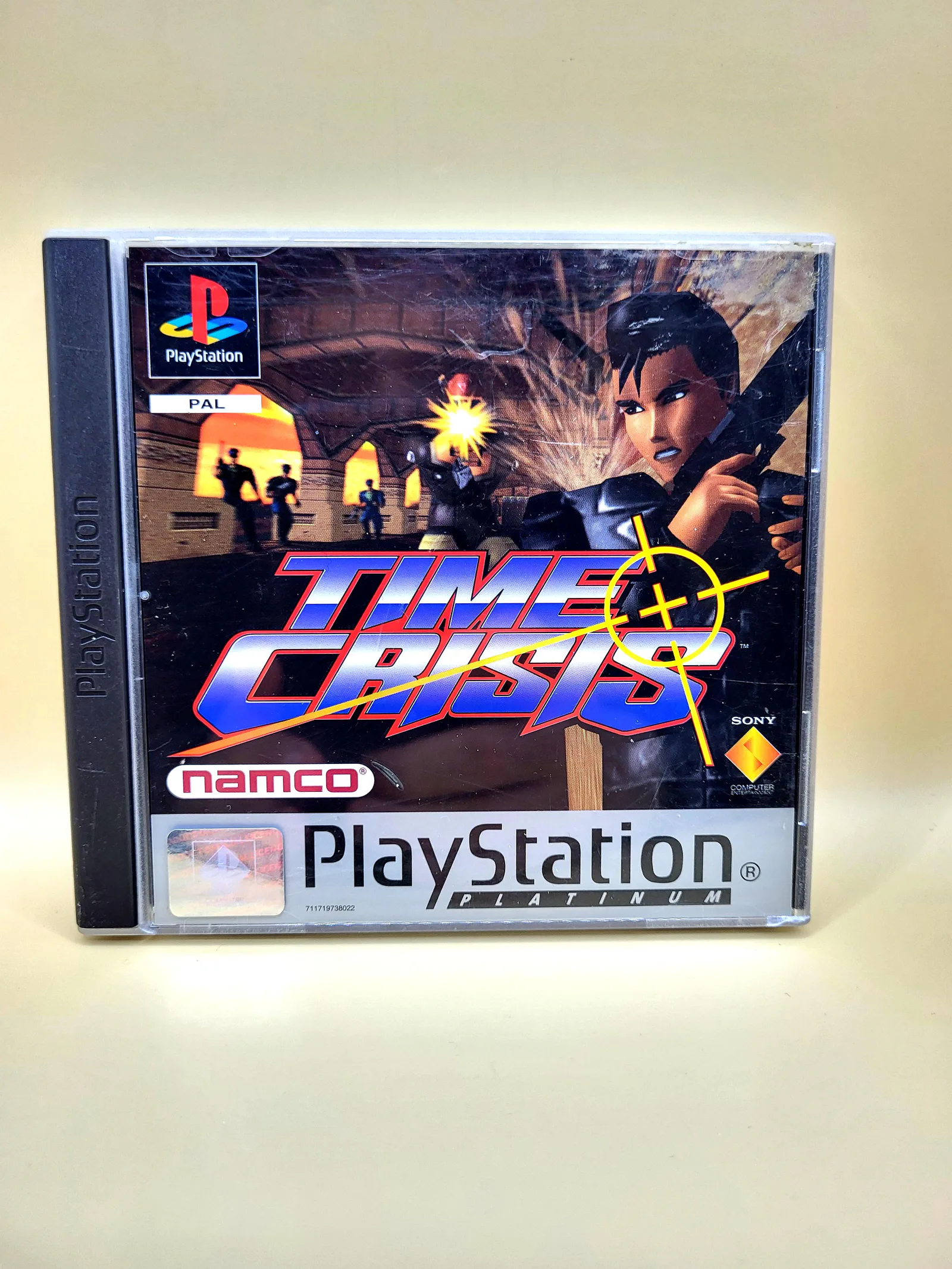
Time Crisis for PlayStation 1
Time Crisis for PlayStation 1 is a shooting game in which, as secret agent Richard Miller, you try to rescue a kidnapped president's daughter. The camera takes you between fixed positions in a guarded castle. You aim at soldiers who emerge from behind walls, throw grenades or attack from above. Meanwhile, the clock keeps running. Quickly identifying the most dangerous opponent helps you finish a fight with enough time remaining.
A button switches you between attacking and taking cover. Behind an obstacle, you replenish the magazine's six rounds but cannot shoot back. Hiding for too long costs precious seconds. Alongside the original arcade story, this PlayStation edition contains an extra mission involving the Kantaris organisation. Your performance determines the next route through the building. In Time Attack, you try to complete individual stages increasingly quickly and improve your own times.
This is a single-player game. You can use a standard PlayStation controller to move the aiming cursor, or play with the original Namco GunCon, called the G-Con 45 in Europe. That lightgun requires a compatible standard-definition CRT television and a connection to the composite video signal; it does not work on a modern LCD screen. The CRT requirement does not apply when using a standard controller. Through Options, you can save rankings on a PlayStation memory card. A gun controller is not automatically included with this game offer.
Region and language
Our PlayStation 1 games are PAL editions and come with a Dutch or English box, unless stated otherwise. By default, you receive the version for the European market. We note it in the product details if the region is different or the box is in another language. In almost all cases, the game is playable at least in English, and often in the other five common European languages too.
Manual
Time Crisis for PlayStation 1 includes the manual unless the product title states otherwise. If the booklet is missing, the title says “No Manual”. This lets you see before ordering whether the game comes with a manual.
The manuals included with our games usually contain at least English and often around six European languages. The exact languages vary by edition, so Dutch is not always included. The booklet explains the controls and the main rules. You can use it to check how to control the game, which actions are available and how its different features work.
The history of Time Crisis
Namco first brought Time Crisis to arcades and made a separate PlayStation version in 1997. The arcade machine linked shooting to a foot pedal used to take cover. For home players came the GunCon, a gun controller with additional buttons. This preserved the switching between firing and hiding without requiring an arcade cabinet. The European name G-Con 45 refers to that same original controller generation, not the later USB lightgun for PlayStation 2.
In a 1997 interview, the PlayStation team explained how substantially the original System 22 arcade hardware differed from Sony's console. Data, graphics and code had to be adapted again to the available capabilities. The team received material from the arcade developers but consisted of different staff. The way you continued after losing also changed: restarting an area was intended to encourage players to learn enemy patterns instead of reaching the ending directly by adding ever more credits.
The extra Kantaris mission gave the home edition its own reason to return. The developers chose a hotel with varied rooms to contrast with the castle and incorporated branching routes. Players could therefore discover different sections by playing faster or differently. This Platinum edition contains that original PlayStation design. It remains the first Time Crisis with Richard Miller and its own extra mission; the cooperative campaign of Time Crisis II on PlayStation 2 is not part of this version.
Similar games for PlayStation 1
Time Crisis: Project Titan uses the same rhythm of shooting, taking cover and reloading on PlayStation 1. Richard Miller gets a different story there and can switch hiding places during certain boss battles. The first Time Crisis instead combines the castle arcade adventure with a separate Kantaris mission featuring branching routes. Both are solo games in which learning enemy patterns helps you gain time; Project Titan is not an expansion included on this disc.
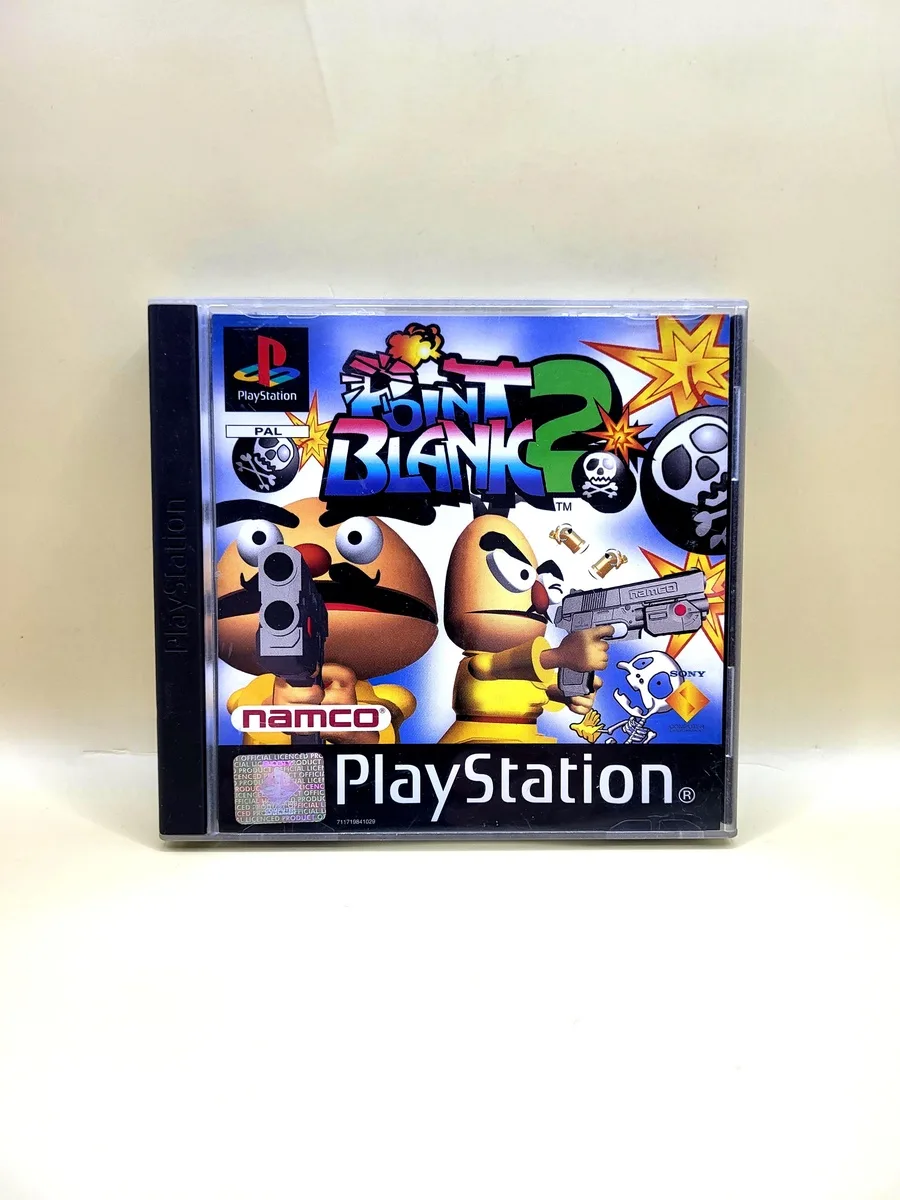
Point Blank 2 shares the use of a GunCon or standard controller for aiming and likewise demands fast, accurate shots. Its challenges are short shooting galleries with their own rules, such as hitting one target with one bullet. Time Crisis builds longer confrontations around soldiers and a continuous action plot. You must also repeatedly decide when to emerge from cover. Point Blank 2 lets two players compete directly for points, whereas you tackle this adventure alone.
Point Blank also brings a shooting gallery to the television on PlayStation 1, with comical targets and challenges centred on speed or precision. Like Time Crisis, repeating a challenge rewards remembering patterns. However, Point Blank constantly changes the rules and does not have you hide an agent behind obstacles. Time Crisis keeps the same attack-and-cover controls throughout successive action scenes. The difference is particularly noticeable when, between hits, you must also monitor your remaining time and ammunition.
Die Hard Trilogy 2: Viva Las Vegas likewise includes shooting sections on PlayStation 1 with a fixed route and targets you must recognise quickly. You also control John McClane in separate action sections and get behind the wheel during chases. Time Crisis concentrates entirely on aiming and rising from cover. Both use an action-film-style presentation, but here you refine one consistent shooting system instead of repeatedly switching between shooting, walking and driving.
Resident Evil Survivor also lets you play through a shooter's eyes on PlayStation 1; the European version supports a GunCon. There, you walk through environments yourself, choose doorways and investigate what happened on the island. Time Crisis moves Richard automatically between fixed shooting positions and lets the clock set the pressure. Exploration and recognising monsters play a larger role in Survivor, whereas here you mainly try to control the pace of each confrontation.