This product is in good condition. At NexWave Games, good means:
Additionally, all discs at NexWave Games are carefully inspected and assessed for quality. When discs arrive, we do not accept any that are so badly damaged that they are unlikely to work. We only accept discs with light scratches at most. Discs with scratches are then treated in our professional disc repair machine. By warming the disc and polishing it with soft brushes, these machines can remove a very thin layer from the disc. This removes the layer containing surface scratches and improves the disc’s readability. This ensures the disc works properly, even on consoles with ageing lasers that have difficulty reading games! Great news for the player.
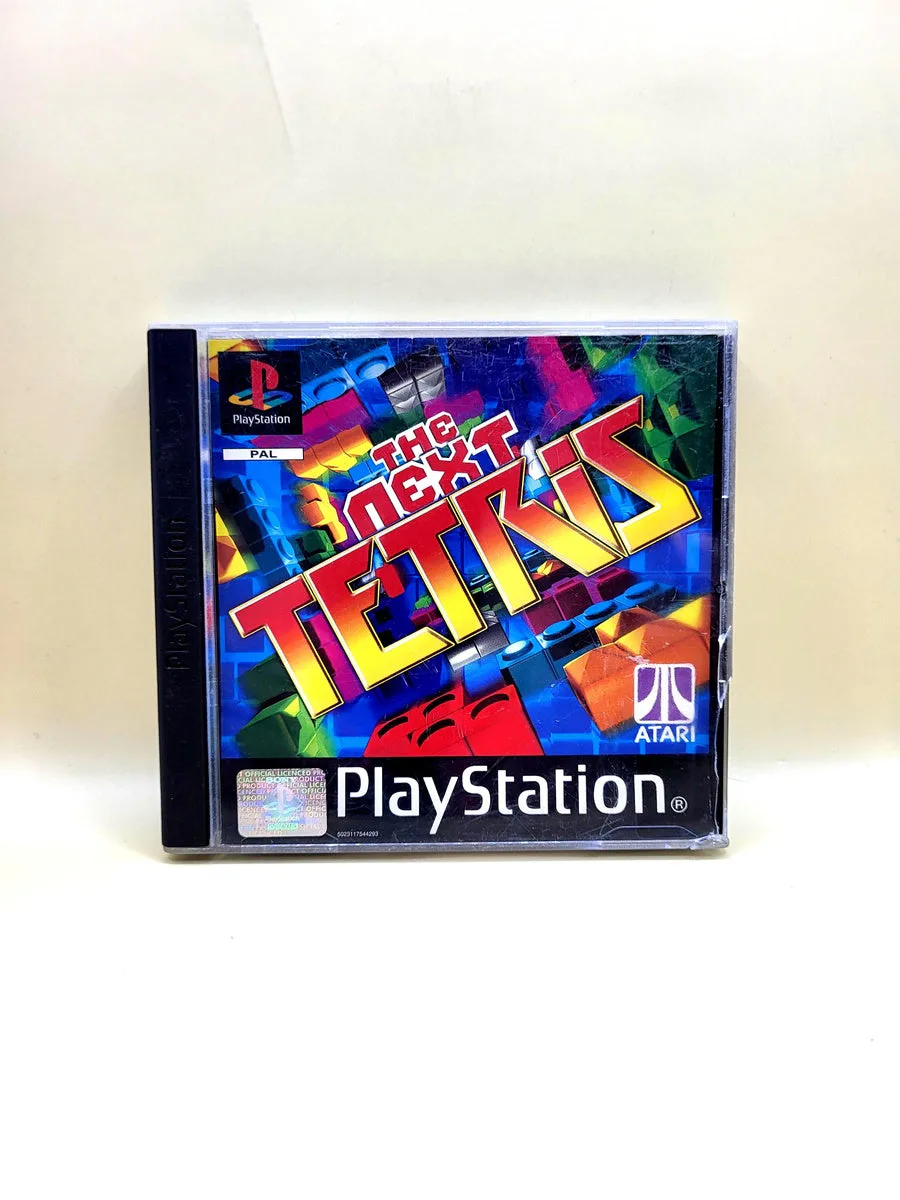
The Next Tetris for PlayStation 1
The Next Tetris for PlayStation 1 lets you rotate falling blocks and fill horizontal lines, but changes what happens after you place them. Multicoloured pieces break apart when they land, while neighbouring blocks of the same colour stick together. When a line disappears, loose sections drop into the gaps underneath. A single placement can therefore trigger several successive clears. You need to consider not just the shape that fits now, but also the colours and empty spaces beneath your stack.
In the main game type, you dig towards the bottom row of a stack that is already partly filled. Clearing quickly is the goal: removing that bottom row ends the round. Practice puzzles give you a limited number of pieces with which to find a solution. Marathon lets you keep going for longer, while Classic Tetris preserves the familiar rules without these breakaway pieces. Within the same game, you can therefore switch between carefully planned chain reactions and steadily building complete lines.
You play alone or against a second player, each using a standard PlayStation controller; no Multitap is needed. The two-player contest uses the new rules and challenges you to clear the bottom row first. Attacks can visually disrupt your opponent's playfield. Save Data lets you store player information, scores and settings, among other things, on a PlayStation memory card with two free blocks. The controls use the directional buttons; DualShock vibration is an optional extra.
Region and language
Our PlayStation 1 games are PAL editions and come with a Dutch or English box, unless stated otherwise. By default, you receive the version for the European market. We note it in the product details if the region is different or the box is in another language. In almost all cases, the game is playable at least in English, and often in the other five common European languages too.
Manual
The manual is missing from this copy of The Next Tetris for PlayStation 1. That is why the product title says “No Manual”. You receive the game in its box, without the instruction booklet. This makes the contents clear before you order.
The original printed manual usually contains at least English and often around six European languages. The languages vary by edition; Dutch is not always included. This information describes the original booklet and does not mean that it comes with this copy. A copy with a manual is offered separately when available.
The history of The Next Tetris
The Next Tetris arrived on PlayStation in 1999, during a period when several developers were adding new rules to the established block puzzle game. The original credits name AnimaTek International as the developer for Blue Planet Software and Bullet-Proof Software. Henk Rogers appears in both the design team and production credits. Hasbro Interactive published the western PlayStation release. The seven recognisable basic shapes remained, but the team chiefly changed the way placed blocks interact with one another and with gravity.
In an interview about the then upcoming game, Rogers explained how an automatic ranking system was intended to let players of different skill levels compete. The number of blocks to clear could therefore vary between players. This emphasis on a measurable goal explains why The Next Tetris is not solely about chasing an ever higher score. Rows at the bottom of a partly filled stack provide a finish line to work towards, with chain reactions helping you make space more quickly.
Other versions followed alongside the PlayStation release, including a later Dreamcast edition with its own online focus. Those networking features do not belong to this PlayStation game. The Japanese DLX release is also a separate version and is not presented here as included content. This original edition combines local competition with practice puzzles and longer sessions. It shows how the creators could experiment within the same playfield with colour, separate components and automatic difficulty adjustment, while retaining the foundations of rotating and stacking.
Similar games for PlayStation 1
Tetris Plus on PlayStation 1 uses the same basic falling shapes and also adds focused puzzles to the classic line-clearing game. You must help a wandering professor reach the bottom before the spiked ceiling catches him. The Next Tetris instead asks you to clear the bottom row of a stack. Careful clearing matters in both, but only here do breakaway pieces and sticking colours determine how the stack changes after you place a shape.
Magische Tetris Uitdaging shares the Tetris shapes and local two-player contests. Capcom uses Disney characters and lets you send awkward extra pieces to your opponent. The Next Tetris builds its duels around clearing a bottom row and changes in gravity. In both games, you must keep space free under pressure, but here you chiefly follow how a chain reaction travels through your own stack, rather than a story starring Mickey and his friends.
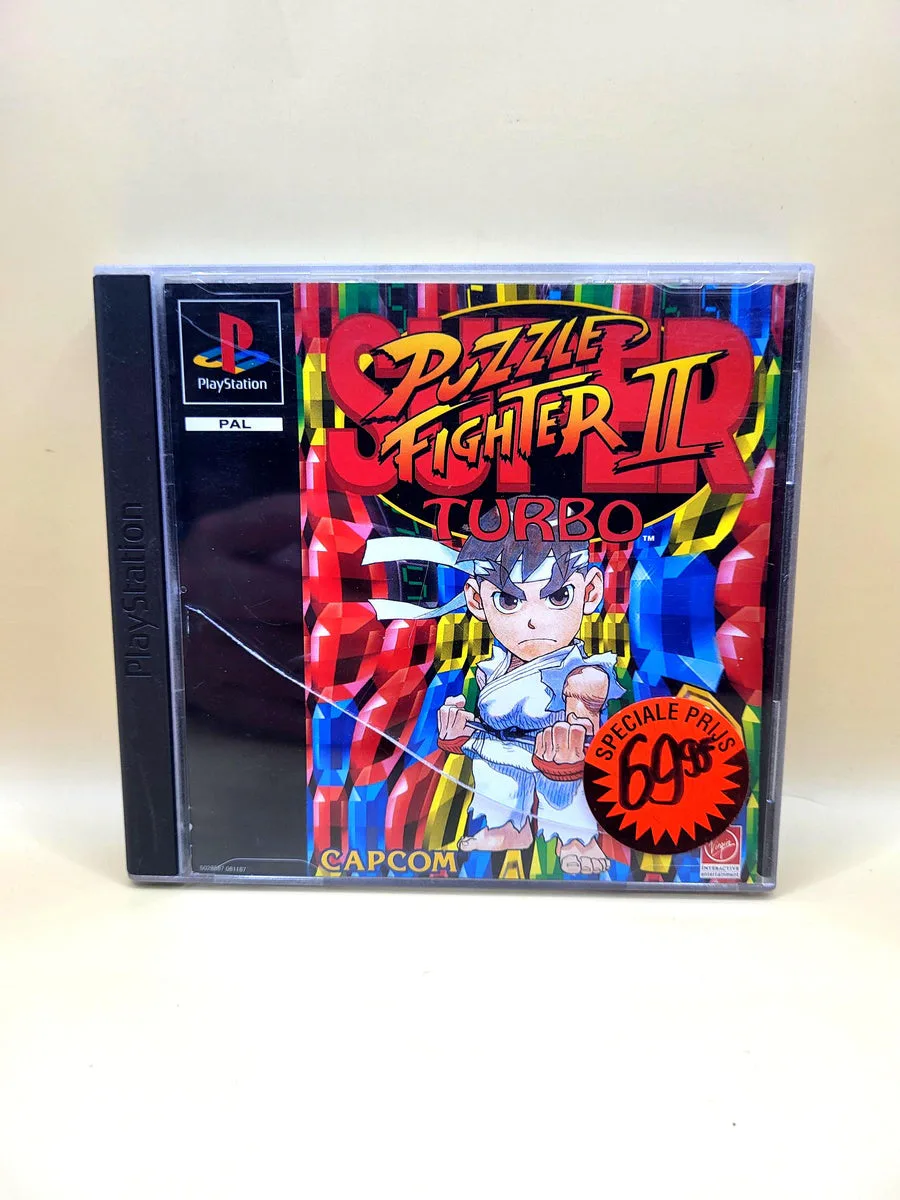
Super Puzzle Fighter II Turbo also asks you to group colours and prepare chain reactions. Capcom drops gems in pairs; a matching crash gem then clears a colour or a large block of colour and triggers attacks. The Next Tetris continues to use complete horizontal lines. The similarity lies in planning what will fall after a clear, while the pieces you need and the way you build an attack differ considerably.
Bust-A-Move 2: Arcade Edition likewise combines short puzzle rounds with direct contests against another player. You shoot coloured bubbles upwards and use the side walls to reach awkward groups. The Next Tetris drops pieces from above and asks you to anticipate gaps in a stack. Both reward spotting a major clearing opportunity, but in Bust-A-Move aiming angles and detaching hanging bubbles take the place of rotating and stacking.
Kula World shares the search for a clever spatial solution, but casts you as a beach ball on floating three-dimensional blocks. You collect keys and find a route to the exit without rolling off an edge. The Next Tetris keeps all the action inside a flat playfield and continually supplies new pieces. Both make you think about empty space, but here you plan a changing stack rather than a route across an existing structure.