This product is like new. At NexWave Games, like new means:
Additionally, all discs at NexWave Games are carefully inspected and assessed for quality. When discs arrive, we do not accept any that are so badly damaged that they are unlikely to work. We only accept discs with light scratches at most. Discs with scratches are then treated in our professional disc repair machine. By warming the disc and polishing it with soft brushes, these machines can remove a very thin layer from the disc. This removes the layer containing surface scratches and improves the disc’s readability. This ensures the disc works properly, even on consoles with ageing lasers that have difficulty reading games! Great news for the player.
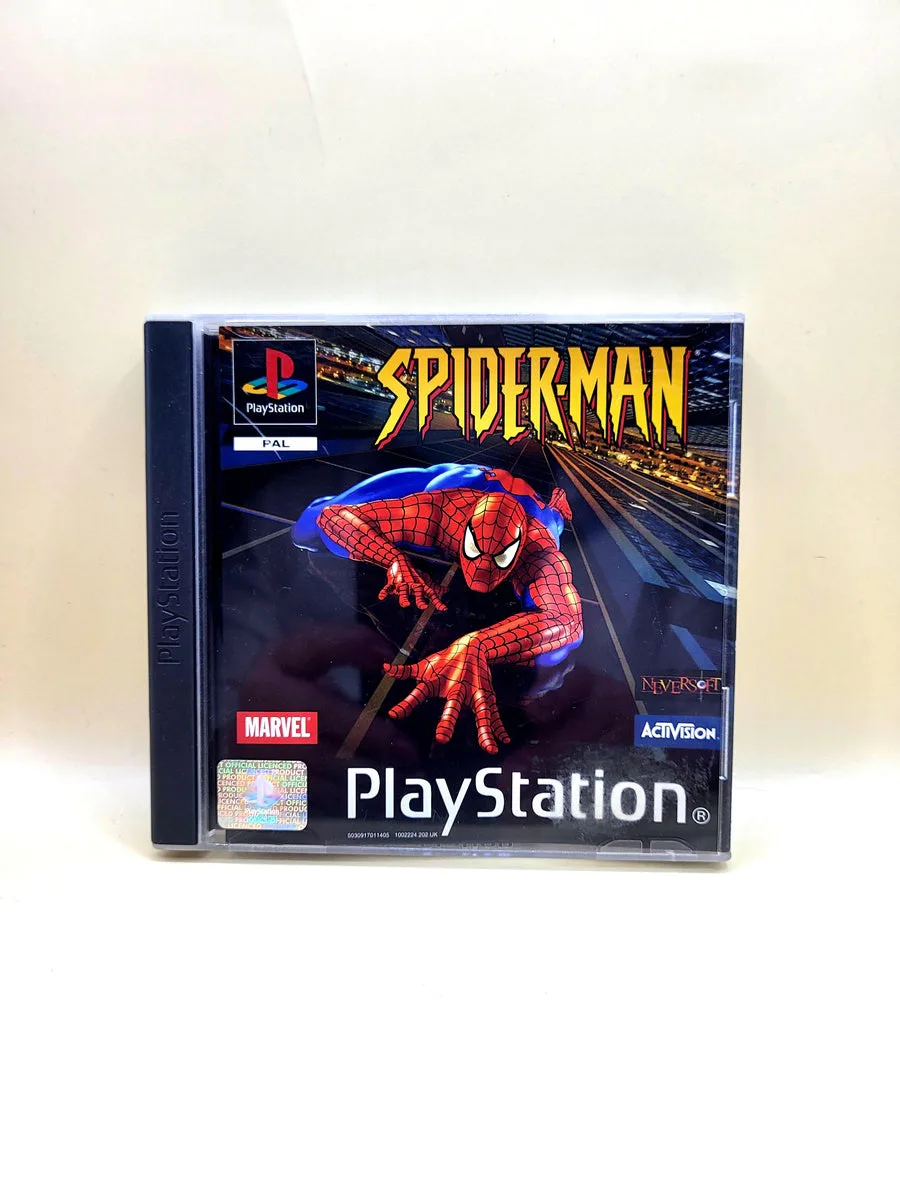
Spider-Man for PlayStation 1
Spider-Man for PlayStation 1 is a three-dimensional action adventure in which you cross New York above its streets. Someone has disguised themselves as the superhero and stolen technology at a scientific presentation. While the police pursue the wrong Spider-Man, you try to find the culprit. You swing between buildings, crawl along walls and ceilings, and rescue hostages. The individual levels take you across rooftops and through offices and sewers; this is not a city you can freely explore.
In combat, you alternate punches and kicks with web attacks. You can immobilise opponents, pull them towards you or hit them from a distance with a web projectile. A web dome provides protection when enemies surround you, but attacks like these consume web fluid. You therefore look for fresh web cartridges and health as you progress. Climbing gives you different attacking positions: from a ceiling, you can survey a room before landing among the enemies. Familiar opponents, including Venom and Scorpion, place different demands on your timing.
You play alone with one controller; a standard controller is sufficient and analogue controls are optional. To save and load later, you need a PlayStation memory card with one free block. Saved progress is based on completed levels; you do not resume from an arbitrary point in the middle of a fight. Separate training activities let you practise swinging and fighting. Hidden comic icons unlock covers in the collection, while unlockable costumes give you reasons to explore levels again.
Region and language
Our PlayStation 1 games are PAL editions and come with a Dutch or English box, unless stated otherwise. By default, you receive the version for the European market. We note it in the product details if the region is different or the box is in another language. In almost all cases, the game is playable at least in English, and often in the other five common European languages too.
Manual
Spider-Man for PlayStation 1 includes the manual unless the product title states otherwise. If the booklet is missing, the title says “No Manual”. This lets you see before ordering whether the game comes with a manual.
The manuals included with our games usually contain at least English and often around six European languages. The exact languages vary by edition, so Dutch is not always included. The booklet explains the controls and the main rules. You can use it to check how to control the game, which actions are available and how its different features work.
The history of Spider-Man
Neversoft developed Spider-Man for PlayStation, and Activision released it in 2000. The studio was also working on Tony Hawk's Pro Skater at the time. According to lead designer Chad Findley, Activision was looking for a developer for the Marvel licence, and Neversoft saw it as a project to develop alongside its skateboarding game. The team based the adventure on the comics and their characters. This version is therefore separate from the 2002 film starring Tobey Maguire and the game based on it for other consoles.
The move into three dimensions centred mainly on swinging and wall-crawling. Findley described how an early swinging prototype let you choose the web's attachment point yourself. That system gave way to controls in which the game determined a useful attachment point while you chose the direction. The team then designed situations around Spider-Man's abilities, such as crawling above bank robbers and avoiding helicopter fire along the side of a building. The linear levels gave the developers room to construct these specific scenes carefully.
Stan Lee provided the narration, and various Marvel heroes appear alongside the familiar villains. The collection of comic covers and extra costumes ties the rewards to the character's history. Neversoft also added a secret What If? variant featuring strange changes and jokes. In 2001, the sequel Spider-Man 2: Enter Electro, developed by Vicarious Visions, arrived on PlayStation. The original Spider-Man remains a separate story with its own levels and bosses; the new attacks and situations from that sequel are not part of this game.
Similar games for PlayStation 1
Spider-Man 2: Enter Electro for PlayStation 1 is the closest comparison: once again, you combine climbing, swinging and fistfights with web attacks. Vicarious Visions' sequel centres on Electro and adds new web moves, among other things. The original Spider-Man builds its story around the stolen technology, the accusation against Spider-Man and encounters with Venom. You therefore have familiar core abilities but a different series of missions and boss fights, without the games telling the same adventure.
Tomb Raider for PlayStation 1 shares the combination of three-dimensional routes, dangerous jumps and combat. Lara Croft must carefully judge her run-up and position at an edge, and uses pistols against opponents. Spider-Man can use a wall or ceiling as an additional route and reach places with his web that a normal jump cannot cover. This changes how you look for a way through: with Lara, you mainly read ledges and distances; with Spider-Man, you also study the surfaces above you.
Spyro the Dragon for PlayStation 1 also has you cross gaps between heights and search for hidden objects. Spyro glides from a higher platform to a lower destination and collects gems in his fantasy worlds. Spider-Man swings and sticks to buildings, making walls part of the route. His comic icons are additional collectibles within missions, whereas Spyro places greater emphasis on searching its areas. The dragon uses flame and a charging attack rather than web traps and combinations of punches and kicks.
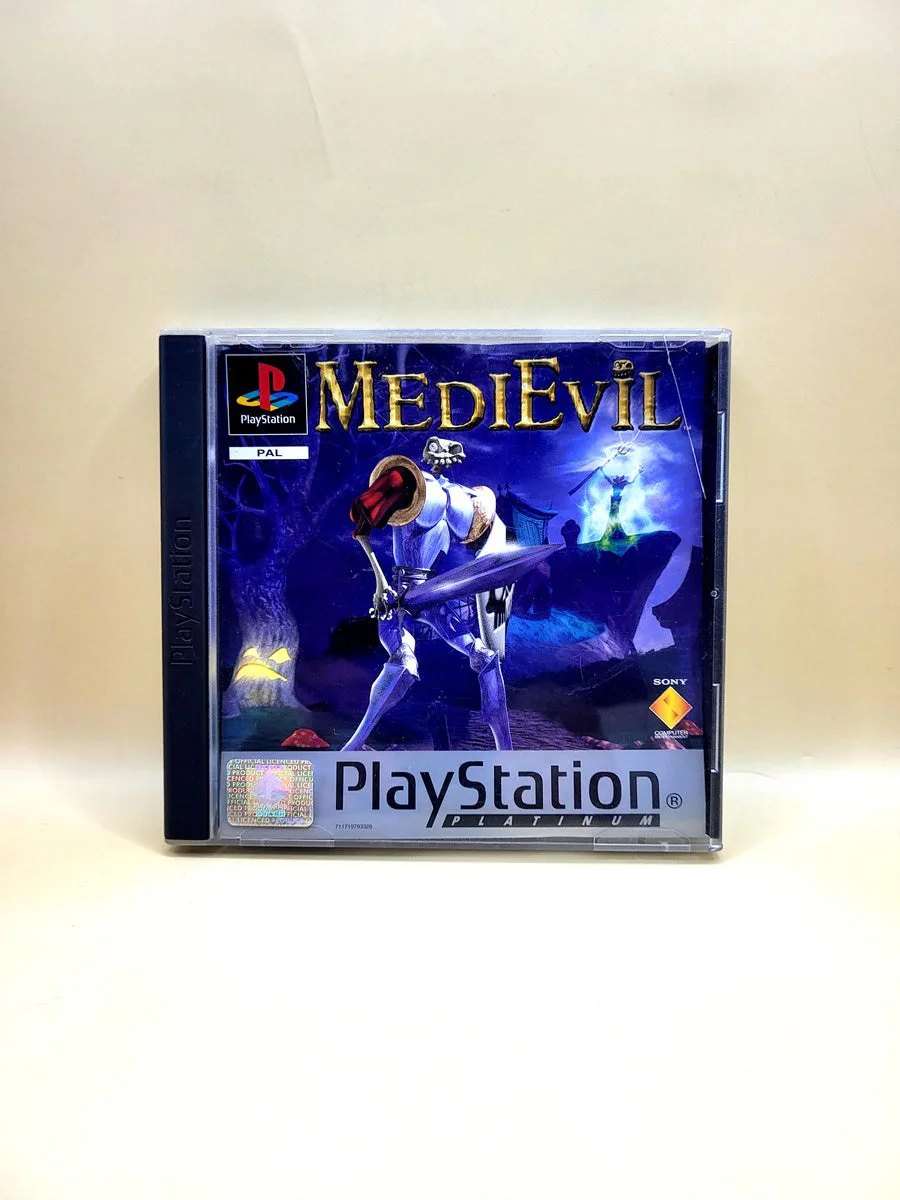
Like Spider-Man, MediEvil for PlayStation 1 mixes action, exploration and a humorous story. Sir Daniel Fortesque finds his way through a spooky fantasy world and uses weapons and shields against its inhabitants. Spider-Man's toolkit revolves around his own movements and web fluid. Where Daniel approaches an enemy with a sword, for example, Spider-Man can climb above a group and disable an opponent with webbing. Both ask you to choose your position, but give you very different ways to do so.
Fighting Force for PlayStation 1 focuses on defeating groups of enemies in three-dimensional environments. You can pick up objects and weapons from the ground, and two people can play together simultaneously, each using their own controller. Spider-Man is a single-player adventure that links its fights with climbing, swinging and rescue missions. Both let you combine punches and kicks, but Spider-Man gives web attacks a major role, whereas Fighting Force draws more of its combat tools from the surroundings.