This product is like new. At NexWave Games, like new means:
Additionally, all discs at NexWave Games are carefully inspected and assessed for quality. When discs arrive, we do not accept any that are so badly damaged that they are unlikely to work. We only accept discs with light scratches at most. Discs with scratches are then treated in our professional disc repair machine. By warming the disc and polishing it with soft brushes, these machines can remove a very thin layer from the disc. This removes the layer containing surface scratches and improves the disc’s readability. This ensures the disc works properly, even on consoles with ageing lasers that have difficulty reading games! Great news for the player.
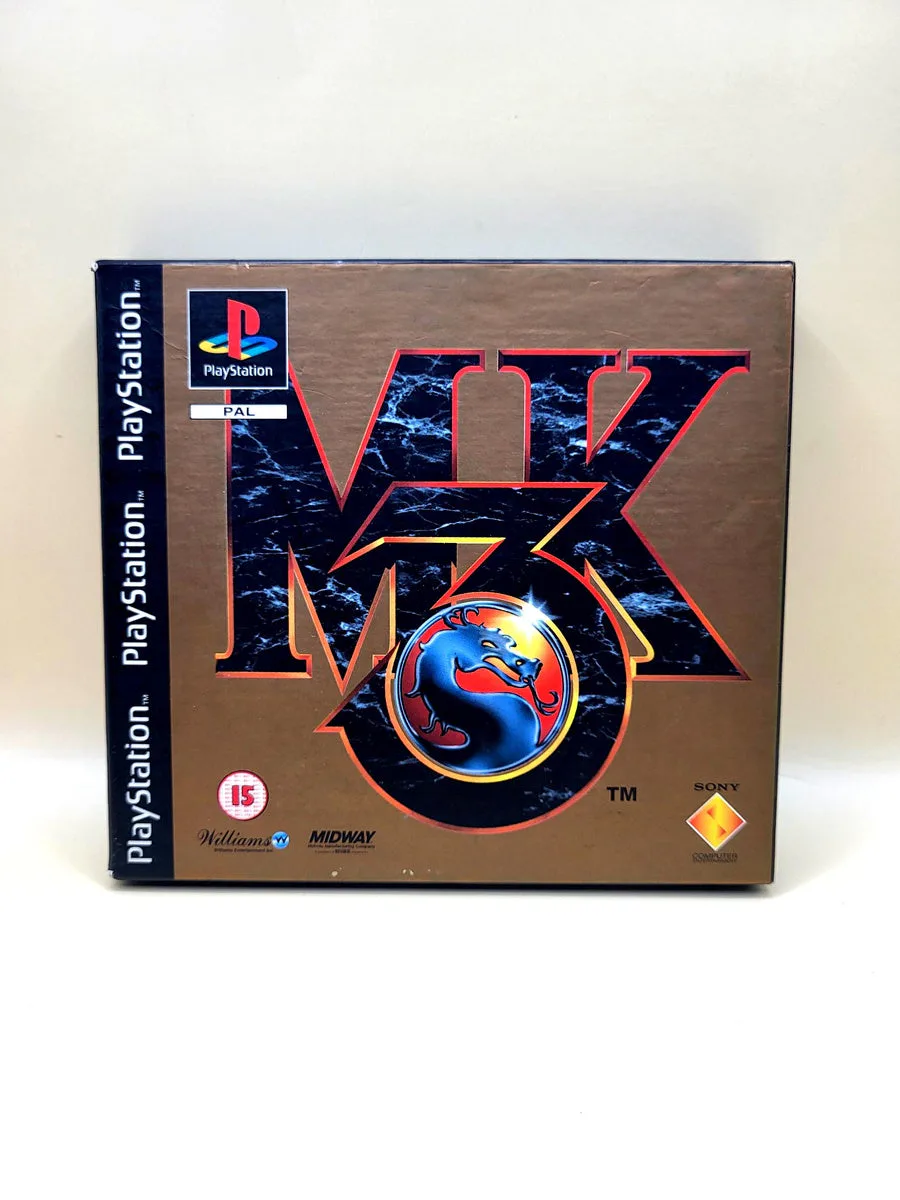
Mortal Kombat 3 for PlayStation 1
Mortal Kombat 3 for PlayStation 1 brings the battles against Shao Kahn to a devastated Earth. You choose Liu Kang, Sonya, Sub-Zero or one of the cybernetic ninjas, among others, and work through a succession of opponents. The digitised fighters face each other in two-dimensional arenas, with streets, rooftops and the subway as backdrops. Each round revolves around managing distance, drawing out an attack and recognising the moment to strike yourself.
The Run button lets you close the gap to your opponent quickly, as long as your stamina meter allows it. Preset sequences of punches and kicks form combos, while blocking has its own button. In certain locations, a well-placed uppercut can move the fight to another floor. Special attacks differ between characters; after the deciding round, you can attempt a Fatality. The explicit finishing moves and blood make this a violent fighting game.
You play alone against the computer or directly against a second player on the same television, using two standard PlayStation controllers. In the solo sequence, you choose a route of opponents; for head-to-head duels, you can enter Kombat Kodes together to change the match conditions. The original PlayStation release resets changed settings when you switch off the console. This is Mortal Kombat 3 with its own fighter selection, not Ultimate Mortal Kombat 3 or the expanded Mortal Kombat Trilogy.
Region and language
Our PlayStation 1 games are PAL editions and come with a Dutch or English box, unless stated otherwise. By default, you receive the version for the European market. We note it in the product details if the region is different or the box is in another language. In almost all cases, the game is playable at least in English, and often in the other five common European languages too.
Manual
Mortal Kombat 3 for PlayStation 1 includes the manual unless the product title states otherwise. If the booklet is missing, the title says “No Manual”. This lets you see before ordering whether the game comes with a manual.
The manuals included with our games usually contain at least English and often around six European languages. The exact languages vary by edition, so Dutch is not always included. The booklet explains the controls and the main rules. You can use it to check how to control the game, which actions are available and how its different features work.
The history of Mortal Kombat 3
Midway first brought Mortal Kombat 3 to arcades in 1995; the PlayStation version followed later that year. The series already had two instalments behind it, defined by digitised actors, secret attacks and violent finishing moves. The third instalment firmly shifted the conflict to Earth under Shao Kahn's occupation. Urban backdrops and new characters such as Sektor and Cyrax gave this entry a different appearance from the earlier tournaments.
The main changes concerned the pace. Running made retreating less safe, and fixed combos rewarded precise sequences of button inputs. A successful opening therefore often led to more than a single hit. At the same time, the familiar structure remained: a chosen fighter, short rounds and a route through stronger opponents. PlayStation preserved this two-dimensional approach while other early fighting games on the console emphasised their three-dimensional characters.
The revision Ultimate Mortal Kombat 3 appeared in 1995 as well, followed by Mortal Kombat Trilogy in 1996, which brought together elements from the earlier games. That development explains why familiar names do not automatically appear in this original selection. Scorpion, for example, is not part of Mortal Kombat 3's playable base roster. This PlayStation disc preserves the earlier stage in that sequence: the invasion story, the new running system and the particular combination of returning warriors and newcomers from 1995.
Similar games for PlayStation 1
Mortal Kombat Trilogy uses the same foundation of running, blocking and fixed combos on PlayStation 1, but brings back many more characters from the early games. Scorpion and Kitana are absent from Mortal Kombat 3's base selection but appear in Trilogy. Trilogy also adds the Aggressor meter. Mortal Kombat 3 instead keeps the original third game's roster together, so you have fewer different opponents and attack patterns to learn at once.
Mortal Kombat 4 turns the fighters into three-dimensional models on PlayStation 1 and adds weapons to the duels. The Run button and several familiar techniques connect it to Mortal Kombat 3, but the presentation and possibilities change. In Mortal Kombat 3, you watch digitised actors from a fixed side view. The difference is particularly apparent when comparing the same characters' old movements with their later polygonal incarnations.
Tekken 2 also gives you short PlayStation 1 duels with a character you learn to master. Its buttons correspond to individual arms and legs, while Mortal Kombat 3 combines high and low attacks with separate block and run buttons. Tekken 2 uses polygonal fighters and has no Fatalities. Both games involve practising timing and punishing missed attacks, but the required button sequences feel distinctly different.
Like Mortal Kombat 3, Street Fighter Alpha 2 keeps a two-dimensional playing field on PlayStation 1. Its drawn characters, three strengths of punches and kicks, and accumulating super meter give the fighting a different structure, however. You block by pressing away rather than using a separate button. In Mortal Kombat 3, the Run meter, fixed combos and finishing moves more strongly determine how you advance and conclude a victorious duel.
Soul Blade centres on battles with swords and other weapons on PlayStation 1. Weapon reach and the arena boundary demand constant attention; a ring-out can decide the duel. Mortal Kombat 3 mainly uses unarmed techniques, projectiles and specific finishing moves in its side-view arenas. Both games let you get to know your own fighter, but positioning around the edge of a ring plays a very different role in Soul Blade.