This product is like new. At NexWave Games, like new means:
Additionally, all discs at NexWave Games are carefully inspected and assessed for quality. When discs arrive, we do not accept any that are so badly damaged that they are unlikely to work. We only accept discs with light scratches at most. Discs with scratches are then treated in our professional disc repair machine. By warming the disc and polishing it with soft brushes, these machines can remove a very thin layer from the disc. This removes the layer containing surface scratches and improves the disc’s readability. This ensures the disc works properly, even on consoles with ageing lasers that have difficulty reading games! Great news for the player.
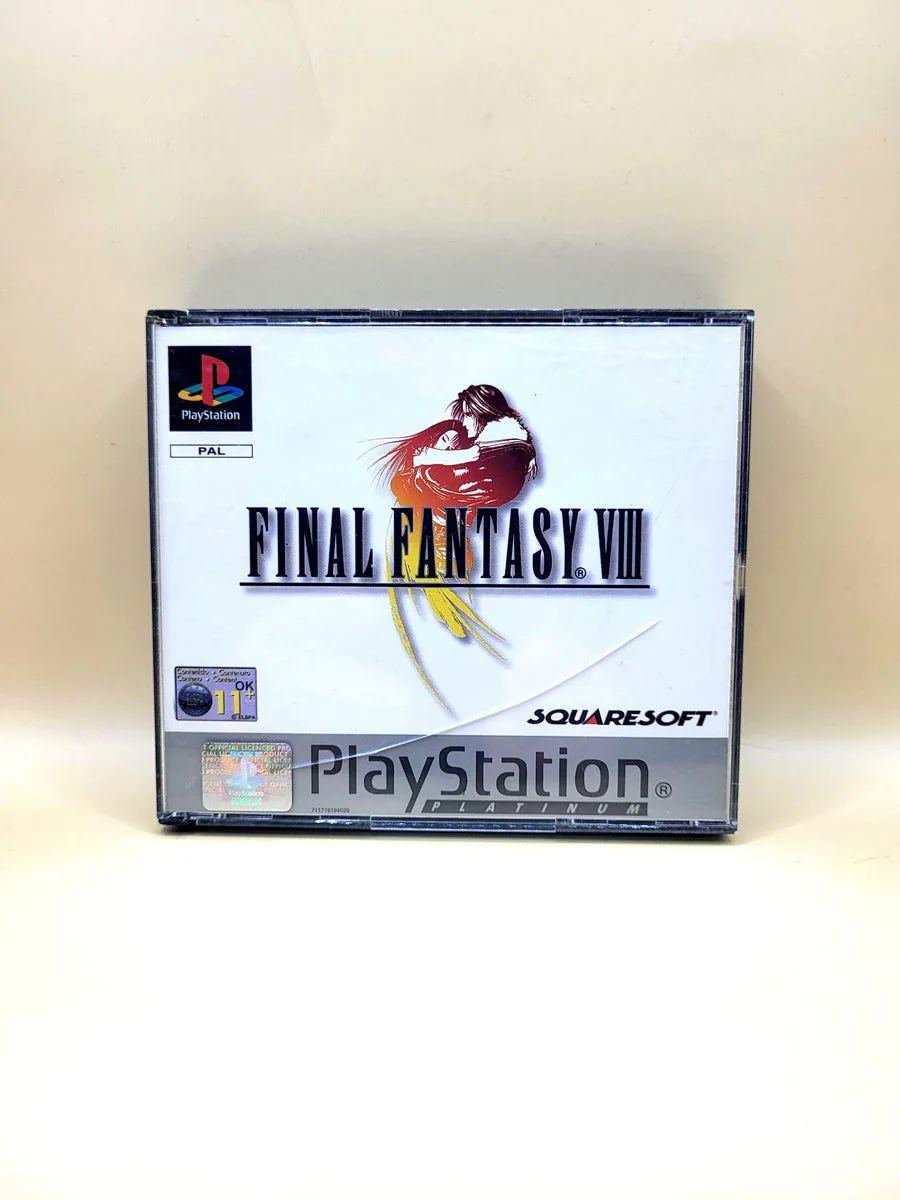
Final Fantasy VIII for PlayStation 1
Final Fantasy VIII for PlayStation 1 is a Japanese RPG following Squall Leonhart, a student at the Balamb Garden military academy. His training as a SeeD mercenary leads into a conflict with Galbadia and the sorceress Edea. Together with Zell, Quistis and Rinoa, among others, he travels through towns, training centres and occupied territories. Along the way, you experience events from Laguna's perspective, slowly connecting two life stories. Conversations, exams and missions give the opening hours a clear school routine.
The Junction system determines how you develop three active party members. You link Guardian Forces to characters and use their learned abilities to attach magic to stats such as strength or hit points. You collect spells through Draw from enemies and at special points; abilities can also turn items into magic. That stock serves both as a resource in battles and as a source of improved stats. As a result, you consider not just which spell to use, but also what that choice does to your preparation.
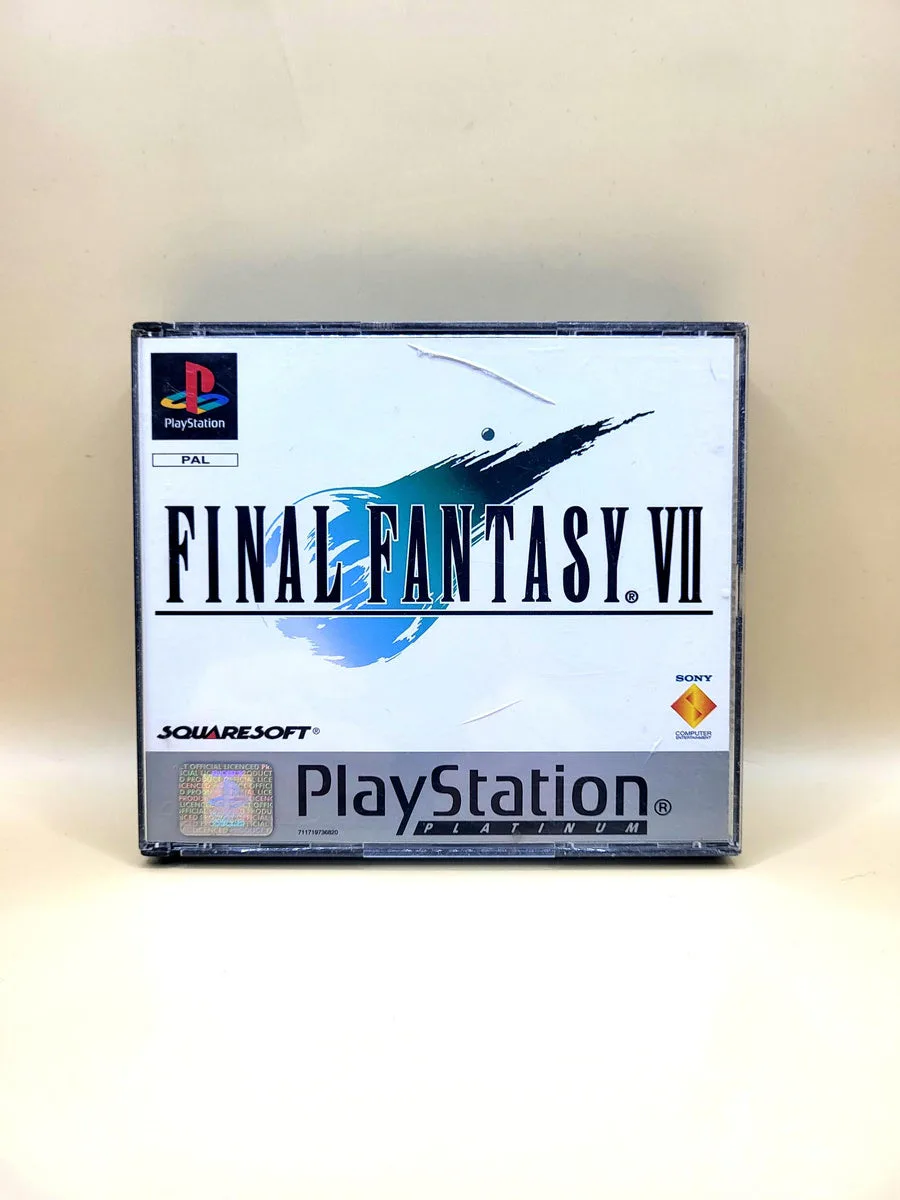
You choose battle commands when time gauges are full and can strengthen Squall's gunblade attack with a timed button press. Outside combat, you can play Triple Triad, the card game you can start with many people along the way. This is a single-player adventure with digital or analogue controls. You save manually to a PlayStation memory card at save points or on the world map. The four discs in this Platinum edition contain the original game, without the speed-up and battle assists of the later remaster.
Region and language
Our PlayStation 1 games are PAL editions and come with a Dutch or English box, unless stated otherwise. By default, you receive the version for the European market. We note it in the product details if the region is different or the box is in another language. In almost all cases, the game is playable at least in English, and often in the other five common European languages too.
Manual
The manual is missing from this copy of Final Fantasy VIII for PlayStation 1. That is why the product title says “No Manual”. You receive the game in its box, without the instruction booklet. This makes the contents clear before you order.
The original printed manual usually contains at least English and often around six European languages. The languages vary by edition; Dutch is not always included. This information describes the original booklet and does not mean that it comes with this copy. A copy with a manual is offered separately when available.
The history of Final Fantasy VIII
Square released Final Fantasy VIII for PlayStation in 1999, two years after the previous main entry. Yoshinori Kitase returned as director. The team retained the combination of pre-rendered backgrounds, three-dimensional figures and computer-animated films, but gave the characters more natural body proportions. The military academy provided a different setting from VII's industrial areas. Squall's training and his relationship with Rinoa also made personal development an important part of the worldwide struggle unfolding around them.
The changes went beyond the visuals. Looking back on the original development, Kitase explained that the team also wanted to refresh the RPG systems. SeeD rank was linked to a salary, for example, tying your income to your work as a mercenary. Guardian Forces, Draw and Junction changed how you build abilities. Triple Triad also gave collecting and card-playing a place in that development. The manual therefore devotes considerable space to linking powers and transferring them between party members.
Animation production changed too: according to Kitase, the team used motion capture to record movements for the first time. Movie scenes and playable sections had to fit the same characters. The original release spread the journey over four CD-ROMs. The later Platinum packaging brought that same adventure back to shops. This version should be distinguished from 2019's Final Fantasy VIII Remastered, which added sharper character models and extra gameplay assists, among other features; those additions are not included on these PlayStation discs.
Similar games for PlayStation 1
Final Fantasy VII shares VIII's time gauges, three active party members and alternation between exploration and computer-animated films. Character development works differently: VII uses Materia in equipment, whereas VIII links Guardian Forces and collected spells to stats. In VII, you follow Cloud from an act of resistance against Shinra. VIII begins with Squall's training and paid SeeD missions. Both reward distributing abilities across your party, but you manage different resources to do so.
Final Fantasy VI also combines individual battle commands with magical powers distributed across your party. Magicite lets characters learn spells there; VIII makes the amount of available magic itself part of their stats. VI shows sprites and four active fighters, whereas VIII uses three-dimensional figures and a party of three. VI's larger cast of protagonists receives several separate storylines. VIII more often keeps the focus on Squall and Rinoa, with Laguna as an important second perspective.
Final Fantasy IX shares VIII's long PlayStation journey, computer-animated films and battle time gauges. It uses four active party members, however, with clearer fixed roles, such as Vivi's black magic and Zidane's thief abilities. You learn many abilities through equipped gear instead of Junction and Draw. Its world revolves more around castles, theatre and fantasy creatures. VIII starts from its military schools and mercenary organisation, giving the same combination of conversations and battles a different atmosphere.
Like VIII, Grandia lets you gather allies, explore a world and select menu commands when characters get their turn. Its battle system, however, makes movement and interrupting enemy actions much more important. VIII chiefly demands attention to linking magic and Guardian Forces beforehand. Justin begins Grandia as a curious adventurer seeking ancient civilisations. Squall receives his first assignments from a school for mercenaries, producing a different kind of group life and responsibility.
The Legend of Dragoon also combines three active party members, major movie sequences and a journey across four PlayStation discs. Its Addition system requires successive timed button presses to extend normal attacks. VIII uses timing for Squall's gunblade, but places much more character development in its Junction menus. Dragoons also transform into warriors with dragon powers themselves; Guardian Forces are powers you link to characters. In both, good preparation affects how many options are available during a battle.