This product is like new. At NexWave Games, like new means:
Additionally, all discs at NexWave Games are carefully inspected and assessed for quality. When discs arrive, we do not accept any that are so badly damaged that they are unlikely to work. We only accept discs with light scratches at most. Discs with scratches are then treated in our professional disc repair machine. By warming the disc and polishing it with soft brushes, these machines can remove a very thin layer from the disc. This removes the layer containing surface scratches and improves the disc’s readability. This ensures the disc works properly, even on consoles with ageing lasers that have difficulty reading games! Great news for the player.
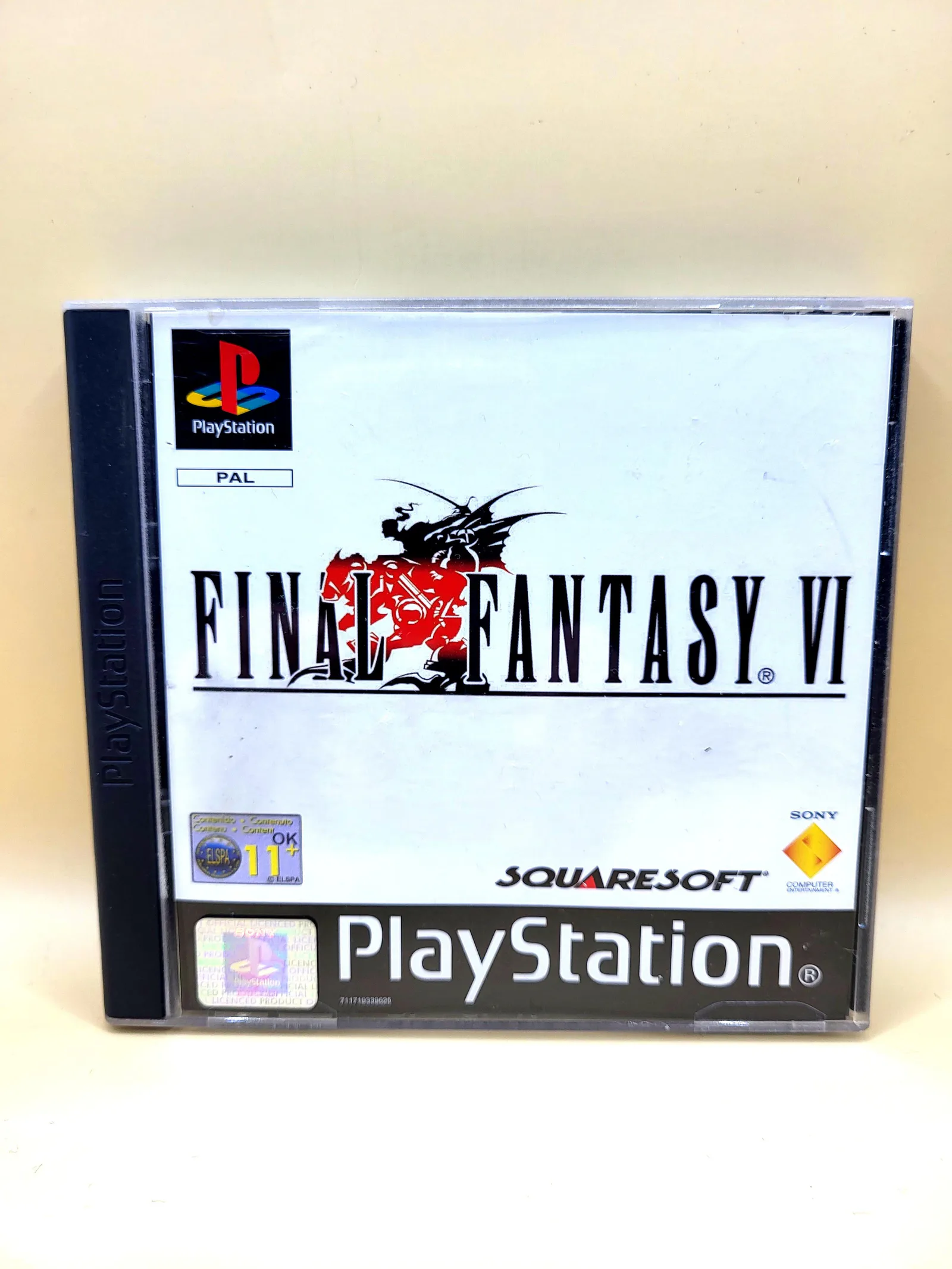
Final Fantasy VI for PlayStation 1
Final Fantasy VI for PlayStation 1 is a Japanese RPG set in a world where steam engines and forgotten magic meet again. You follow Terra and a growing group of allies who oppose the Empire. A frozen Esper sets off a journey through mining towns, castles and abandoned research facilities. The different characters bring their own pasts with them, so the story regularly shifts perspective. You talk to residents, search buildings and choose the equipment your party wears.
In battles, you control up to four party members through menu commands as their time gauges fill. Their individual abilities give each a clear role: Locke can steal, Edgar uses tools and Sabin performs martial arts techniques. Later, you learn spells through Magicite, allowing you to supplement those fixed traits. You decide who heals, which enemy needs to go first and when a powerful Esper enters the fight. Weapons and Relics also change the options available to your party.
You explore the world alone using a standard PlayStation controller and the directional buttons. During battles, a second player can control their assigned party members through the Multi setting; this uses two controllers, without a Multitap. You can save to a PlayStation memory card through Save on the world map and at save points. Temporary Memo data disappears when you turn off or reset the console, so it does not replace permanent saving. This PlayStation version retains the two-dimensional game and adds computer-animated sequences; it is not the later Pixel Remaster.
Region and language
Our PlayStation 1 games are PAL editions and come with a Dutch or English box, unless stated otherwise. By default, you receive the version for the European market. We note it in the product details if the region is different or the box is in another language. In almost all cases, the game is playable at least in English, and often in the other five common European languages too.
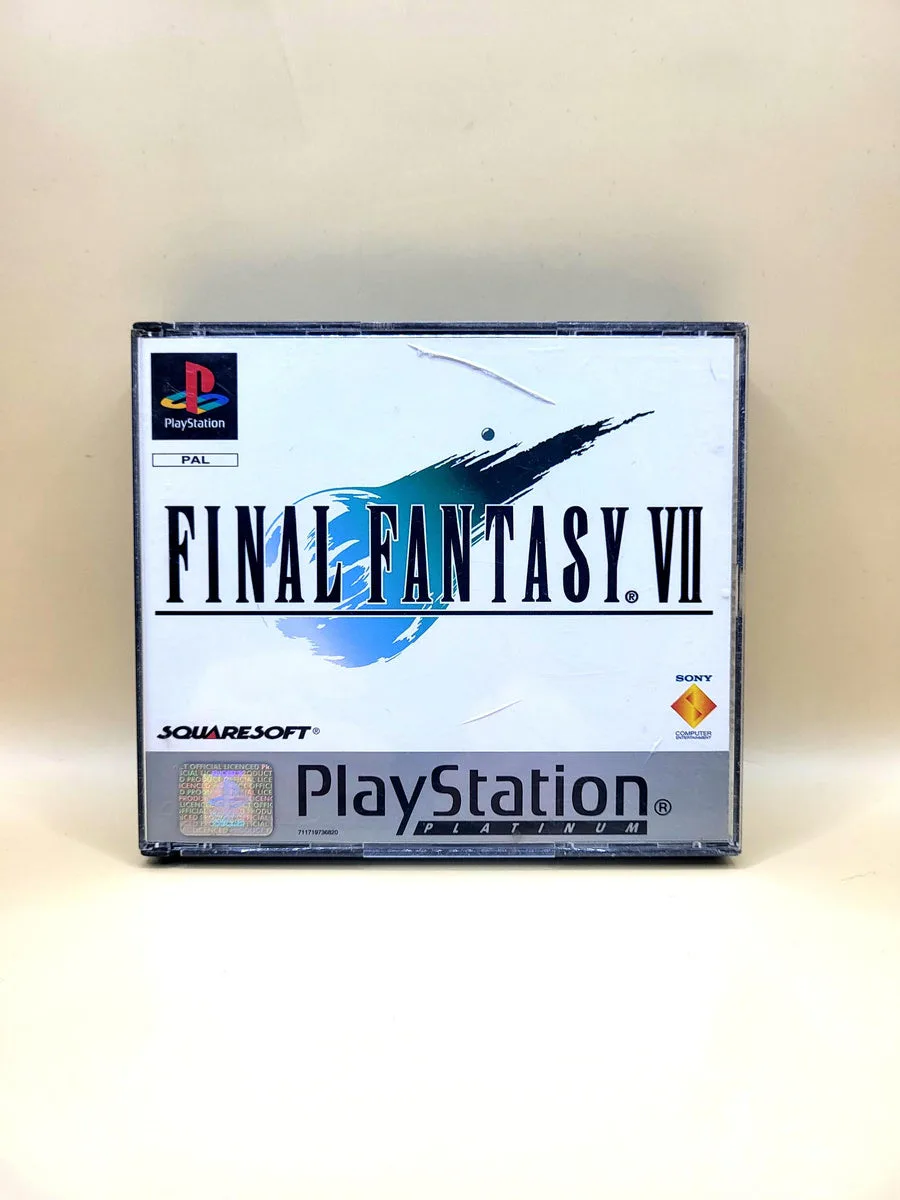
This edition includes the full Final Fantasy VI game for PlayStation 1 and a separate bonus demo of Final Fantasy X. That demo requires a PlayStation 2; it does not work on PlayStation 1 and is not the full Final Fantasy X game.
Manual
Final Fantasy VI for PlayStation 1 includes the manual unless the product title states otherwise. If the booklet is missing, the title says “No Manual”. This lets you see before ordering whether the game comes with a manual.
The manuals included with our games usually contain at least English and often around six European languages. The exact languages vary by edition, so Dutch is not always included. The booklet explains the controls and the main rules. You can use it to check how to control the game, which actions are available and how its different features work.
The history of Final Fantasy VI
Square originally made Final Fantasy VI for the Super Famicom in 1994. It was the last numbered main entry of that generation before the series switched to three-dimensional characters with Final Fantasy VII. Its world of machinery and magic grew partly from ideas by Tetsuya Nomura and a colleague. Nomura designed monsters, among other things, and worked on battle visuals. Within the small team, staff could also suggest ideas for the story and character backgrounds.
In a Square Enix retrospective, Nomura describes how Hironobu Sakaguchi selected these proposals and others developed them further. Shadow and Setzer, for example, grew from ideas that had partly originated during the previous game. This brought several personal stories together. The party is more than a collection of people pursuing the same goal: family ties, loss and loyalty each find their own place between the struggle against the Empire and journeys around the world.
The European PlayStation release followed in 2002. It brought the older sprite-based adventure to an audience that had often discovered the series through VII or VIII. New computer-animated sequences showed some characters beyond their original pixel forms, while exploration and menu-based battles remained two-dimensional. The European package originally combined Final Fantasy VI with a separate Final Fantasy X demo for PlayStation 2. The full sixth game itself remained a title for the original PlayStation.
Similar games for PlayStation 1
Final Fantasy VII shares VI's battle time gauges and the distribution of magical abilities across your party. Materia determines which spells and commands a character can use there, whereas VI combines individual skills with learned Esper magic. VII uses three-dimensional characters and begins in the industrial city of Midgar. VI retains sprites and more frequently divides its story between different protagonists. Both connect personal troubles to a much larger threat to their world.
Final Fantasy VIII also lets you link magical powers to party members, but handles this very differently. Guardian Forces open up ways to attach collected spells directly to stats such as strength and hit points. In VI, you learn magic through Magicite, while Edgar's tools and Sabin's techniques remain distinctive personal commands. VIII mainly follows Squall and his training as a SeeD mercenary. VI devotes more separate storylines to its larger cast of protagonists.
Final Fantasy IX connects with VI through recognisable roles for thieves, healers and black mages, alongside a world of castles and unusual creatures. Both allow up to four party members in normal battles. IX, however, uses three-dimensional characters and teaches many abilities through equipped gear. VI builds its progression around personal commands and Magicite. Zidane's theatre troupe also gives IX a different opening from Terra's involvement with the Empire's machines.
Suikoden for PlayStation 1 also revolves around resistance to an empire and the people who join it. Gathering allies takes an even larger role: you build up a headquarters and seek the 108 Stars of Destiny. VI works with a smaller cast whose personal backgrounds receive more extensive individual treatment. Suikoden also uses conventional turns and six fighters in the party; in VI, filled time gauges determine when you issue commands.
Like VI, Grandia combines a long journey, new allies and a threatening military power. Justin sets out from curiosity about ancient civilisations, whereas Terra becomes caught up early in a struggle over magic. During Grandia's battles, characters move around the battlefield and you can interrupt enemy actions. VI keeps party formation much more fixed and mainly asks you to weigh up menu commands. The emphasis on discovery rather than bringing personal stories together also changes the feeling of the journey.