This product is in good condition. At NexWave Games, good means:
Additionally, all discs at NexWave Games are carefully inspected and assessed for quality. When discs arrive, we do not accept any that are so badly damaged that they are unlikely to work. We only accept discs with light scratches at most. Discs with scratches are then treated in our professional disc repair machine. By warming the disc and polishing it with soft brushes, these machines can remove a very thin layer from the disc. This removes the layer containing surface scratches and improves the disc’s readability. This ensures the disc works properly, even on consoles with ageing lasers that have difficulty reading games! Great news for the player.
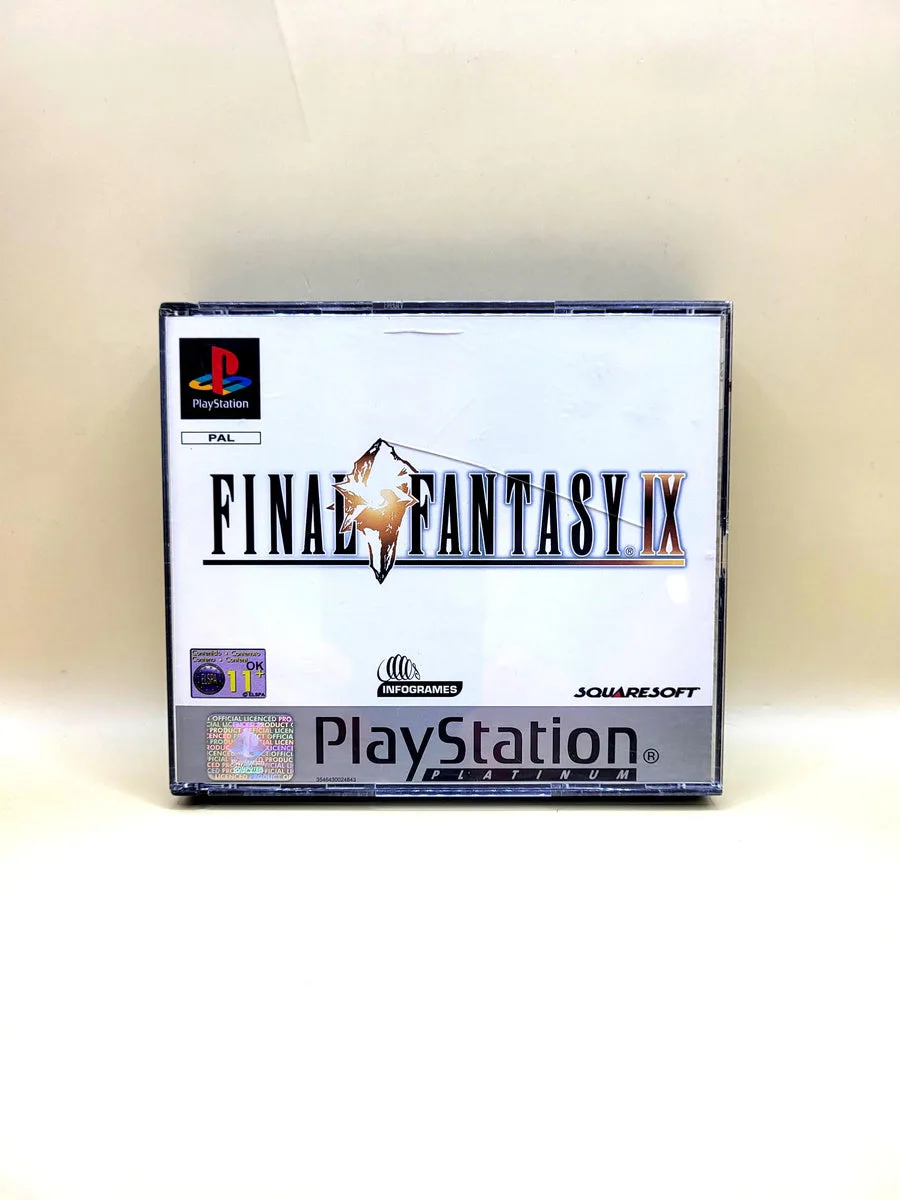
Final Fantasy IX for PlayStation 1
Final Fantasy IX for PlayStation 1 begins with a theatre troupe planning to kidnap Princess Garnet. As the thief Zidane, you become caught up in a war in which the young black mage Vivi and the dutiful knight Steiner also search for their place. You travel through towns, forests and dungeons, talk to residents and collect equipment. The painted backgrounds give each location its own details, from busy shopping streets to abandoned ruins. Along the way, Active Time Events show what other party members are experiencing at that moment.
Four characters can take part in battles at once. Their time gauges fill before you choose an attack, spell or item. Vivi uses black magic, Garnet handles healing and summons, while Zidane can steal items. Weapons and armour contain abilities that you learn to keep with earned Ability Points. This means an older piece of equipment can still be useful. The Trance gauge temporarily opens up extra options after a character has taken enough damage, but you cannot freely save that state for later.
Alongside the story, you play Tetra Master with collected cards and search for treasure with chocobos. You save progress at certain moogles and through a summoned moogle on the world map; a save file uses one memory card block. The adventure is built around one player. Through Battle Control, you can assign battle characters to a second standard controller, without a Multitap. That second player controls only assigned actions during battles, not the world independently or an adventure of their own.
Region and language
Our PlayStation 1 games are PAL editions and come with a Dutch or English box, unless stated otherwise. By default, you receive the version for the European market. We note it in the product details if the region is different or the box is in another language. In almost all cases, the game is playable at least in English, and often in the other five common European languages too.
Manual
Final Fantasy IX for PlayStation 1 includes the manual unless the product title states otherwise. If the booklet is missing, the title says “No Manual”. This lets you see before ordering whether the game comes with a manual.
The manuals included with our games usually contain at least English and often around six European languages. The exact languages vary by edition, so Dutch is not always included. The booklet explains the controls and the main rules. You can use it to check how to control the game, which actions are available and how its different features work.
The history of Final Fantasy IX
Square released Final Fantasy IX in Japan in 2000; the European PlayStation edition followed in 2001. After VII and VIII, it was the third new main instalment for Sony's first console. Director Hiroyuki Ito and scenario designer Kazuhiko Aoki later described how the team discussed returning to the origins of Final Fantasy early on. Castles, black mages, crystals and clearly recognisable party roles regained an important place. The story nevertheless remained self-contained: knowledge of previous instalments is not required.
Looking back did not mean the team simply repeated an old game. Ito explained that different staff members gave those origins their own meaning. Questions about identity, kindness and the influence of circumstances found their way into the story. Designer Toshiyuki Itahana linked the small body proportions and broad gestures to the recurring theatre motif. He also worked on the pre-rendered backgrounds, where colour and light helped players see where they could walk and which details mattered.
Development involved staff in Japan and Hawaii. Aoki recalled that dividing growing amounts of data across four discs required attention until late in the process. Nobuo Uematsu composed the music, with recurring melodies and individual themes for characters and locations. Final Fantasy IX thus concluded the main series on the original PlayStation. The Platinum reissue retains the same game design; speed boosts, autosaving and other aids from later ports are not automatically part of this four-disc version.
Similar games for PlayStation 1
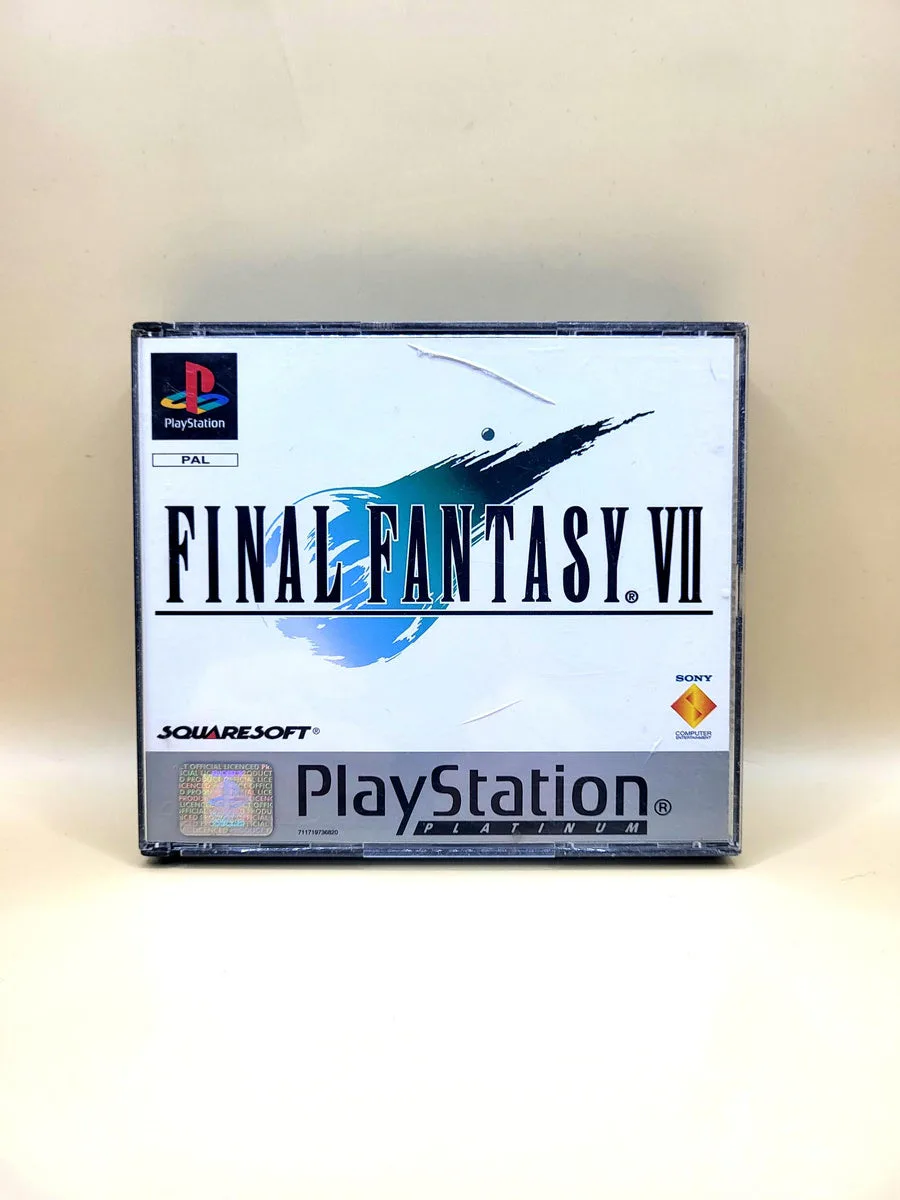
Final Fantasy VII also combines a journey around the world, party battles with time gauges and movie sequences on PlayStation 1. Cloud travels through a world of power plants and industrial cities, whereas IX draws more heavily on kingdoms and fairy-tale locations. In VII, you distribute magic through Materia fitted into equipment. IX links abilities to fixed character roles and what you learn from equipment. You therefore put your party together in a different way here.
Final Fantasy VIII shares the long storyline, four discs and alternation between exploration and separate battles. Squall's party uses Junctions, however, linking stocks of spells to attributes. In IX, you learn abilities through equipment and each character retains a more clearly defined profession. Both have a card game: VIII uses Triple Triad, IX Tetra Master. The rules and the way cards decide a duel differ, so experience with one does not explain every choice in the other.
Like IX, the PlayStation version of Final Fantasy VI has four party members in battle and different personal abilities. VI uses two-dimensional characters and a world where imperial machines clash with magic. Magicite lets many characters learn new spells. IX shows polygonal characters against pre-rendered backgrounds and ties magical roles more closely to specific party members. Both give supporting characters room to develop, but their equipment and progression work differently.
The Legend of Dragoon also offers a long fantasy journey with a defined group of heroes and a story spanning several PlayStation discs. During normal attacks, you press buttons at the right moments for extra hits through Additions. In IX, you choose commands once the time gauge is full, without such fixed button sequences for normal attacks. Dragoon transformations and IX's Trance temporarily grant extra power, but are built up and used differently within their respective battle systems.
Like Final Fantasy IX, Grandia follows a travelling party that discovers new friends, ancient civilisations and larger conflicts along the way. In Grandia, you can already see many enemies moving around and interrupt their attacks by planning carefully on the shared action bar. IX generally uses random encounters and individual time gauges. Grandia develops weapons and magic through use; IX bases ability learning on worn equipment and earned Ability Points.