This product is like new. At NexWave Games, like new means:
Additionally, all discs at NexWave Games are carefully inspected and assessed for quality. When discs arrive, we do not accept any that are so badly damaged that they are unlikely to work. We only accept discs with light scratches at most. Discs with scratches are then treated in our professional disc repair machine. By warming the disc and polishing it with soft brushes, these machines can remove a very thin layer from the disc. This removes the layer containing surface scratches and improves the disc’s readability. This ensures the disc works properly, even on consoles with ageing lasers that have difficulty reading games! Great news for the player.
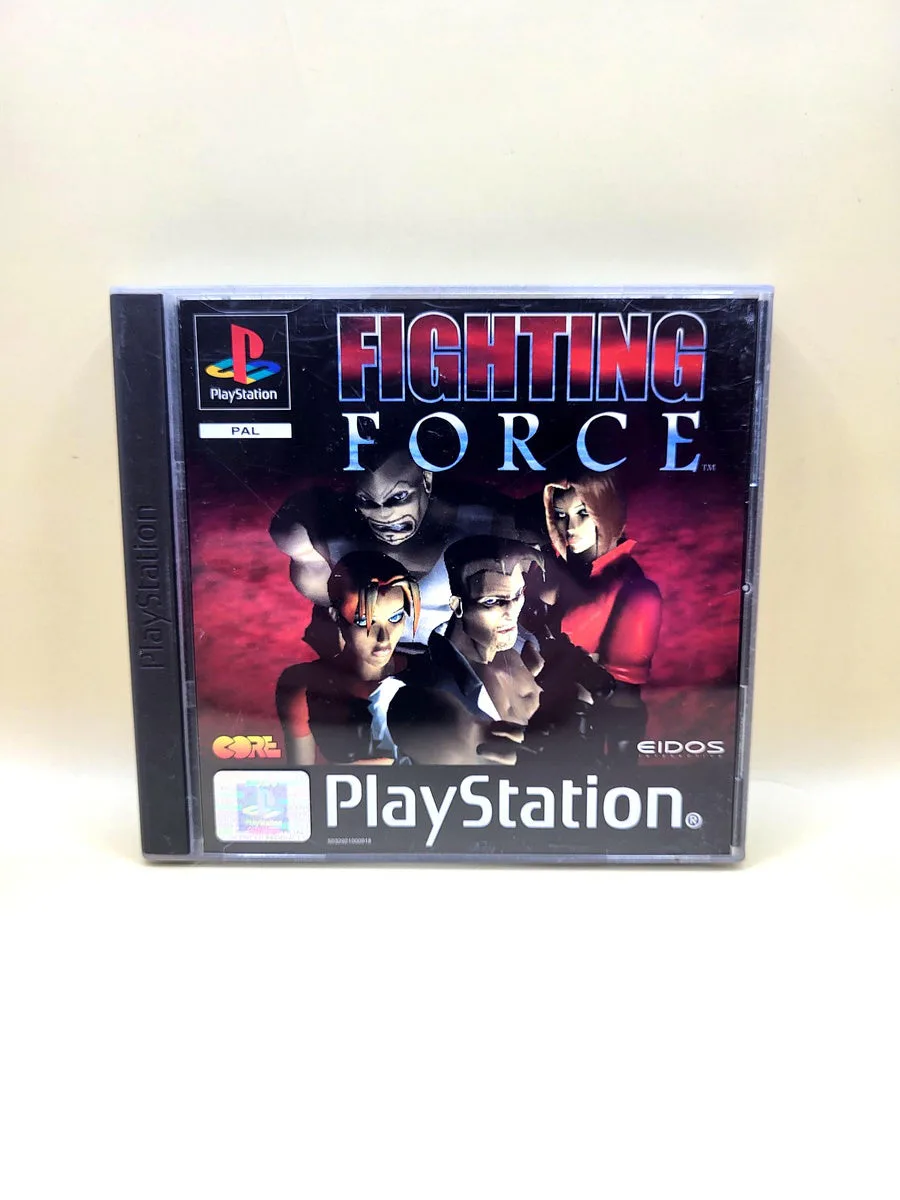
Fighting Force for PlayStation 1
Fighting Force for PlayStation 1 is a three-dimensional beat 'em up in which you defeat groups of street fighters with fists, kicks and anything you can lift. You choose Hawk Manson, Mace Daniels, Alana McKendrick or Ben ‘Smasher’ Jackson. Their strength and speed differ, so a heavy blow with Smasher feels different from a quick attack with Alana. You travel through streets, buildings and other enclosed fighting areas to stop Dr. Dex Zeng's plans.
A bin, car tyre or loose object soon becomes another weapon. You smash objects to find useful items, grab opponents and throw them aside when you are surrounded. Firearms temporarily give you greater range, but combinations and positioning remain important up close. You can move around enemies rather than only along a horizontal line. At certain points you choose the next route, so a second session can lead you through different fights.
You play alone or with one other person simultaneously on the same screen. Cooperative play requires two controllers; a Multitap is not required. Both players choose different characters and divide the enemies between them. The directional buttons move your fighter, while separate buttons handle punching, kicking, jumping and grabbing. The options menu lets you save settings to a PlayStation memory card. The emphasis is on reading groups of enemies and making use of the clutter around you.
Region and language
Our PlayStation 1 games are PAL editions and come with a Dutch or English box, unless stated otherwise. By default, you receive the version for the European market. We note it in the product details if the region is different or the box is in another language. In almost all cases, the game is playable at least in English, and often in the other five common European languages too.
Manual
Fighting Force for PlayStation 1 includes the manual unless the product title states otherwise. If the booklet is missing, the title says “No Manual”. This lets you see before ordering whether the game comes with a manual.
The manuals included with our games usually contain at least English and often around six European languages. The exact languages vary by edition, so Dutch is not always included. The booklet explains the controls and the main rules. You can use it to check how to control the game, which actions are available and how its different features work.
The history of Fighting Force
Core Design made Fighting Force, and Eidos Interactive released it for PlayStation in 1997. The studio was also working on Tomb Raider during this period, but here it chose short street fights rather than large puzzle spaces. Four distinctive fighters, weapons you can pick up and cooperative play connect the game to older beat 'em ups. The move to polygons gave players more room to circle opponents and made everyday objects part of the fighting.
Programmer Sarah Jane Avory later explained how her enjoyment of Streets of Rage influenced the first ideas. She initially worked with artist Roberto Cirillo on a three-dimensional take on that kind of action. A possible connection with Sega's series was discussed, but Fighting Force ultimately received its own characters and name. The planned Saturn version disappeared during development. According to Avory, attention shifted to PlayStation, which she programmed herself after previously working mainly on Sega hardware.
That background explains the combination of classic fighting rules and a three-dimensional playfield. You still clear successive groups, while cars and street furniture provide space and opportunities. Fighting Force 2 followed in 1999, sending Hawk alone on larger infiltration missions and removing cooperative play. The original PlayStation release preserves the immediate teamwork of this first instalment. Features such as rewind and freely saved game states from the much later Fighting Force Collection are not part of this original disc.
Similar games for PlayStation 1
Fighting Force 2 for PlayStation 1 again uses Hawk and likewise lets you combine fists with weapons you find. The sequel builds larger missions around laboratories and company buildings. You control only Hawk and do not get a cooperative campaign for two players. Fighting Force puts more weight on choosing between four fighters and defeating groups together. The same interest in destructible objects thus changes from a shared street brawl into a personal infiltration assignment.
Die Hard Trilogy for PlayStation 1 shares the modern action setting and the elimination of groups of enemies. Its first part mainly uses firearms inside a building, while the other parts feature shooting along a fixed route and driving. Fighting Force retains one cohesive beat 'em up, with greater emphasis on grabbing, kicking and using objects directly from the surroundings. Rather than switching between three types of action, you build on the same street-fighting rules.
Gekido: Urban Fighters for PlayStation 1 also uses street fights, different characters and three-dimensional backgrounds. Its visual style is more overtly based on comics and exaggerated movement. Fighting Force keeps its characters and streets closer to a rough action film and makes loose street furniture an important part of your approach. In both games you must prevent groups from trapping you, but the presentation and the way you link attacks feel different.
In its regular fights, Tekken 3 for PlayStation 1 centres on one opponent, rounds and precise combinations. The extra Tekken Force section does explore fighting groups, but is a separate addition to the tournament. Fighting Force builds its entire adventure around such group battles. You walk through successive areas, pick up weapons and can complete the campaign together. Tekken 3 therefore asks for more attention to individual techniques, and Fighting Force to the whole situation around you.
Crisis Beat for PlayStation 1 also lets you take on groups of opponents with a chosen fighter. It uses a passenger ship as its recurring setting and links fights to its own system for pinning down enemies. Fighting Force chooses varied urban locations and loose objects you can lift or smash. Both games translate the classic brawl into three dimensions, but give you different means of breaking up a group and creating space.