This product is in good condition. At NexWave Games, good means:
Additionally, all discs at NexWave Games are carefully inspected and assessed for quality. When discs arrive, we do not accept any that are so badly damaged that they are unlikely to work. We only accept discs with light scratches at most. Discs with scratches are then treated in our professional disc repair machine. By warming the disc and polishing it with soft brushes, these machines can remove a very thin layer from the disc. This removes the layer containing surface scratches and improves the disc’s readability. This ensures the disc works properly, even on consoles with ageing lasers that have difficulty reading games! Great news for the player.
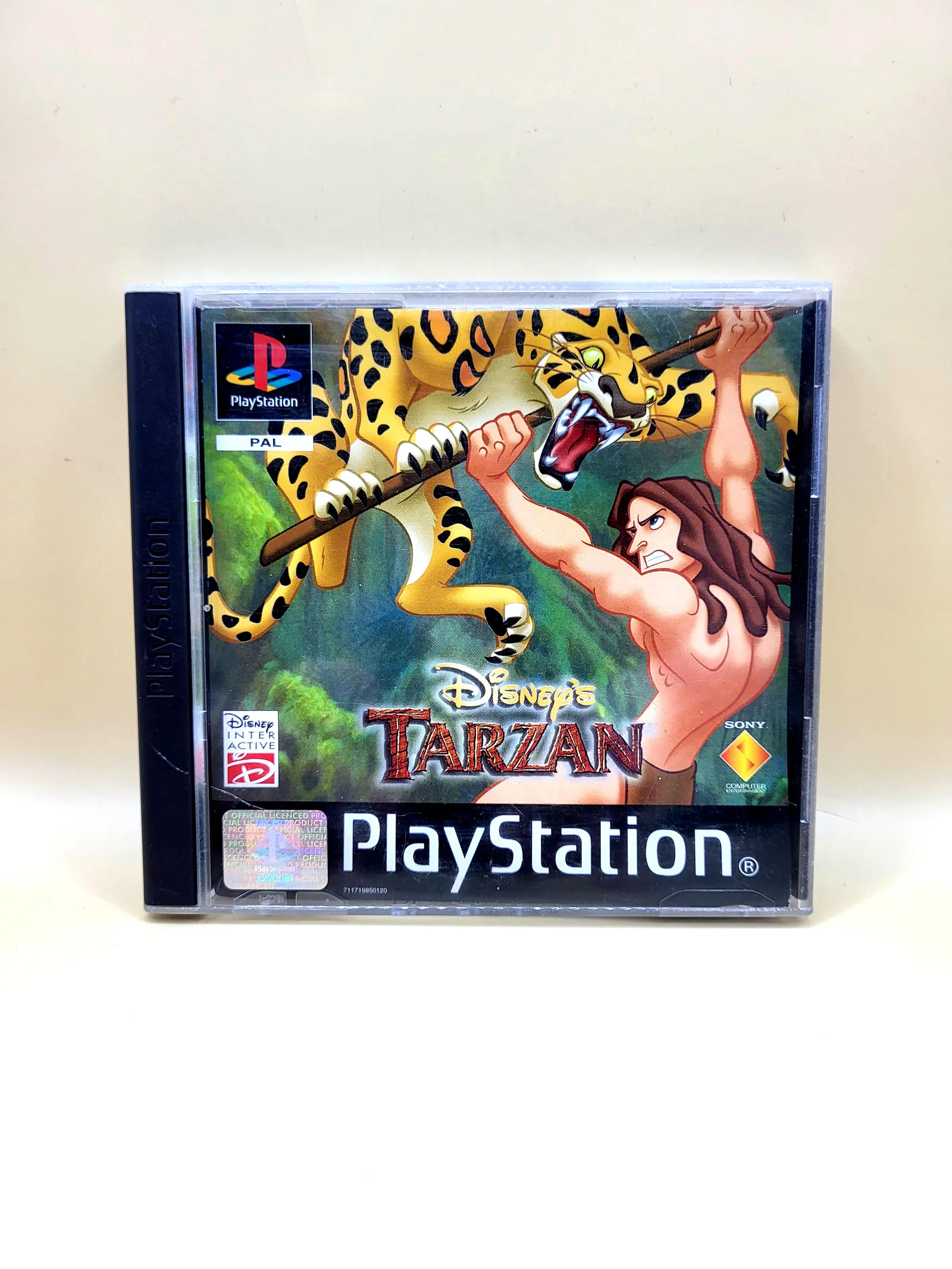
Disney's Tarzan for PlayStation 1
Disney's Tarzan for PlayStation 1 follows the jungle hero from his childhood among the gorillas to his confrontation with hunter Clayton. You run over tree roots, climb vines and jump between branches while animals and traps block your path. Most sections are viewed from the side, but chases and sliding sequences change the perspective. During an elephant stampede, for example, you must dodge obstacles while the herd comes after you. Later you surf along branches and meet Jane, Terk and Tantor.
Tarzan throws fruit to keep enemies at a distance. Yellow fruit never runs out; you must collect the stronger colours and save them for difficult opponents. A ground pound reveals hidden items and passages. Bananas restore your energy and tokens earn extra lives. Look above and below the main path too: the letters of TARZAN unlock movie clips, and four sketch pieces grant access to a bonus area. You can revisit completed areas to search for missed items.
You play this platform adventure alone with one standard PlayStation controller; a second player cannot join in. The thirteen story areas alternate ordinary jumping routes with chases and boss battles, including the duel with Sabor the leopard. After a story area, you can save your progress to a PlayStation Memory Card, which is required separately. A bonus area does not offer a separate save point. This lets you follow the journey over several sessions without starting again as young Tarzan every time.
Region and language
Our PlayStation 1 games are PAL editions and come with a Dutch or English box, unless stated otherwise. By default, you receive the version for the European market. We note it in the product details if the region is different or the box is in another language. In almost all cases, the game is playable at least in English, and often in the other five common European languages too.
Manual
The manual is missing from this copy of Disney's Tarzan for PlayStation 1. That is why the product title says “No Manual”. You receive the game in its box, without the instruction booklet. This makes the contents clear before you order.
The original printed manual usually contains at least English and often around six European languages. The languages vary by edition; Dutch is not always included. This information describes the original booklet and does not mean that it comes with this copy. A copy with a manual is offered separately when available.
The history of Disney's Tarzan
Eurocom developed Disney's Tarzan for PlayStation in 1999, around the release of Disney's animated film of the same name. The British studio had already made Disney games, including Hercules and Maui Mallard. Tarzan continued that collaboration with three-dimensional characters and a route that mostly retained the side-scrolling structure of a classic platform game. Sony published the PlayStation release. The film supplied the game's characters, jungle setting and development from young foundling to adult protector of the gorillas.
During development, Eurocom received Disney character model sheets and hand-drawn examples of their movements. These allowed the designers to translate poses, proportions and animation into the console's more limited visuals. Disney Interactive reviewed work-in-progress builds throughout the project. The visual design therefore involved more than tracing images from the finished film: the team worked with supplied design material and built playable movements around it. Sliding along branches gained its own place in the action alongside running and swinging.
The game also linked the film to replaying. Collected letters made movie clips available, while sketch pieces opened bonus routes. Searching through a familiar area thus became part of the adaptation alongside following the storyline. Releases for other systems appeared under the same name too. The Game Boy Color version came from Digital Eclipse and used a different technical approach. This PlayStation version is Eurocom's original console adventure, not the later Tarzan Freeride or one of the handheld adaptations.
Similar games for PlayStation 1
Disney's Hercules for PlayStation 1 was also made by Eurocom and turns a Disney film into jumping action with familiar characters. Both combine side-on routes with sections where you move towards the background or the camera. Hercules mainly uses his strength and sword against mythological monsters. Tarzan more often has you climbing vines, throwing fruit and sliding along branches. The similarity lies in following film scenes; the movements clearly suit a different hero and setting.
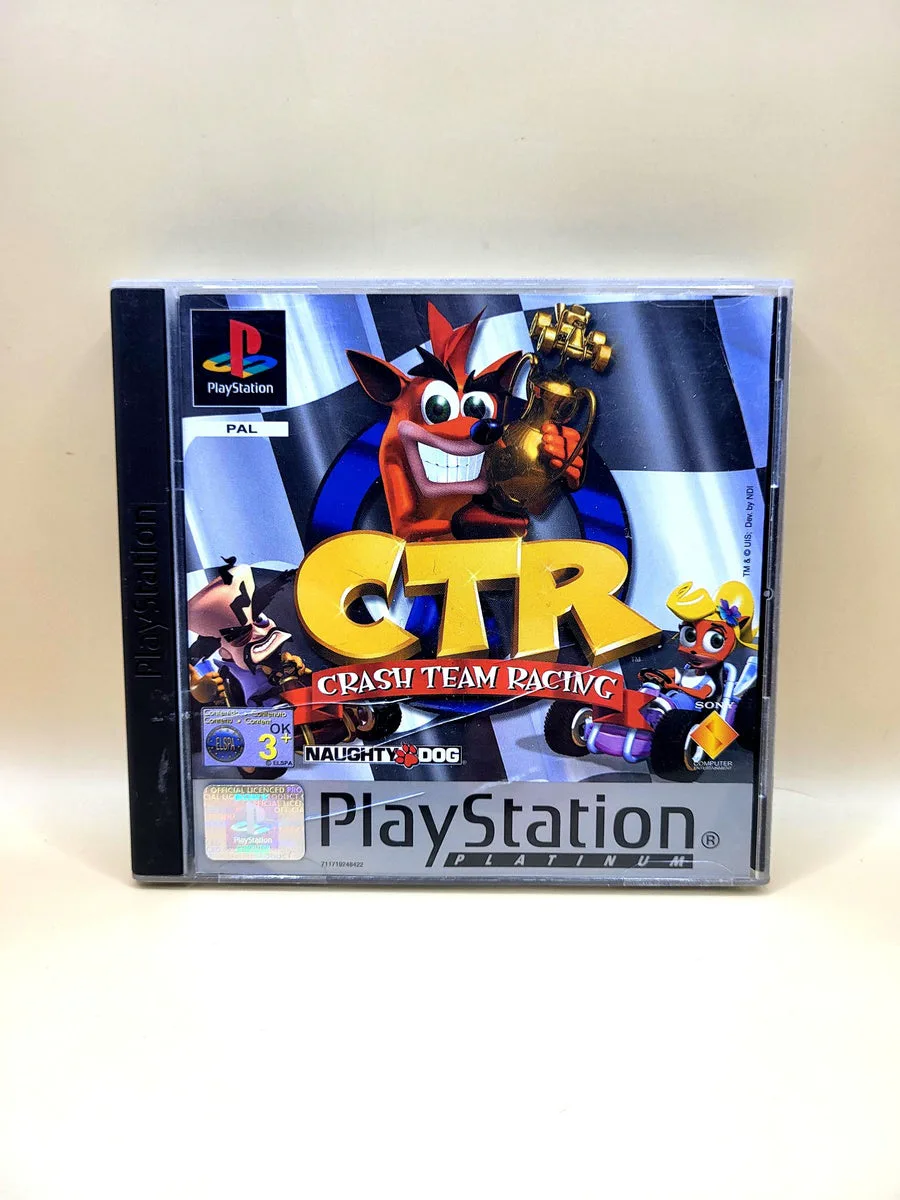
Crash Bandicoot on PlayStation 1 shares the alternation between side views, routes into the screen and fast chases. In both, you must judge where you can land and spot items away from the straight path. Crash centres on crates, Wumpa fruit and his spin attack. Tarzan uses fruit as a projectile, recovers with bananas and swings on vines. His film story also progresses from childhood to adulthood, whereas Crash reaches successive areas along his island route.
Spyro the Dragon for PlayStation 1, like Tarzan, rewards searching for items on high ledges and behind the obvious main route. However, Spyro can run freely through spacious three-dimensional areas and glide over long distances. Tarzan usually follows a more clearly defined side-on route, with climbing sections and separate sliding sequences. Spyro fights enemies with fire or a horn charge; Tarzan keeps his distance by throwing fruit. The choice is therefore mainly between spatial exploration and a more directed film journey.
Rayman on PlayStation 1 also calls for precise jumps, searching side paths and revisiting familiar areas. Its fully two-dimensional world uses drawn characters, floating platforms and an expanding range of abilities. Tarzan displays three-dimensional characters and alternates its side view with other camera angles. Rayman's floating fist takes the place of the jungle hero's fruit throwing and swinging. Both offer collecting beyond the main route, but Rayman builds its obstacles around a different way of moving.
Toy Story 2: Buzz Lightyear to the Rescue! for PlayStation 1 also turns familiar film scenes into playable collecting areas. Buzz searches for Pizza Planet tokens by completing tasks in more open three-dimensional locations, such as Andy's house. Tarzan more often guides you along a fixed route with hidden letters and sketch pieces. Both encourage returning for missed rewards. Whereas Buzz uses his laser and various gadgets, Tarzan mainly relies on climbing, jumping, throwing fruit and direct contact with the jungle.