This product is like new. At NexWave Games, like new means:
Additionally, all discs at NexWave Games are carefully inspected and assessed for quality. When discs arrive, we do not accept any that are so badly damaged that they are unlikely to work. We only accept discs with light scratches at most. Discs with scratches are then treated in our professional disc repair machine. By warming the disc and polishing it with soft brushes, these machines can remove a very thin layer from the disc. This removes the layer containing surface scratches and improves the disc’s readability. This ensures the disc works properly, even on consoles with ageing lasers that have difficulty reading games! Great news for the player.
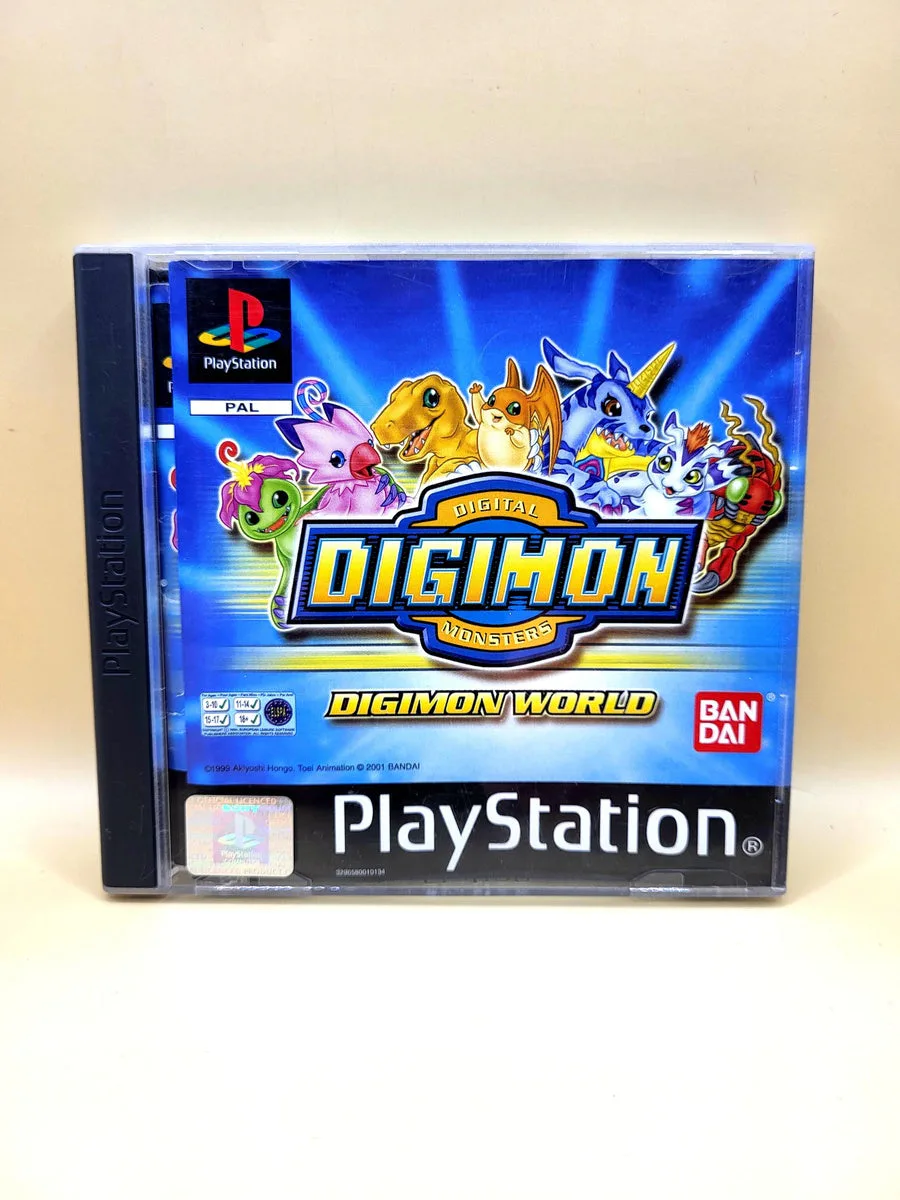
Digimon World for PlayStation 1
In Digimon World for PlayStation 1, you arrive on File Island, where Jijimon asks you to bring the missing inhabitants back to File City. You travel through forests, caves and other areas with one Digimon partner. Along the way, you meet creatures willing to live in the city again after a battle or completed task. Their return brings new shops, services and other facilities that help you prepare for your next exploration.
Your partner needs food, sleep and toilet visits. Training improves attributes such as strength and intelligence, but takes time and can cause tiredness. Care, weight and developed attributes influence which Digimon he becomes. In battles, your partner fights independently while you issue available commands or use items. A Digimon does not live forever: at the end of his life, a new generation begins from a Digitama. The reason for his disappearance influences what that successor inherits.
You play the adventure alone using the directional buttons on an ordinary PlayStation controller. When your partner goes to sleep, you can manually save your progress to a PlayStation memory card. For separate Competition Battle matches with two players on the same console, you need two controllers and a memory card containing previously registered Digimon. You register them at the Save Machine in Jijimon's house. These are separate matches; you do not explore File Island together.
Region and language
Our PlayStation 1 games are PAL editions and come with a Dutch or English box, unless stated otherwise. By default, you receive the version for the European market. We note it in the product details if the region is different or the box is in another language. In almost all cases, the game is playable at least in English, and often in the other five common European languages too.
Manual
Digimon World for PlayStation 1 includes the manual unless the product title states otherwise. If the booklet is missing, the title says “No Manual”. This lets you see before ordering whether the game comes with a manual.
The manuals included with our games usually contain at least English and often around six European languages. The exact languages vary by edition, so Dutch is not always included. The booklet explains the controls and the main rules. You can use it to check how to control the game, which actions are available and how its different features work.
The history of Digimon World
Bandai released Digimon World for PlayStation in Japan in 1999. The game built on Digital Monster, the portable electronic pet that combined caring and fighting. The first Digimon World was already in development before the animated series entered production. Producer Kazumasa Habu later explained that the teams behind the LCD toy and the PlayStation game worked on the world together. The island was therefore not simply a playable retelling of episodes from the television series.
On PlayStation, caring for a creature acquired a visible environment. Instead of just icons on a small screen, you saw your partner walking beside a human trainer and visited separate areas around File City. Bringing inhabitants back gave that exploration a lasting purpose. The combination of a limited lifespan, varying evolutions and battles with partly autonomous partners formed the game's own system. This explains why simply becoming stronger through fighting is not enough to achieve every desired development.
Later Digimon games took different directions. Digimon World 2003, also on PlayStation, used a group of partners and turn-based battles within an online world as its fictional setting. The first World remained recognisable for its daily routine with one partner to raise and a city you gradually repopulate. In later discussions about the series, Bandai Namco identified that lifespan and autonomous fighting as distinctive elements. This release contains the original PlayStation game, without systems from later remakes or sequels.
Similar games for PlayStation 1
Digimon World 2003 for PlayStation 1 shares the digital creatures and the development of stronger partners. There you control a group of Digimon and choose attacks during turn-based battles. The first Digimon World centres on one partner who needs to eat, sleep and use the toilet. His lifespan also forms part of your planning. World 2003 prioritises the group adventure and assembling your battle options; here, daily care also helps determine how your next journey unfolds.
Monster Rancher for PlayStation 1 also lets you raise, train and battle a creature. You pay attention to its development and prepare it for competitions. Its unusual premise is that you can generate monsters from other CDs. Digimon World links raising a creature to an island you explore with your partner and inhabitants who repopulate a city. Caring for an individual creature is a shared element, but the objective and the environment are different.
Jade Cocoon: Story of the Tamamayu for PlayStation 1 combines a village story with discovering and using monsters. As Levant, you capture creatures in the forests and can merge captured monsters into new combinations. In Digimon World, your partner's form develops mainly from his care and built-up attributes. Both connect development with exploration, but Jade Cocoon places more emphasis on capturing and merging than on food, sleep and a limited lifespan.
Azure Dreams for PlayStation 1 also connects raising monsters with a town you develop further. You search for eggs in a tower, hatch them and take the creatures on new trips. The tower has a different layout each time you enter it. Digimon World uses various fixed areas on File Island and lets inhabitants open new facilities in File City. Preparation helps you progress in both, but Azure Dreams makes repeated tower expeditions the core of its exploration.
Chocobo's Dungeon 2 for PlayStation 1 also sends you exploring with a recognisable fantasy creature and gives the items you carry an important role. Chocobo searches changing dungeons, collects equipment and combines weapons or armour. Digimon World spends much more time on your partner's physical needs and development outside battles. Both require you to prepare for a trip, but Chocobo's Dungeon 2 mainly revolves around treasure and equipment within dungeon floors whose layouts keep changing.