This product is like new. At NexWave Games, like new means:
Additionally, all discs at NexWave Games are carefully inspected and assessed for quality. When discs arrive, we do not accept any that are so badly damaged that they are unlikely to work. We only accept discs with light scratches at most. Discs with scratches are then treated in our professional disc repair machine. By warming the disc and polishing it with soft brushes, these machines can remove a very thin layer from the disc. This removes the layer containing surface scratches and improves the disc’s readability. This ensures the disc works properly, even on consoles with ageing lasers that have difficulty reading games! Great news for the player.
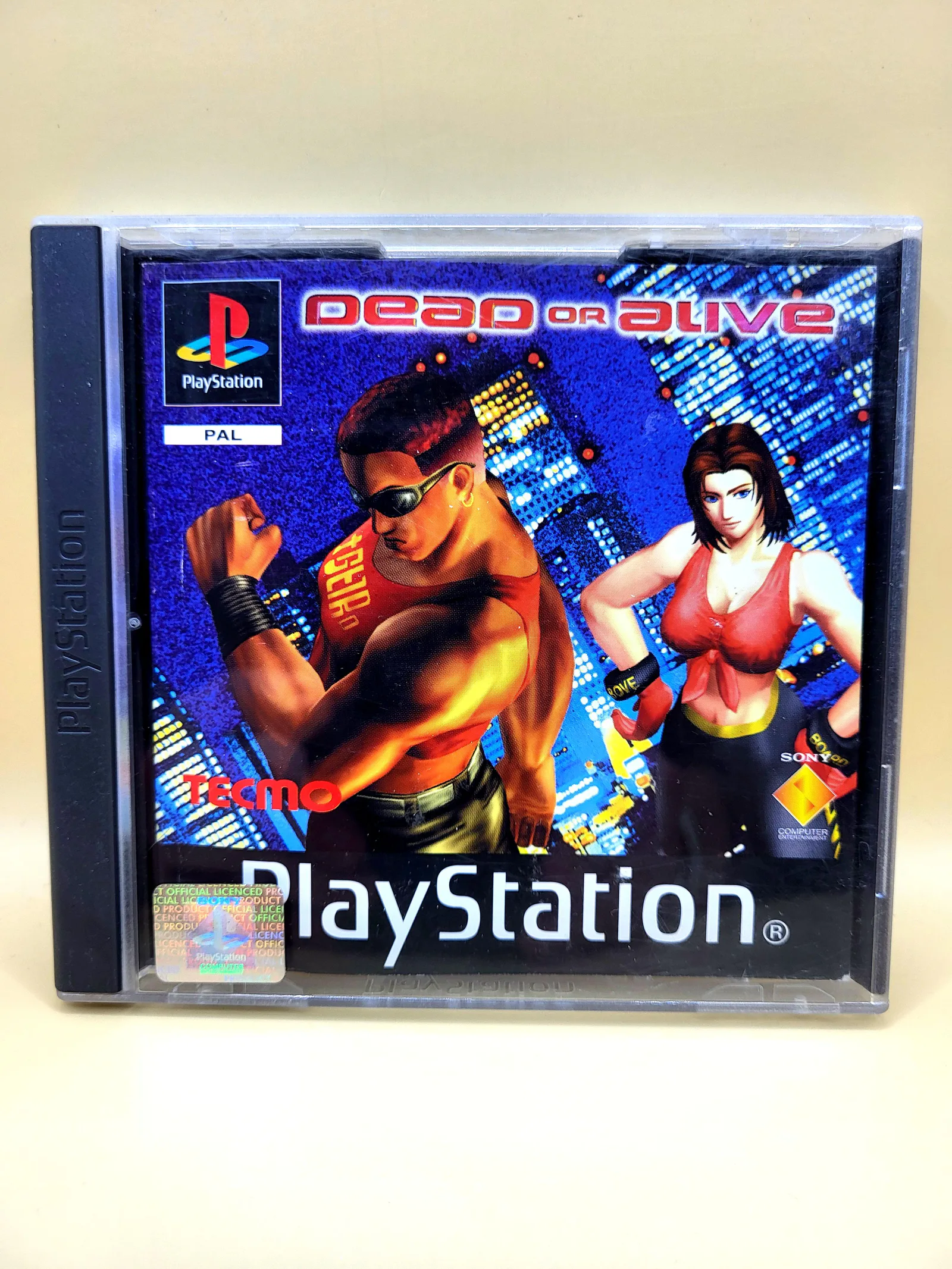
Dead or Alive for PlayStation 1
Dead or Alive for PlayStation 1 is a 3D fighting game in which you alternate punches, kicks and throws with intercepting attacks. You choose characters including Kasumi, Jann Lee or Tina and learn how their moves work at different distances. A well-timed defensive move can turn an opponent's repeated combination against them. On the other hand, waiting too long leaves you vulnerable to a close-range throw.
Explosive Danger Zones surround the safe parts of the arena. Knocking someone down onto them causes additional damage through the explosion and creates opportunities for a follow-up attack. Your position is therefore almost as important as the combination you enter. The separate Danger Zone game type even makes the entire floor dangerous. Training lets you practise moves without repeatedly having to work through a tournament.
You play alone against the computer or directly against a second player using two standard PlayStation controllers; no Multitap is needed. Team Battle lets you choose a squad of fighters who compete one after another, not simultaneously as a tag team. You can also improve your time or stay standing for as long as possible in Survival. A PlayStation memory card stores unlocked content among other things, keeping earned extras available after you switch off.
Region and language
Our PlayStation 1 games are PAL editions and come with a Dutch or English box, unless stated otherwise. By default, you receive the version for the European market. We note it in the product details if the region is different or the box is in another language. In almost all cases, the game is playable at least in English, and often in the other five common European languages too.
This edition of Dead or Alive is supplied without the front cover, even though the product photo shows the standard packaging.
Manual
Dead or Alive for PlayStation 1 includes the manual unless the product title states otherwise. If the booklet is missing, the title says “No Manual”. This lets you see before ordering whether the game comes with a manual.
The manuals included with our games usually contain at least English and often around six European languages. The exact languages vary by edition, so Dutch is not always included. The booklet explains the controls and the main rules. You can use it to check how to control the game, which actions are available and how its different features work.
The history of Dead or Alive
Tecmo introduced Dead or Alive in 1996 as an arcade game, developed by Team Ninja under Tomonobu Itagaki's direction. The original cabinet used Sega Model 2 hardware. A Saturn release was followed by the PlayStation version in 1998. This brought the series to players on Sony's console, where one-on-one character fighting already had a large audience. Explosive floor boundaries and attack reversals gave Tecmo's game its own recognisable foundation.
The move to PlayStation involved more than copying the earlier console release. Bass and Ayane joined the roster, alongside additional costumes and game types. In a later interview, Itagaki described how carefully the team had to manage each character's polygon count at the time. This shows that the different versions were built within their own hardware limits. The PlayStation game therefore has its own place alongside the original arcade game and the Saturn version.
This first instalment established characters and fighting ideas that later Dead or Alive games built upon. Kasumi's ninja techniques, Tina's wrestling holds and Jann Lee's fast attacks give the competitors different rhythms, while defence and arena positioning connect them. Later sequels added other systems and environments. This release preserves the early structure: separate rounds, direct duels and additional challenges built around the same fighting system, without the tag battles or elaborate arena transitions of later entries.
Similar games for PlayStation 1
Tekken 3 shares short 3D duels, varied fighting styles and combinations with Dead or Alive. Namco links four attack buttons to your character's limbs and also lets you sidestep. Dead or Alive places greater emphasis on intercepting attacks and the explosive floor. Both teach you when to retaliate after a missed attack, but maintaining a safe distance from a Danger Zone adds another risk here.
Like Dead or Alive, Soul Blade uses three-dimensional fighters with different ranges and attack patterns. Swords and other weapons determine reach there, and you can knock an opponent out of the ring. Dead or Alive has its competitors fight mainly with their bodies and punishes a fall onto the explosive boundary with damage. Soul Blade also adds an Edge Master route featuring tasks and weapons to earn alongside individual fights.
Bloody Roar 2 also combines punches, kicks and throws in fast 3D fights. The defining decision there is when to transform from human to animal, making other attacks available. Dead or Alive maintains its focus on an established fighting style, reading your opponent and the dangerous floor. Both reward learning combinations, but in Bloody Roar 2 a transformation changes the course of a round much more directly.
Like Dead or Alive, Bushido Blade demands attention to distance, timing and where you stand. A sword strike there can immediately decide the fight, however, without a conventional health bar to gradually empty. You also move through larger environments and choose different stances. Dead or Alive keeps combat within defined rounds with a health meter. Its tension lies in successive attacks and defensive responses rather than one potentially fatal weapon strike.
Street Fighter Alpha 3 also lets you learn characters through their normal attacks, throws and special techniques. Capcom uses a two-dimensional playing field with projectiles and different Ism fighting systems. Dead or Alive places human fighters in 3D arenas and makes the floor part of damage calculation. Both require you to punish a jump or missed attack effectively, but the way you control space and defend against attacks differs considerably.