This product is like new. At NexWave Games, like new means:
Additionally, all discs at NexWave Games are carefully inspected and assessed for quality. When discs arrive, we do not accept any that are so badly damaged that they are unlikely to work. We only accept discs with light scratches at most. Discs with scratches are then treated in our professional disc repair machine. By warming the disc and polishing it with soft brushes, these machines can remove a very thin layer from the disc. This removes the layer containing surface scratches and improves the disc’s readability. This ensures the disc works properly, even on consoles with ageing lasers that have difficulty reading games! Great news for the player.
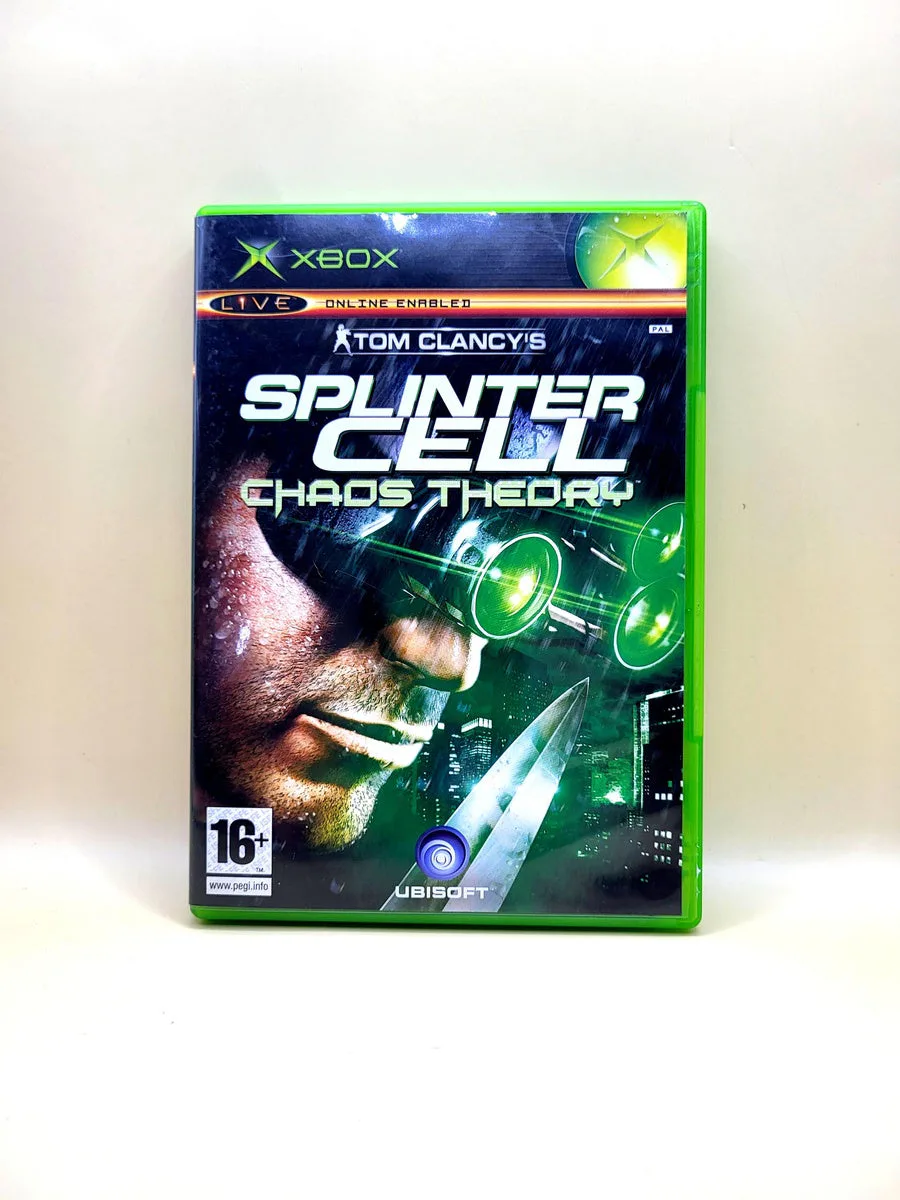
Tom Clancy's Splinter Cell Chaos Theory for Xbox Original
Tom Clancy's Splinter Cell Chaos Theory for the Xbox Original is a stealth game in which you carry out secret assignments as Sam Fisher. An escalating international conflict and attacks on information systems send the Third Echelon agent to guarded locations. You gather data, interrogate guards and look for a way to reach your objective without bringing the whole area down on you.
Light and sound determine how much risk you take. You watch Sam's visibility and compare the sound of his movements with the ambient noise. A louder background can mask your footsteps, while a brightly lit passage calls for a different approach. Night vision, thermal imaging and gadgets help you understand a room before moving on. At close range, you can take down an enemy with a lethal or non-lethal attack, so you also choose how to handle a confrontation.
Alongside the single-player story, this Xbox Original release includes separate cooperative missions for two players on a split screen. You control two agents who help each other reach higher passages, among other actions. Coordinating timing and position then becomes part of the stealth. Alone or together, the core stays the same: look and listen first, then move. A short detour, a disabled light or waiting for a passing guard can achieve more than immediately drawing a weapon.
Region and language
Our Xbox Original games are PAL editions and come with a Dutch or English box, unless stated otherwise. By default, you receive the version for the European market. We note it in the product details if the region is different or the box is in another language. In almost all cases, the game is playable at least in English, and often in the other five common European languages too.
Manual
Tom Clancy's Splinter Cell Chaos Theory for Xbox Original includes the manual unless the product title states otherwise. If the booklet is missing, the title says “No Manual”. This lets you see before ordering whether the game comes with a manual.
The manuals included with our games usually contain at least English and often around six European languages. The exact languages vary by edition, so Dutch is not always included. The booklet explains the controls and the main rules. You can use it to check how to control the game, which actions are available and how its different features work.
The history of Tom Clancy's Splinter Cell Chaos Theory
Tom Clancy's Splinter Cell Chaos Theory appeared on Xbox in 2005. Ubisoft Montreal developed the solo campaign and separate cooperative missions; Ubisoft Annecy worked on the competitive component. It was the third instalment after Splinter Cell and Pandora Tomorrow. The first Xbox game had appeared in 2002. Sam Fisher and his night-vision goggles remained the familiar starting point, while Chaos Theory provided more information about conditions for moving unseen and unheard.
A clear addition was the noise meter beside the existing light meter. It showed not only Sam's own sound but also the noise level of his surroundings. That made it easier to deliberately wait for a passing vehicle or another loud sound. The new knife expanded close-range actions, with a choice between lethal and non-lethal force. The series' development therefore also lay in smaller decisions within a single room or passage.
The cooperative missions added a second way to play. Two agents received their own missions alongside Sam's solo adventure, with movements that required help from the other player. On the Xbox Original, you play these locally with two controllers and a split screen. The original English version again features Michael Ironside as Sam Fisher's voice; Amon Tobin worked on the music. Sound therefore supports both the atmosphere of the espionage thriller and the practical question of how much noise you can make during an infiltration.
Similar games for Xbox Original
Tom Clancy's Splinter Cell for the Xbox Original introduces the same combination of Sam Fisher, shadows and technical equipment. You observe guards and try to pass through a location without raising the alarm. Chaos Theory builds on that with an ambient-noise meter, new close-range actions and separate missions where two players cooperate locally.
Tom Clancy's Splinter Cell Pandora Tomorrow stays close to the same style of espionage, with sneaking, gadgets and an international threat story. You play its story campaign alone. Chaos Theory adds cooperative split-screen missions, and its sound meter gives you a clearer view of the relationship between your footsteps and the noise around you.
Metal Gear Solid 2: Substance combines infiltration, equipment and an espionage story around Solid Snake and Raiden. You observe guards and use distractions, among other techniques, to enter a secure location. Chaos Theory places greater emphasis on measurable visibility and ambient sound. Both require preparation, but provide different information for choosing your next move.
Hitman 2: Silent Assassin also asks you to plan an assignment and understand the security. Agent 47 uses tools including disguises to reach his target. Sam Fisher relies mainly on darkness, careful movement and his equipment. Both games give you reason to examine an environment before taking action.
Second Sight on the Xbox Original combines stealth and firearms with John Vattic's paranormal powers. You can influence enemies and objects through telekinesis. Chaos Theory keeps its tools within espionage technology and makes light and sound central to your progress. Their similarity lies in choosing between bypassing, distracting and directly confronting an enemy.