This product is like new. At NexWave Games, like new means:
Additionally, all discs at NexWave Games are carefully inspected and assessed for quality. When discs arrive, we do not accept any that are so badly damaged that they are unlikely to work. We only accept discs with light scratches at most. Discs with scratches are then treated in our professional disc repair machine. By warming the disc and polishing it with soft brushes, these machines can remove a very thin layer from the disc. This removes the layer containing surface scratches and improves the disc’s readability. This ensures the disc works properly, even on consoles with ageing lasers that have difficulty reading games! Great news for the player.
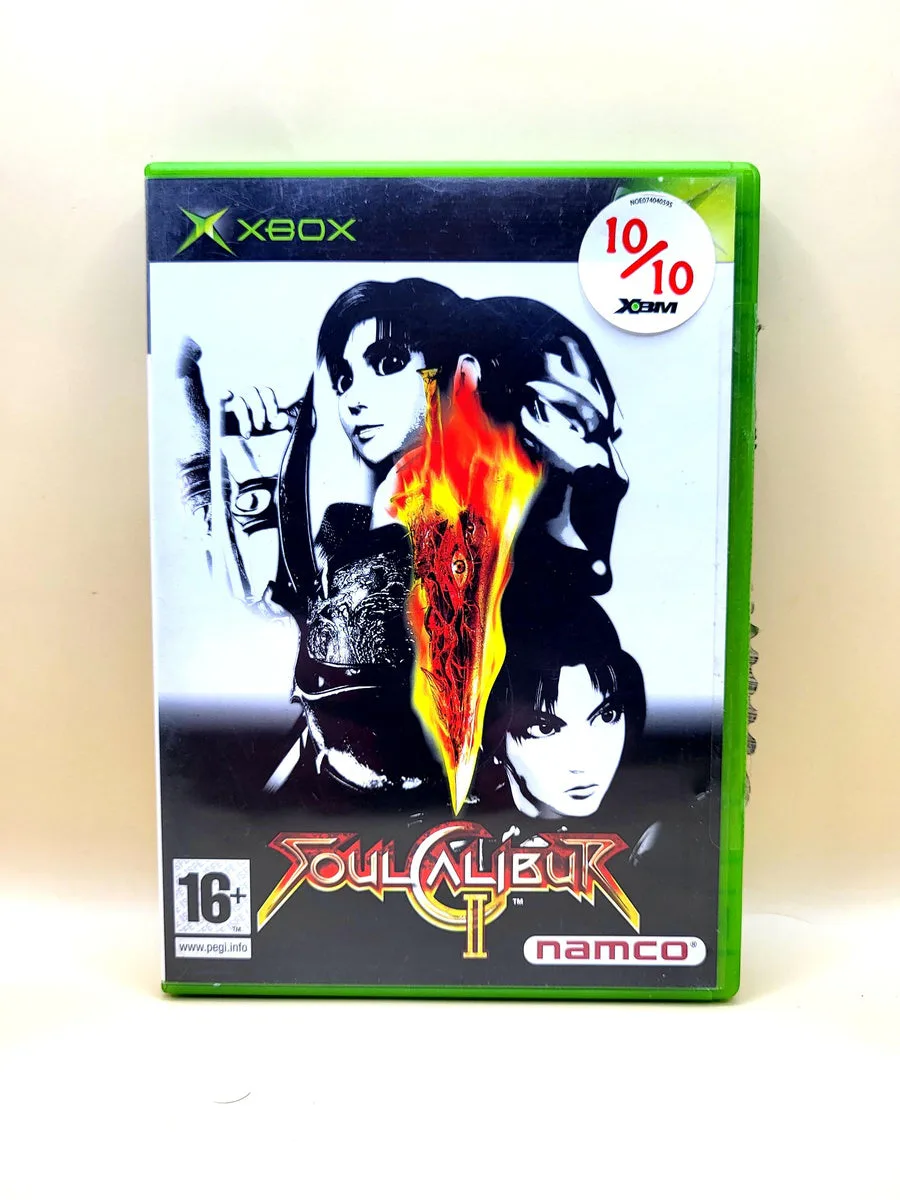
Soulcalibur II for Xbox Original
Soulcalibur II for Xbox Original is a three-dimensional fighting game in which weapons determine a duel’s distance and pace. You choose a character such as Mitsurugi, Taki, Kilik or Ivy, each with distinct moves and reach. The Xbox version includes Spawn as its exclusive guest fighter. He uses an axe and has his own attacks reflecting his comic-book appearance. You explore how his abilities compare with the swords, staffs and other weapons of the regular fighters.
You move forwards, backwards and sideways to make an attack miss or find an opening yourself. Horizontal strikes cover different space from vertical attacks. Well-timed Guard Impacts let you repel an attack and try to take the initiative. Open edges also introduce the possibility of a ring-out. Both fighters’ positions can therefore become as important as their remaining health.
Weapon Master gives you a series of missions with changing conditions, spread across a map. You earn rewards and collect weapons, including versions with special properties for Extra battles. Regular Arcade and Versus fights keep attention on the selected fighter and the duel. Practice lets you rehearse moves and combinations. Two players can face each other locally and investigate how different weapons respond to one another’s reach.
Region and language
Our Xbox Original games are PAL editions and come with a Dutch or English box, unless stated otherwise. By default, you receive the version for the European market. We note it in the product details if the region is different or the box is in another language. In almost all cases, the game is playable at least in English, and often in the other five common European languages too.
Manual
Soulcalibur II for Xbox Original includes the manual unless the product title states otherwise. If the booklet is missing, the title says “No Manual”. This lets you see before ordering whether the game comes with a manual.
The manuals included with our games usually contain at least English and often around six European languages. The exact languages vary by edition, so Dutch is not always included. The booklet explains the controls and the main rules. You can use it to check how to control the game, which actions are available and how its different features work.
The history of Soulcalibur II
Soulcalibur II appeared in arcades in 2002 and came to Xbox, PlayStation 2 and Nintendo GameCube in 2003. Namco developed the sequel within the series that began with Soul Edge, known as Soul Blade on the European PlayStation. The first Soulcalibur had developed freedom of movement around an opponent. The second built on this with returning fighters, new characters and revised combat possibilities. Home versions added more content around challenges and weapons.
Each console received its own guest character. Xbox got Spawn, Todd McFarlane’s comic-book hero. PlayStation 2 got Heihachi and GameCube got Link; those guests are not part of this Xbox release. Spawn brought his appearance, weapon and moves into the established combat rules. Weapon Master also gave the home version longer progression through chapters, rewards and varied tasks. Outside ordinary arcade matches, you could therefore learn different weapons and situations.
The distinctive guests made the console versions recognisable, while movement, defence and attacks shared their foundation. Local Xbox duels were for two players and chiefly required knowing your reach and your opponent’s. Other Soulcalibur games and an HD rerelease of this instalment followed later. This disc contains the original 2003 Xbox version. Weapon Master, different weapon styles and Spawn place it within that first generation of home releases of the arcade sequel.
Similar games for Xbox Original
Dead or Alive 3 for Xbox Original shares movement in three-dimensional arenas and responding to attacks. Its unarmed fighters use counters, throws and tag teams. Soulcalibur II chiefly lets the chosen weapon determine reach and can end a duel with a ring-out. Both require reading the next move, but keeping distance with a staff means something different from facing an unarmed opponent.
Dead or Alive Ultimate brings earlier Dead or Alive combat together on Xbox Original, including a rebuilt version of the second game. You fight unarmed using throws and counters in interactive arenas. Soulcalibur II centres its characters on different weapons and connects additional challenges through Weapon Master. Both offer local duels, but the roles of terrain and distance differ.
Mortal Kombat: Deadly Alliance for Xbox Original lets each fighter switch between two unarmed styles and a weapon style. You therefore change the available attacks during a fight. Soulcalibur II builds most characters around one weapon and uses Guard Impacts for timed defence. Both require learning combinations and reach, but connect that knowledge differently with the chosen fighter.
Capcom vs. SNK 2 EO for Xbox Original uses two-dimensional combat with teams from two publishers’ character worlds. Different grooves change the rules for meters and special techniques. Soulcalibur II uses three-dimensional movement, established weapon styles and the risk of ring-outs. Both emphasise training and local duels, but moving sideways around an opponent belongs specifically to Soulcalibur’s spatial approach.
Mortal Kombat: Deception lets fighters switch between several styles, including a weapon style. Soulcalibur II instead builds most characters around a fixed weapon and its associated moves. Both use three-dimensional arenas and character-specific attacks. Choosing distance and defence therefore has a different relationship with your fighting style in each game.