This product is like new. At NexWave Games, like new means:
Additionally, all discs at NexWave Games are carefully inspected and assessed for quality. When discs arrive, we do not accept any that are so badly damaged that they are unlikely to work. We only accept discs with light scratches at most. Discs with scratches are then treated in our professional disc repair machine. By warming the disc and polishing it with soft brushes, these machines can remove a very thin layer from the disc. This removes the layer containing surface scratches and improves the disc’s readability. This ensures the disc works properly, even on consoles with ageing lasers that have difficulty reading games! Great news for the player.
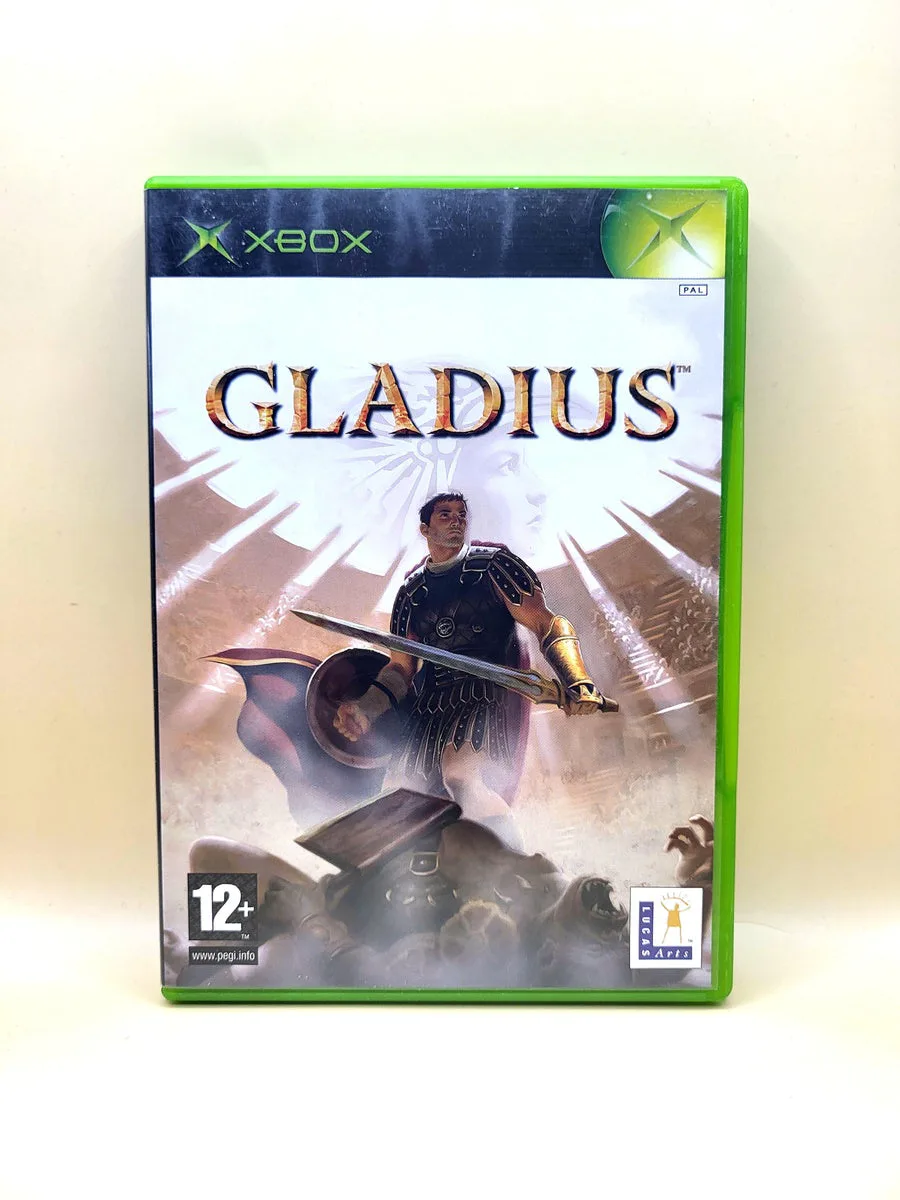
Gladius for Xbox Original
Gladius for Xbox Original lets you build your own gladiator school in a fantasy world with Roman and northern influences. You begin the story of Valens or Ursula and recruit fighters for an increasingly varied team. In the arena, you choose who participates and move fighters across squares. Position, differences in elevation and the relationships between fighter classes determine how sensible an attack is. You therefore look beyond the weapon with the highest number: an ally's position can also change a duel.
Battles unfold in turns, but many attacks use a meter that asks for a well-timed button press. Execution therefore supplements the plan you made beforehand. Between tournaments, you buy equipment, learn skills and check the next competition's entry requirements. Not every competition admits the same participants. A varied school consequently helps more than a small group capable of handling only one type of opponent. Travelling puts new arenas, encounters and recruits within reach.
You can play alone or locally with up to four players sharing gladiators during campaign battles. Each participant uses a separate Xbox controller. Players take their turns on the same screen; this is not simultaneous action combat. Once Versus has been unlocked, you can also pit schools against each other. Planning an attack together or challenging each other's formation gives the same rules a different purpose.
Region and language
Our Xbox Original games are PAL editions and come with a Dutch or English box, unless stated otherwise. By default, you receive the version for the European market. We note it in the product details if the region is different or the box is in another language. In almost all cases, the game is playable at least in English, and often in the other five common European languages too.
Manual
Gladius for Xbox Original includes the manual unless the product title states otherwise. If the booklet is missing, the title says “No Manual”. This lets you see before ordering whether the game comes with a manual.
The manuals included with our games usually contain at least English and often around six European languages. The exact languages vary by edition, so Dutch is not always included. The booklet explains the controls and the main rules. You can use it to check how to control the game, which actions are available and how its different features work.
The history of Gladius
LucasArts developed Gladius as an original new game, separate from its familiar Star Wars and Indiana Jones licences. Announced in 2002, it appeared in 2003 for Xbox, GameCube and PlayStation 2. The studio described it as a combat RPG in which managing a gladiator school should matter as much as an individual attack. Progress consequently revolves around more than one protagonist: your entire school's composition and equipment remain relevant in every new competition.
The two storylines begin from different backgrounds. Valens is the son of a famous gladiator from Imperia, while Ursula comes from northern Nordagh. The setting mixes references to antiquity with magic and fantasy creatures. Gladius is therefore not attempting a historical reconstruction of Rome. Arenas give the tactics clear boundaries, while journeys between regions make room for the story's greater threat. Championships connect the local contests to that broader journey.
A distinctive design choice is the attack meter: a turn-based decision gains a brief moment of execution. This leaves something to do after planning without turning the whole game into action combat. The Xbox version also supports four local participants, whereas the PlayStation 2 edition has a different player limit. This description follows the original Xbox rules. Later digital availability or operation on other consoles does not change the campaign and local play options contained on this disc.
Similar games for Xbox Original
Sudeki and Gladius both use parties whose members have different roles. Sudeki lets you switch heroes during direct action; Gladius divides combat into turns and asks you to consider formation and movement first. Sudeki is single-player, whereas Gladius can share gladiators in campaign battles among up to four local players, each with a separate controller.
Gladius and Star Wars Jedi Knight II: Jedi Outcast both demand attention to position and attack timing, but implement this differently. Gladius has you plan a turn and then operate an attack meter. Jedi Outcast continually requires direct movement and reactions during a duel. Gladius can share campaign battles locally; in Jedi Outcast, two-player play is restricted to the separate Arena and the story remains single-player.
Star Wars: Knights of the Old Republic shares Gladius's party building and equipment choices tailored to each character's role. Knights of the Old Republic uses combat with pausable commands, while Gladius employs fixed turns and a grid. Gladius consequently demands closer attention to every movement within the arena; Knights of the Old Republic places more weight on conversations, choices and relationships between companions.
Baldur's Gate: Dark Alliance II likewise lets you strengthen fantasy fighters with new equipment and abilities. There, you traverse dungeons through direct action and two players can fight enemies simultaneously. Gladius revolves around managing a larger school and taking individual turns. Both offer local cooperative play, but in Gladius you share an arena battle's tactical decisions instead of moving through a dungeon together.
Fable and Gladius connect combat with developing abilities and buying better equipment. Fable, however, follows one hero whom you control directly in battle, with choices influencing his development. Gladius divides attention across an entire gladiator school and uses competition requirements to change your selection. Where Fable allows a focus on one fighting style, Gladius more often asks you to consider a broader collection of fighters.