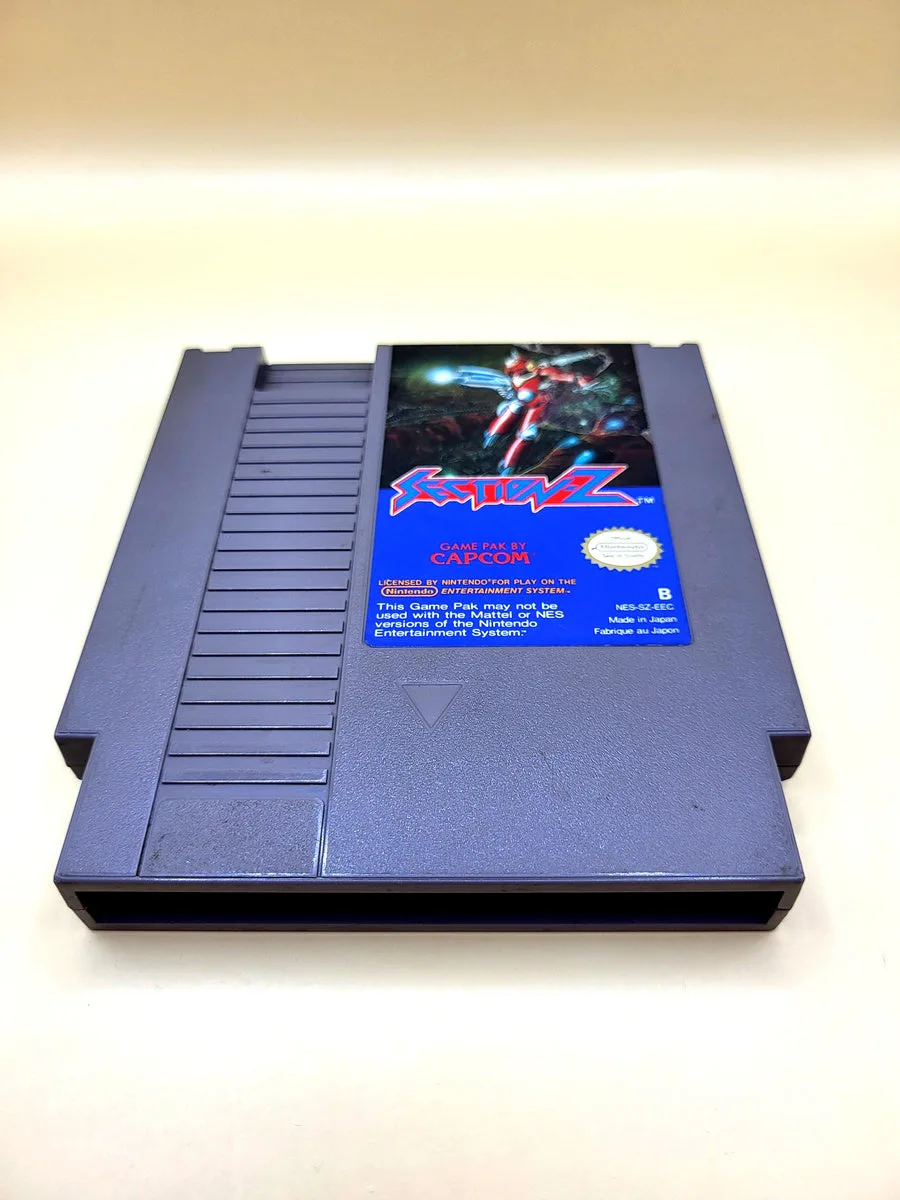
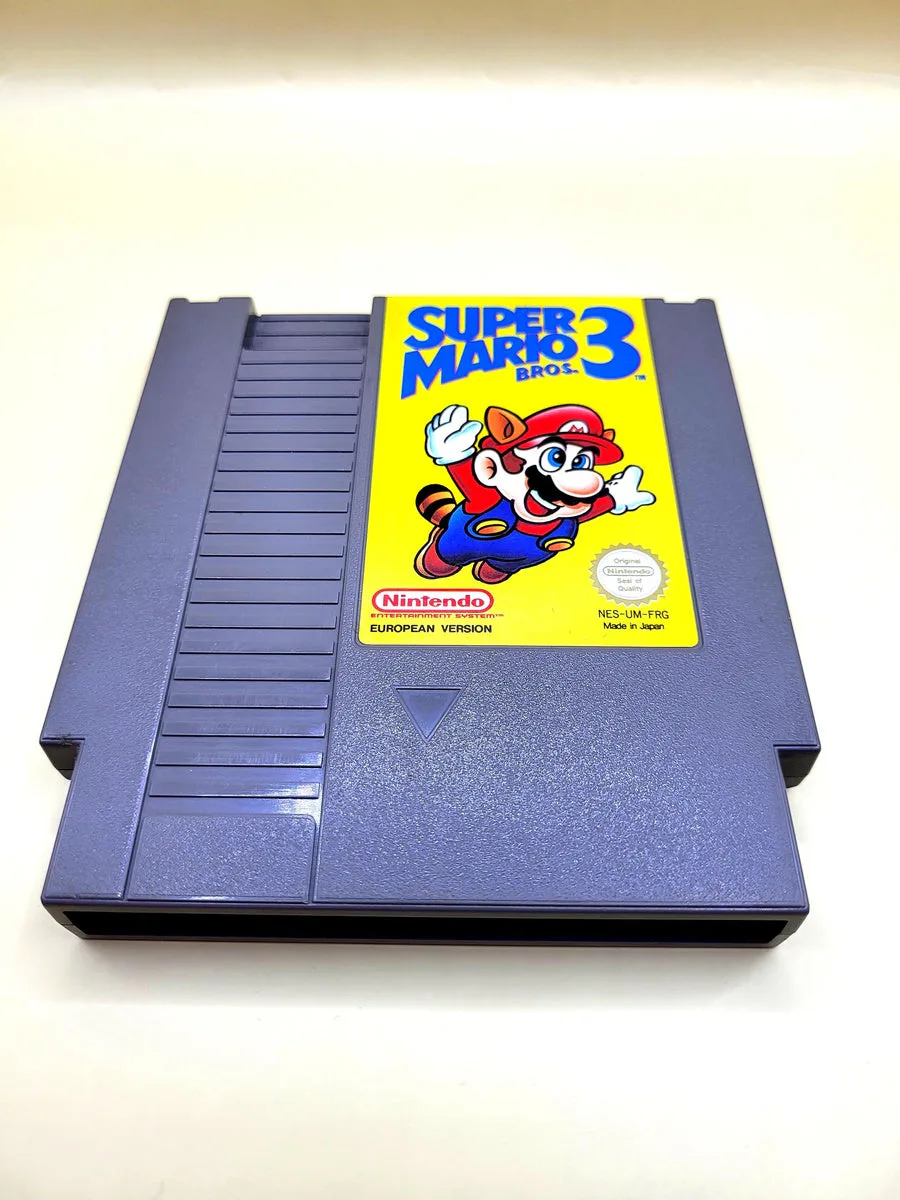
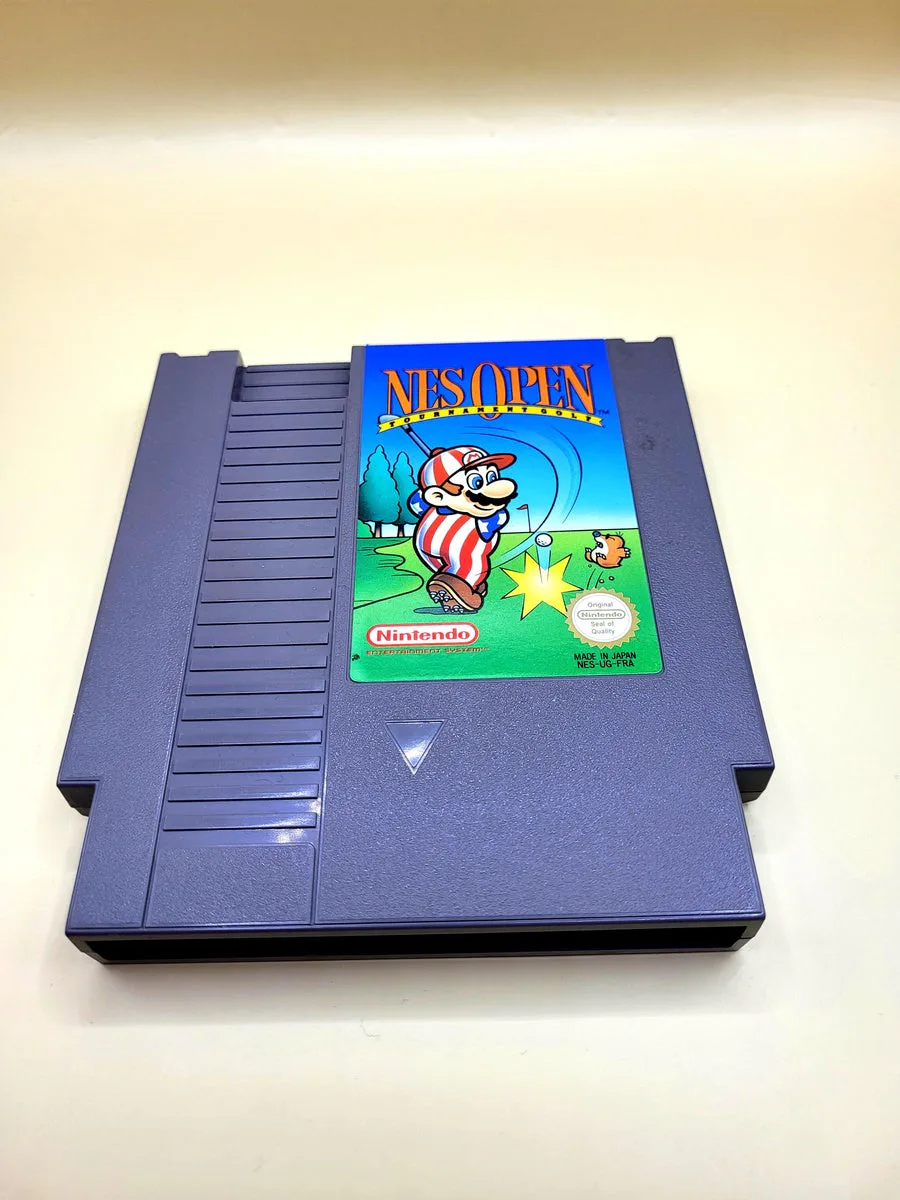
This product is like new. At NexWave Games, like new means:
Additionally, all discs at NexWave Games are carefully inspected and assessed for quality. When discs arrive, we do not accept any that are so badly damaged that they are unlikely to work. We only accept discs with light scratches at most. Discs with scratches are then treated in our professional disc repair machine. By warming the disc and polishing it with soft brushes, these machines can remove a very thin layer from the disc. This removes the layer containing surface scratches and improves the disc’s readability. This ensures the disc works properly, even on consoles with ageing lasers that have difficulty reading games! Great news for the player.
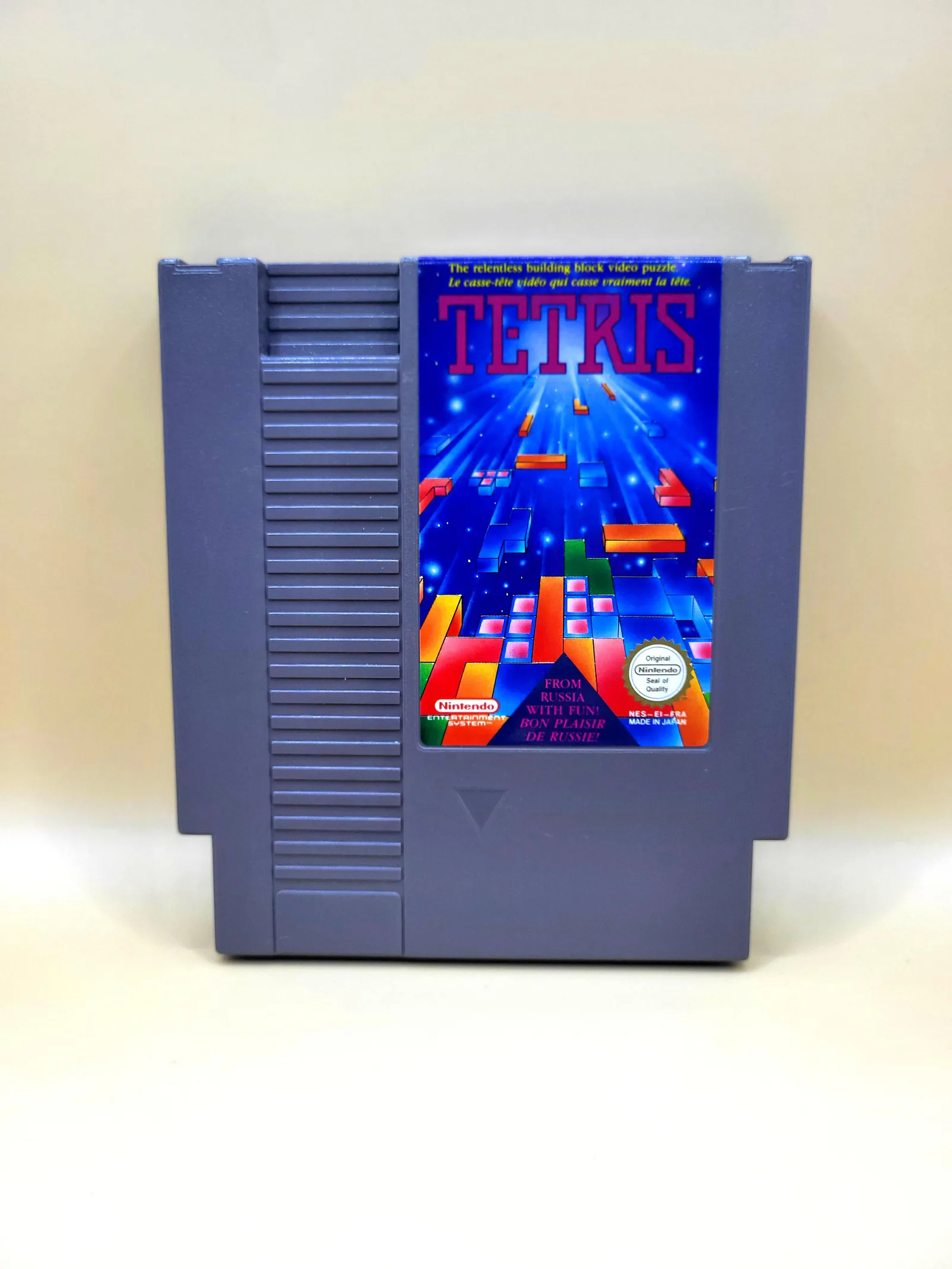
Tetris for Nintendo NES
Tetris for Nintendo NES lets you stack seven different block shapes in a rectangular playfield. Each piece consists of four squares. You move it left or right and rotate it as it falls to form complete horizontal lines. These disappear, making room for new pieces. A poorly placed block can seal off a gap that becomes difficult to reach later. That is why you watch not only the current shape, but also the next piece displayed beside the playfield.
A-TYPE is about playing for as long as possible and building a high score. You choose the starting speed; the pace increases as you play. B-TYPE gives you a specific task: clear twenty-five lines. Before starting, you set both the speed and the height of the randomly placed starting blocks. The pace remains constant throughout that round. Clearing several lines at once earns more points, with four lines the largest combination possible from placing one piece.
The two action buttons rotate pieces in opposite directions, while pressing down makes a block fall faster. Select lets you hide the next-piece preview for an extra challenge. This Nintendo edition is for one player using one standard controller. You can enter names for the top three scores during a session, but they disappear when you switch off the console. The cartridge has no permanent saving or passwords for resuming an interrupted round later.
Region and language
Our Nintendo NES games are PAL editions, unless stated otherwise. This product contains a loose cartridge for the European market. A box is only included if explicitly stated in the product details. We note any different region in the product details. In almost all cases, the game is playable at least in English, and often in the other five common European languages too.
Manual
With Tetris for Nintendo NES, you receive a loose cartridge. A box and manual are not included unless we explicitly state otherwise in the product details. This is the standard way we supply this copy.
The history of Tetris
Alexey Pajitnov devised Tetris in 1984 while working as a programmer in Moscow. The wooden puzzle game Pentominos provided inspiration, but he used shapes made of four squares for his computer game. This produced the seven pieces that also appear in this NES edition. Removing full lines gave stacking an ongoing purpose: reopening the field before later shapes ran out of room. The idea subsequently spread beyond the Soviet Union to computers and game consoles.
Nintendo developed and published its own NES version, released in North America in 1989. During the same period, Henk Rogers helped bring Tetris to Nintendo through agreements with the Soviet rights holder. The Game Boy also received a Tetris release and introduced the name to a wide audience. This NES cartridge is Nintendo's separate television version, however, with its own presentation, score display and choice of A-TYPE or B-TYPE. It is not the other NES adaptation released by Atari Games under the Tengen brand.
Nintendo focused this version on one player trying to improve their own stacking. Combining an ongoing score chase with a twenty-five-line task provides two different goals within the same rules. The statistics panel counts the pieces you have received, while the preview supports planning ahead. This information sits directly beside the playfield, so you can keep watching it while rotating and moving pieces. The simple controls and fixed block shapes remained recognisable parts of the Tetris series even as later releases added other features.
Similar games for Nintendo NES
Dr. Mario for Nintendo NES also has you rotate and place falling pieces before the field becomes too full. You stack coloured capsules around viruses and make rows of matching colours, however, rather than filling entire horizontal lines. Tetris mainly demands matching shapes and keeping gaps open. In Dr. Mario, the colours of both capsule halves also determine the best place to put a piece.
Yoshi's Cookie on Nintendo NES shares the search for complete rows and the need to think ahead with Tetris. Here, you slide existing rows of cookies horizontally and vertically to bring matching kinds together. There is no individual falling block that you must rotate during its descent. Tetris grows its stack from the bottom; Yoshi's Cookie asks you to rearrange a pattern already on the board.
Wario's Woods for Nintendo NES also combines falling objects with clearing an increasingly crowded board. You control Toad inside that board and carry monsters and bombs to the right places. In Tetris, you control the falling piece itself instead. Colours and bombs determine which groups disappear in Wario's Woods, whereas Tetris rewards completely filled lines regardless of the blocks' colours.
Boulder Dash on Nintendo NES makes gravity an important part of every decision, just like Tetris. Rockford digs through dirt, allowing rocks to fall and block routes or hit enemies. Tetris builds its dangerous stack from above instead, without a character among the blocks. Both punish poorly positioned gaps, but Boulder Dash links its puzzles to a journey towards diamonds and an exit within a time limit.
Solomon's Key for Nintendo NES also demands careful use of blocks and empty space. Dana creates and removes stones to reach a key and the exit while enemies move through the room. Tetris does not let you choose a building block freely: you must react to the sequence of shapes. In Solomon's Key you solve a prepared room; in Tetris, the next difficult situation largely results from your own earlier placements.