This product is like new. At NexWave Games, like new means:
Additionally, all discs at NexWave Games are carefully inspected and assessed for quality. When discs arrive, we do not accept any that are so badly damaged that they are unlikely to work. We only accept discs with light scratches at most. Discs with scratches are then treated in our professional disc repair machine. By warming the disc and polishing it with soft brushes, these machines can remove a very thin layer from the disc. This removes the layer containing surface scratches and improves the disc’s readability. This ensures the disc works properly, even on consoles with ageing lasers that have difficulty reading games! Great news for the player.
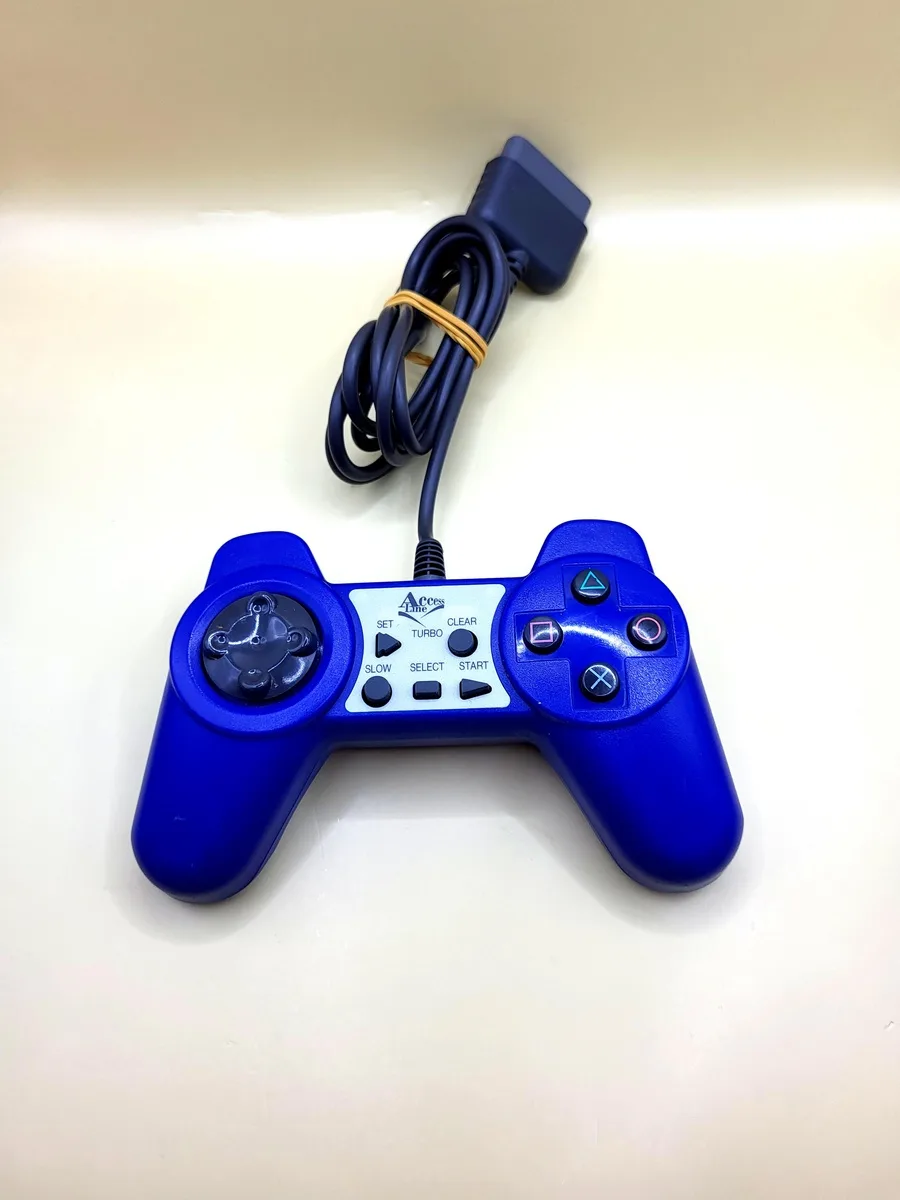
Blue Access Line Turbo Controller for PlayStation
This blue Access Line Turbo Controller for PlayStation 1 is a wired digital controller. The photograph shows the Access Line logo, a directional pad and the four familiar PlayStation symbols on the action buttons. There are no twin analogue sticks. Movement therefore uses the directional pad and actions use buttons. This matches the original digital controls of many PS1 games but does not replace a controller specifically required for analogue-stick play.
The centre shows Start and Select plus Set, Turbo, Clear and Slow markings. Those visible extra controls distinguish this model from Sony's standard pad. An original setup manual for this example has not been confirmed, so no specific repeat rate or Turbo key combination is promised. Ordinary controls remain governed by the game manual and selected button layout. The blue housing and pictured cable belong to this version, not a wireless or analogue variant.
Connect the plug to a PlayStation controller port, not the memory-card slot above it. A wired pad needs no batteries or wireless pairing. The offer contains only the pictured controller and cable, not a console, games or memory card. A second player needs another controller where supported; more players may require a separate multitap. The examples below have digital basic controls. A game such as Ape Escape requiring analogue sticks is excluded.
History
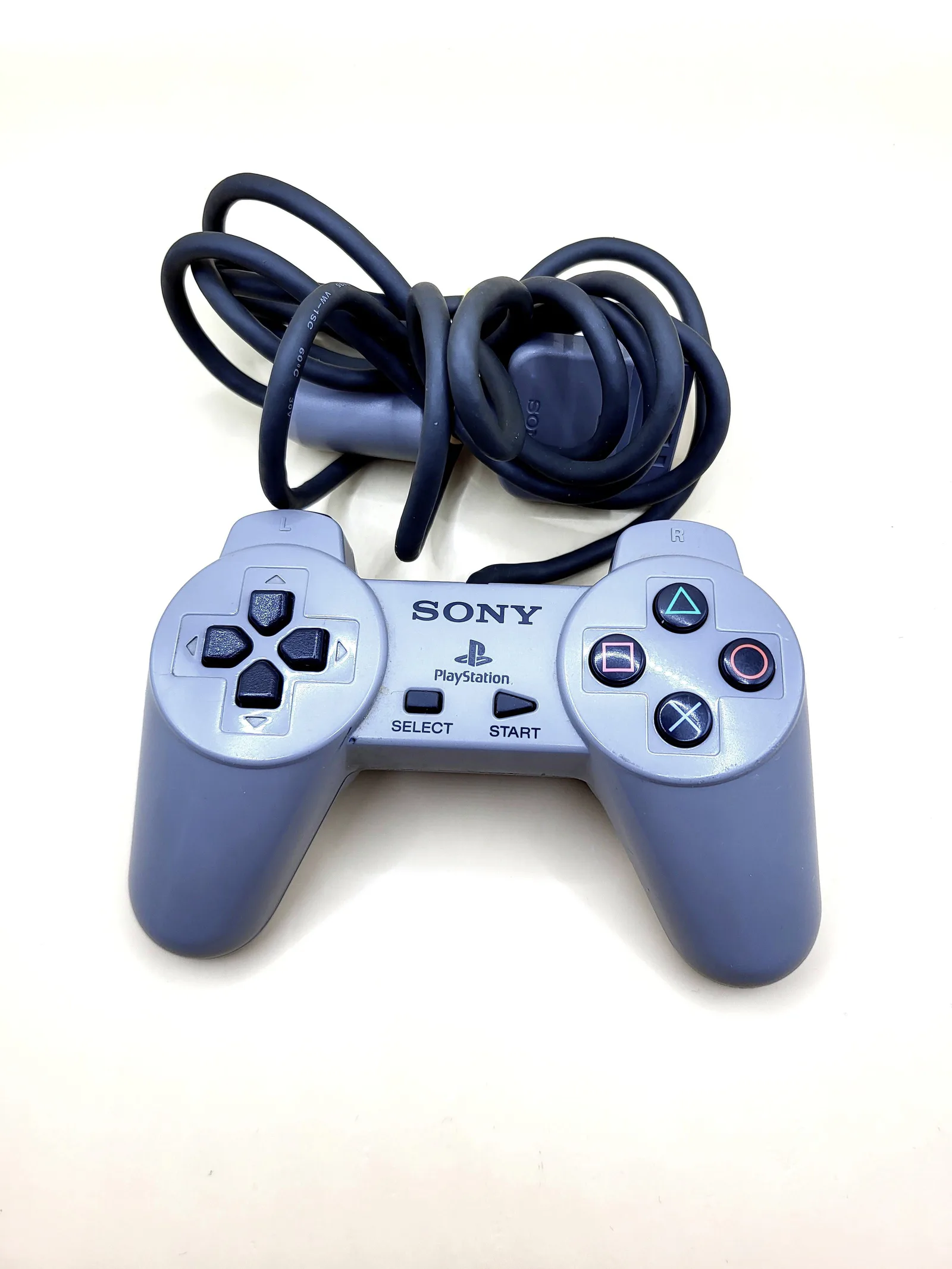
The first PlayStation appeared in Japan in 1994 and Europe in 1995. Its original controller had a directional pad, four symbol action buttons and shoulder buttons. Developers used that layout for platforming, fighting, racing and menu-based battles. It could also control three-dimensional worlds. Direction was a button input, not the continuous travel of an analogue stick. That digital foundation explains why many original PS1 games can be played without thumbsticks.
In 1997 Sony added twin analogue sticks with Dual Analog. DualShock followed with analogue controls and vibration motors. That did not suddenly make sticks mandatory for every existing game: many retained digital controls. Others were designed around the new possibilities, with Ape Escape a clear example. The distinction lies in game controller requirements, not merely whether a plug fits the same console.
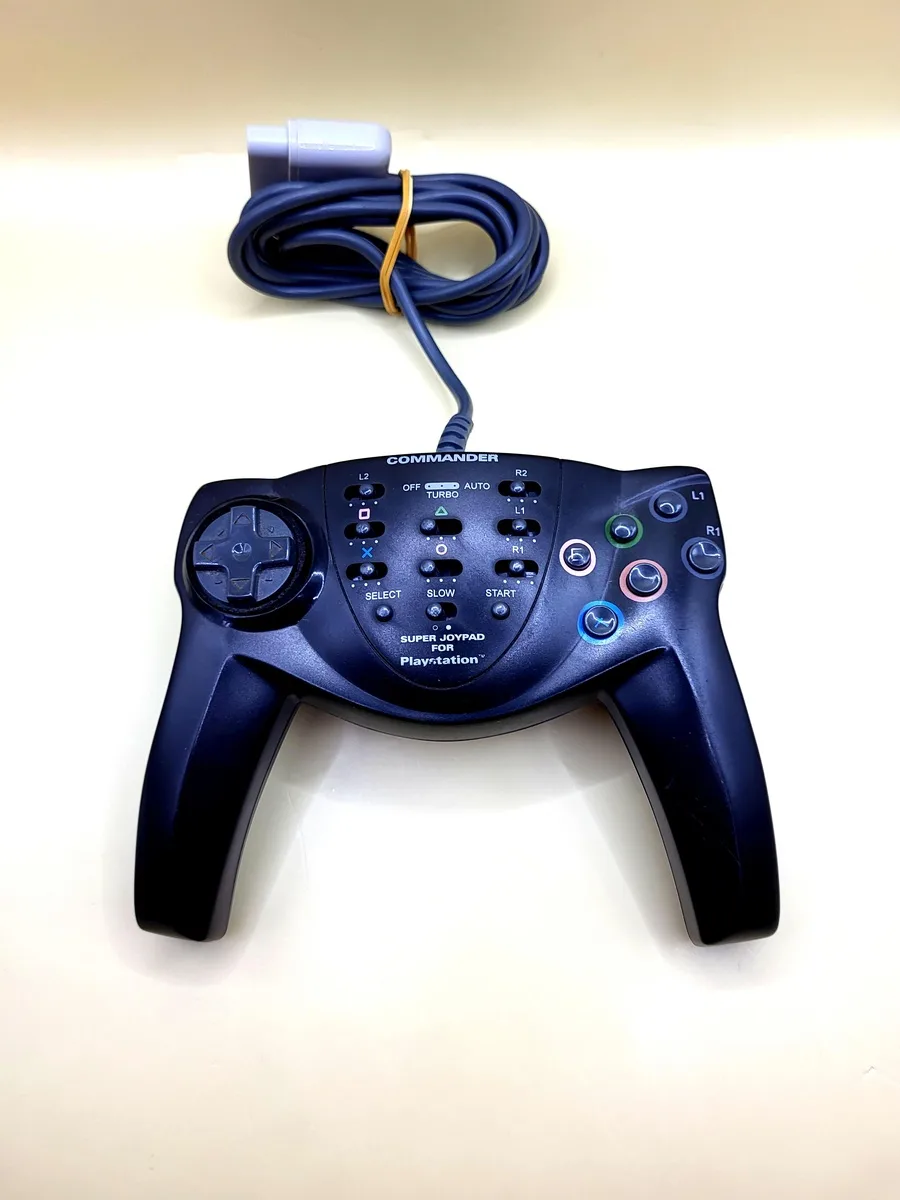
Access Line and Commander offered their own housings and additional controls within that digital era. These product photographs confirm names, colours, buttons and cables. Exact launch dates or original manufacturer histories for these examples have not been established. No date, takeover story or Sony licence is therefore attributed to them. Their historical place is as alternative digital pads alongside Sony models. Extra markings do not make them analogue or change game software.
Five popular PlayStation 1 games
Crash Bandicoot 2: Cortex Strikes Back sends Crash from Warp Rooms into short platform routes full of crates, enemies and hidden passages. Collect crystals, jump gaps and slide to travel further or under obstacles. Fixed camera angles require careful distance judgement. On the original PlayStation, save through the Warp Room save function and a memory card; this is not N. Sane Trilogy's automatic saving.
Spyro the Dragon offers broader three-dimensional areas to explore. Free petrified dragons, collect gems and find routes into other parts of a level. Spyro breathes fire, charges with his horns and glides from high ground. Jump distance and choosing between flame and a charge determine how you pass obstacles. This example concerns the first PlayStation adventure from 1998, with its original controls and presentation.
Tekken 3 builds combat around an attack button for each arm or leg. Combine attacks, manage distance and sidestep within the arena. Characters including Jin, Xiaoyu and Hwoarang use different rhythms and combinations. Practise against the computer or play side by side with two controllers. An analogue stick is unnecessary for basic combat; the directional pad and four attack buttons form the familiar foundation.
Gran Turismo 2 divides content between Arcade and Simulation discs. Arcade offers immediate racing; Simulation focuses on licences, prize money, buying cars and upgrading parts. Learn to brake early, take a good line and apply power smoothly. A controller is enough for regular races. Both game discs matter for the complete original set. These hardware-page examples do not indicate included games or the completeness of separate copies.
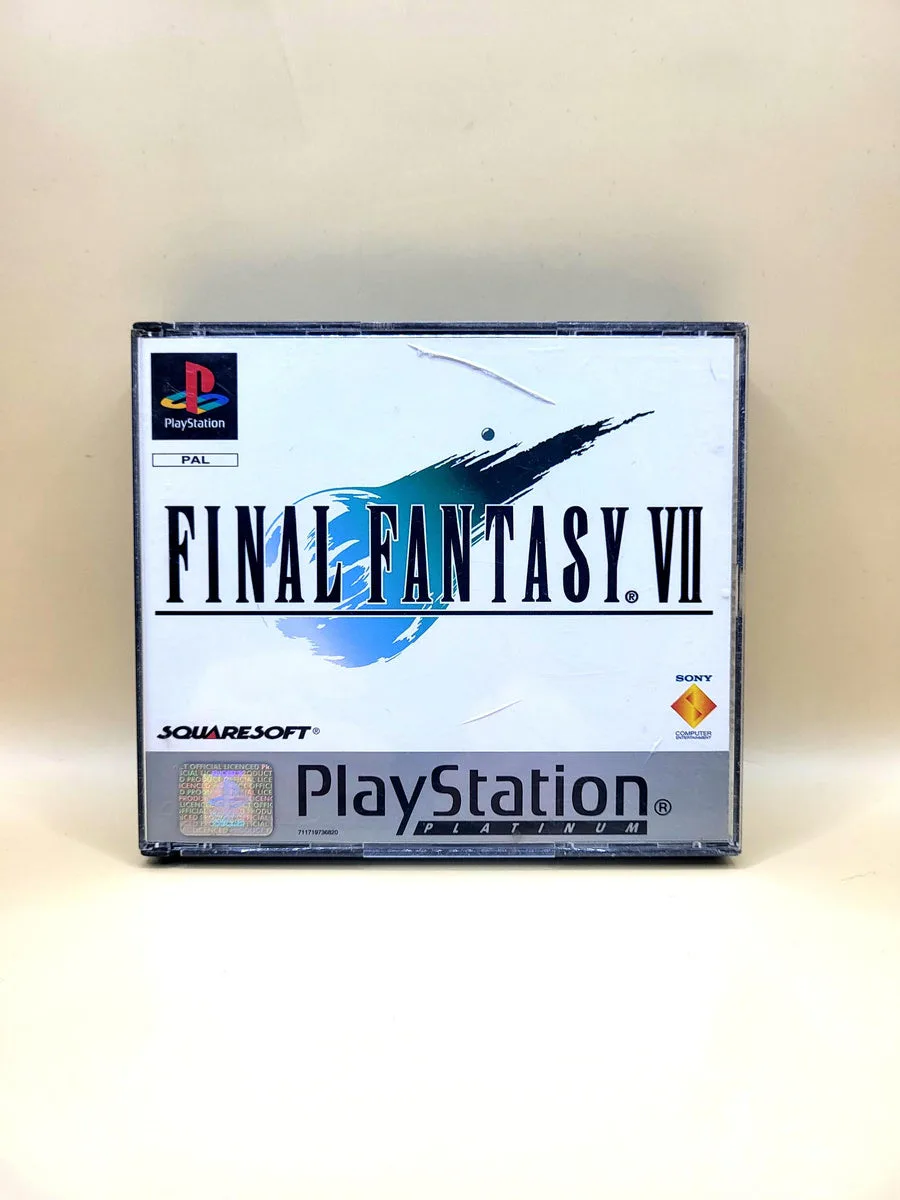
Final Fantasy VII follows Cloud and his allies from Midgar into a world threatened by Shinra and Sephiroth. Exploration and conversations alternate with battles using menu-selected commands. Materia grants magic and other abilities, letting you shape the party. The original PlayStation release uses multiple CDs and separate memory-card save points. Its button controls require a different kind of attention from Crash or Tekken's immediate action.