This product is like new. At NexWave Games, like new means:
Additionally, all discs at NexWave Games are carefully inspected and assessed for quality. When discs arrive, we do not accept any that are so badly damaged that they are unlikely to work. We only accept discs with light scratches at most. Discs with scratches are then treated in our professional disc repair machine. By warming the disc and polishing it with soft brushes, these machines can remove a very thin layer from the disc. This removes the layer containing surface scratches and improves the disc’s readability. This ensures the disc works properly, even on consoles with ageing lasers that have difficulty reading games! Great news for the player.
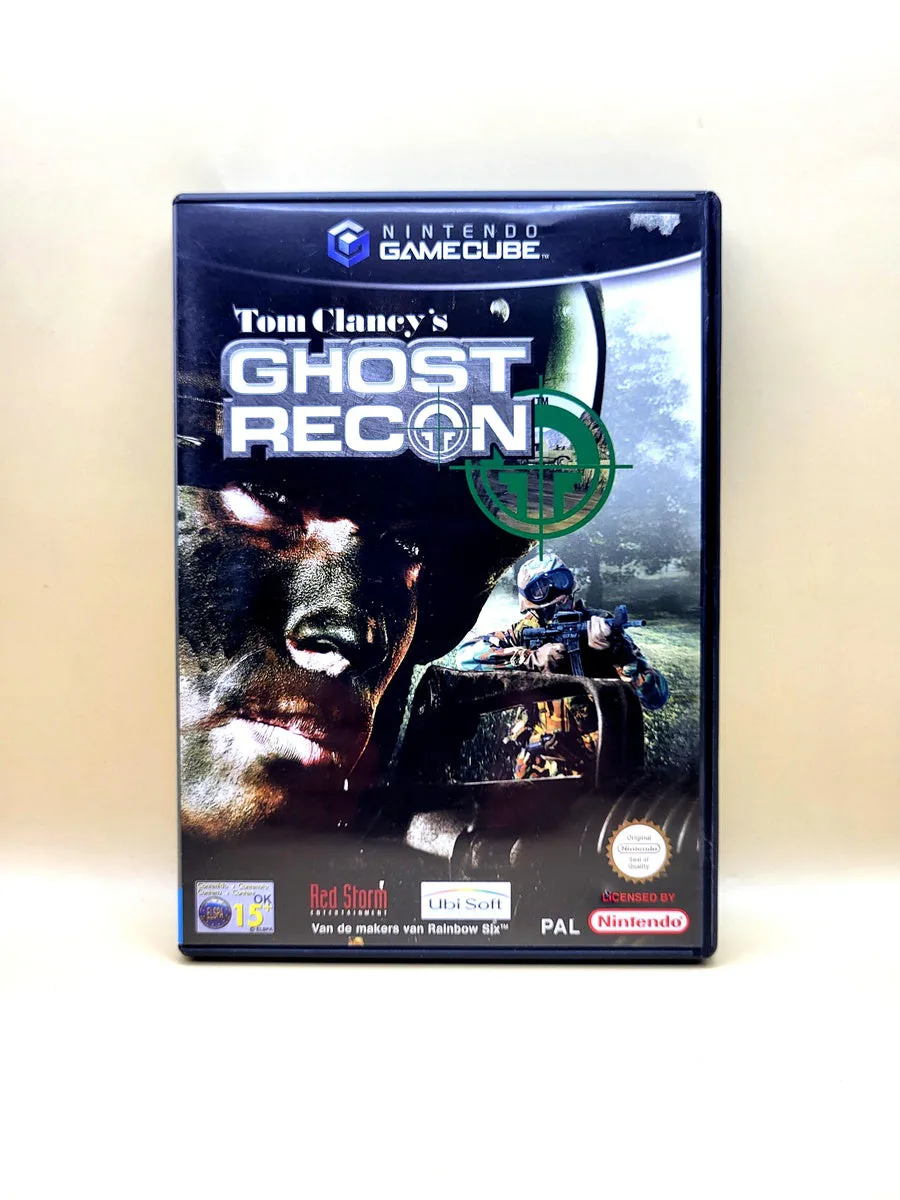
Tom Clancy's Ghost Recon for Nintendo GameCube
Tom Clancy's Ghost Recon for Nintendo GameCube is a tactical shooter in which you lead a military unit through missions in Eastern Europe. You divide six soldiers between two teams and can switch between the available team members. Before moving on, you examine possible cover, enemy positions and the route to the next objective. An exposed crossing can quickly go wrong. The position of your other team is therefore at least as important as the sights of the soldier you control yourself.
You issue orders through the map and coordinate the movements of your teams. You can have one group wait while you use the other to scout a position or look for another direction of attack. Beforehand, you choose soldiers and equipment that suit the mission. A sniper, for example, has a different role from an explosives specialist. Along the way, you watch over the whole unit: if a soldier is taken out, your options for completing the remaining objectives change. Every encounter therefore calls for a decision.
The missions combine combat with objectives such as securing an area or taking a position. You can also play unlocked campaign missions with a second player in split screen. To do so, you first complete the relevant mission alone. Together, you agree on who advances and who provides cover, so cooperation between the two teams also becomes cooperation between two players.
Region and language
Our Nintendo GameCube games are PAL editions and come with a Dutch or English box, unless stated otherwise. By default, you receive the version for the European market. We note it in the product details if the region is different or the box is in another language. In almost all cases, the game is playable at least in English, and often in the other five common European languages too.
Manual
Tom Clancy's Ghost Recon for Nintendo GameCube includes the manual unless the product title states otherwise. If the booklet is missing, the title says “No Manual”. This lets you see before ordering whether the game comes with a manual.
The manuals included with our games usually contain at least English and often around six European languages. The exact languages vary by edition, so Dutch is not always included. The booklet explains the controls and the main rules. You can use it to check how to control the game, which actions are available and how its different features work.
The history of Tom Clancy's Ghost Recon
Tom Clancy's Ghost Recon began on Windows PC in 2001, developed by Red Storm Entertainment and published by Ubi Soft. After versions for other systems, the Nintendo GameCube edition appeared in 2003. The series drew on the military thrillers associated with the Tom Clancy name, but built a fictional conflict of its own. Its story took place in Eastern Europe in 2008, still a future scenario at the time, with the Ghosts as a specially trained unit.
The move to GameCube brought the control of a group of soldiers to the controller. In this version, you work with two teams of three soldiers. Alongside aiming and moving yourself, choosing a team member and issuing map orders became regular parts of play. The relationship between the two groups remained the central idea: moving one team also affects what the other group can see, defend or attack.
At the GameCube launch, Ubi Soft highlighted split-screen play, both together against computer-controlled enemies and against each other. This gave the console version a local way to share its team play. Ghost Recon 2 followed on GameCube in 2005, developed by Ubisoft Shanghai, with a different conflict and an over-the-shoulder camera view. The first game shows the series’ earlier approach, focusing on switching between soldiers and carefully planning movements.
Similar games for Nintendo GameCube
Tom Clancy's Ghost Recon 2 moves the action to North Korea and adds an over-the-shoulder camera view. On GameCube, it follows its own campaign around Scott Mitchell. The first Ghost Recon places more emphasis on dividing up and directly controlling soldiers within two teams, so you move your attention between different positions more often.
The Sum of All Fears also puts you in charge of a specialist team, but focuses its missions on counterterrorism and hostage situations. Its locations and events connect to the film and novel of the same name. Ghost Recon places the unit in a military conflict, with more attention to moving and coordinating two separate teams.
Tom Clancy's Splinter Cell centres on Sam Fisher, who uses shadows, quiet movement and gadgets to try to remain unseen. You mainly watch the visibility of a single operative. Ghost Recon shares the need to examine an environment in advance, but also has you coordinate the routes, equipment and positions of several soldiers.
Medal of Honor: Frontline follows Jimmy Patterson on missions during the Second World War. Progress revolves around the actions of that one protagonist, from shooting to completing mission objectives. Ghost Recon adds another responsibility: you also have to take account of soldiers you are not directly controlling at that moment.
Call of Duty: Finest Hour tells the story of the Second World War through different Allied soldiers and has you move through battles alongside fellow combatants. You follow their experiences within the campaign. Ghost Recon gives you more direct influence over assembling and moving the unit, so choosing a route also becomes a decision about your teams.