
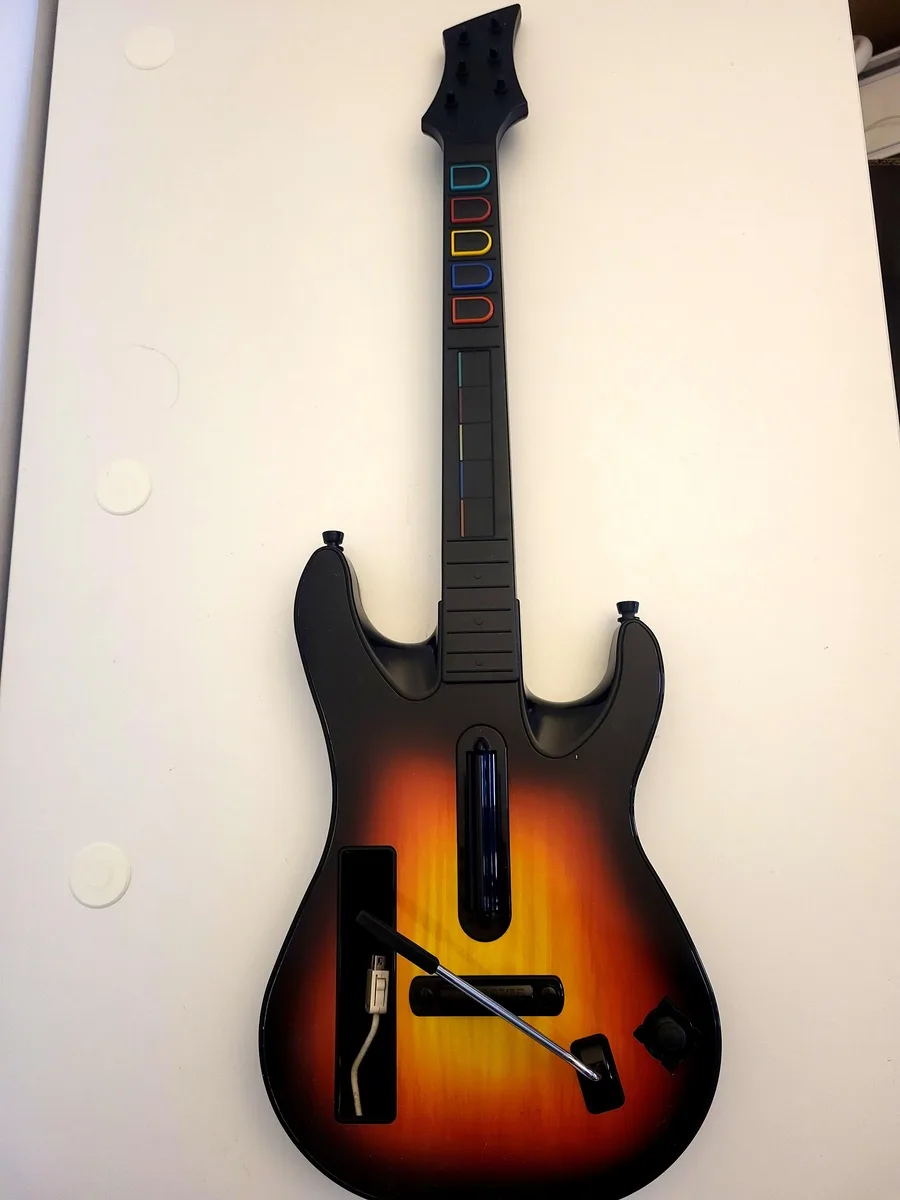
Guitar Hero Gitaar Sunburst - Nintendo Wii
€ 58,98
€ 4,94
In stock
De staat van dit product is: zo goed als nieuw.
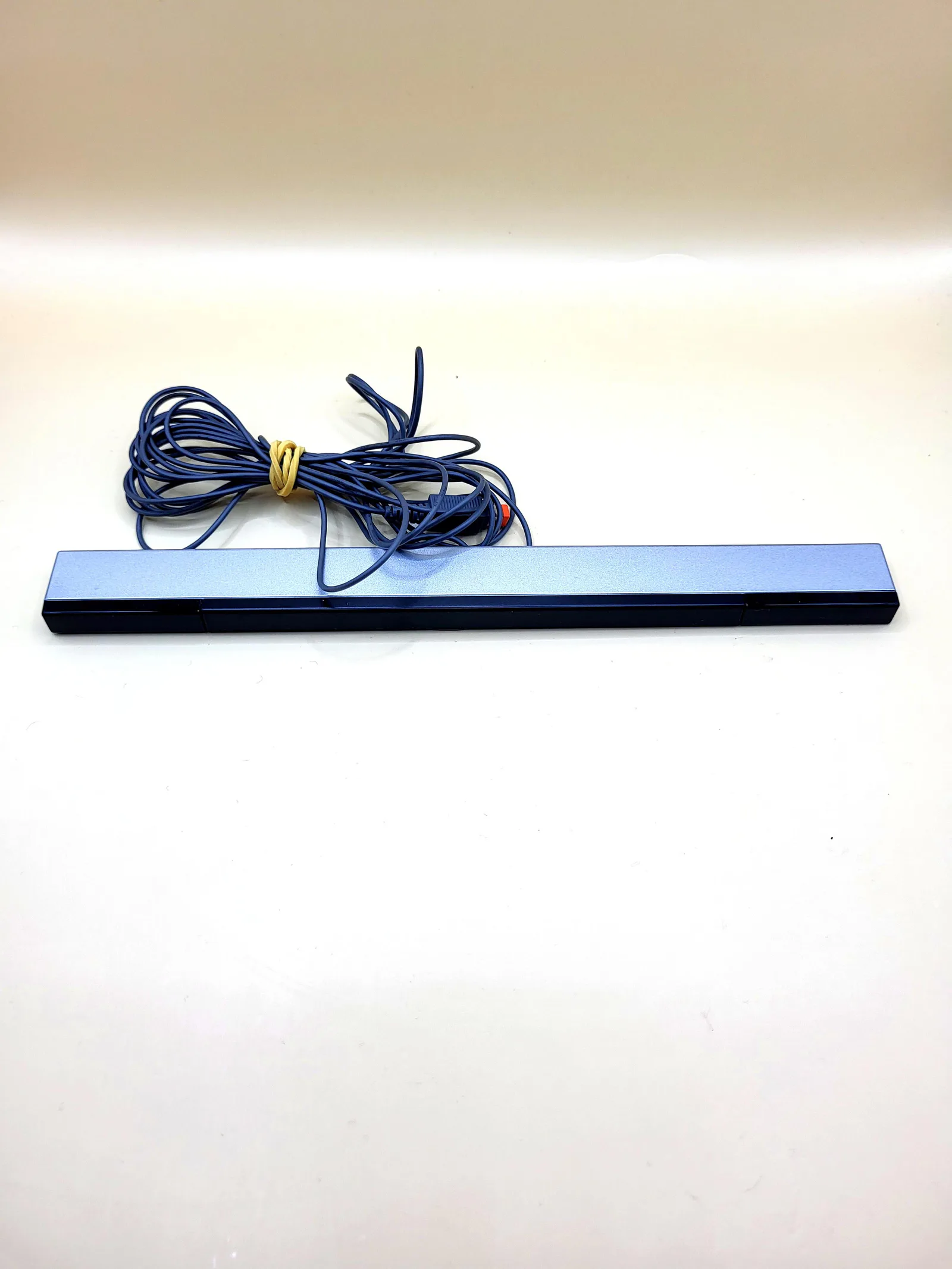
The Nintendo Wii Sensor Bar gives a Wii Remote's pointer a reference beside the television screen. Despite its name, the bar is not a camera filming you. It emits infrared light detected by the sensor in the remote. The Remote uses those light points to determine the pointer. You can select menus or aim at objects and targets in supported games without using a stick as a mouse.
This wired version is powered through the Sensor Bar connector on a Wii or Wii U. It needs no separate batteries or USB power. Centre the bar above or below the screen and select the corresponding position in settings. Keep the line of sight to the remote clear. Strong sunlight and other infrared sources may interfere with pointing. The bar sends no button presses and does not replace pairing a Remote wirelessly.
The bar adds no MotionPlus and does not independently track every arm movement. Tilting, rotation and pointing are different parts of Wii controls. The five examples below use the pointer in different ways. Their required controllers and any Nunchuk are still needed. This listing is for the bar with its cable; game, console, Remote, new adhesive strips or a separate stand are included only when expressly stated.
When the Wii launched in 2006, its remote took a different role from the conventional gamepad. Nintendo combined buttons with motion controls and an on-screen pointer. The Sensor Bar belonged to that last function. Infrared sources beside the screen worked with the Remote's sensor, while the bar itself recorded no player image. Positioning it near the television therefore became part of setting up the console.
Developers used the pointer both for simple choices and to link hand movement directly to aiming. Wii Play turned it into short activities; Metroid Prime 3 used it within a substantial adventure. These uses explain why a button connection alone was not always enough for full controls. Other movements were still measured differently. The later MotionPlus add-on supplied extra rotation tracking rather than replacing the infrared reference for ordinary pointer functions.
The Wii U later retained support for Wii Remotes and the existing wired Sensor Bar. Nintendo explains how the same bar connects directly to Wii U. An accessory from the previous generation could therefore move to a new console, depending on the software used. This was not a general switch to connectors such as USB. Its function remained a light reference for the Remote, not an independent controller or room-tracking camera.
Super Mario Galaxy has Mario walking across small planets, jumping around spherical worlds and collecting Power Stars. Move Mario with the Nunchuk stick while the Wii Remote provides the pointer and a shaking gesture for the spin attack. The original Wii version requires both controllers, but not MotionPlus. A second player can assist with an additional Remote's pointer rather than controlling a second fully mobile character.
The Legend of Zelda: Twilight Princess follows Link through Hyrule, including exploration as a wolf alongside Midna. Dungeon puzzles, horse riding and combat shape the adventure. The Wii release uses Remote and Nunchuk for movement, aiming and sword-and-shield actions. MotionPlus is not required. Its controls differ from the GameCube release; this example concerns the original Wii version, not Twilight Princess HD.
Wii Play collects short games using different Wii Remote controls. In Shooting Range, follow targets with the pointer and try to build consecutive hits. Missed shots break the streak, rewarding careful aim over random firing. Other activities need different movements or timing. A second player needs their own Remote. The Sensor Bar provides the pointing reference, not the controller whose buttons you press.
Metroid Prime 3: Corruption has Samus Aran explore planets, scan information and open routes with acquired abilities. Move with the Nunchuk and point the Wii Remote to look around and hit enemies. Each hand has a different role: movement and aiming are divided between two devices. This is the original Wii release of the third adventure, not Metroid Prime's older GameCube controls. A Sensor Bar supports pointing but does not replace a Nunchuk.
Link's Crossbow Training focuses on accurate shooting in locations from Twilight Princess. Aim at targets and enemies and build scoring streaks within the time limit. In free-movement sections, move Link with the Nunchuk stick. The Wii Zapper holds a Remote and Nunchuk; it is not a camera replacing the Sensor Bar. Up to four players can compare scores in turns. The game's historical bundle does not mean this separate bar includes a Zapper.
€ 58,98
€ 34,97
€ 29,94
€ 24,97
€ 24,94
€ 22,99
€ 22,99
€ 22,94
€ 19,99
€ 19,99