This product is like new. At NexWave Games, like new means:
Additionally, all discs at NexWave Games are carefully inspected and assessed for quality. When discs arrive, we do not accept any that are so badly damaged that they are unlikely to work. We only accept discs with light scratches at most. Discs with scratches are then treated in our professional disc repair machine. By warming the disc and polishing it with soft brushes, these machines can remove a very thin layer from the disc. This removes the layer containing surface scratches and improves the disc’s readability. This ensures the disc works properly, even on consoles with ageing lasers that have difficulty reading games! Great news for the player.
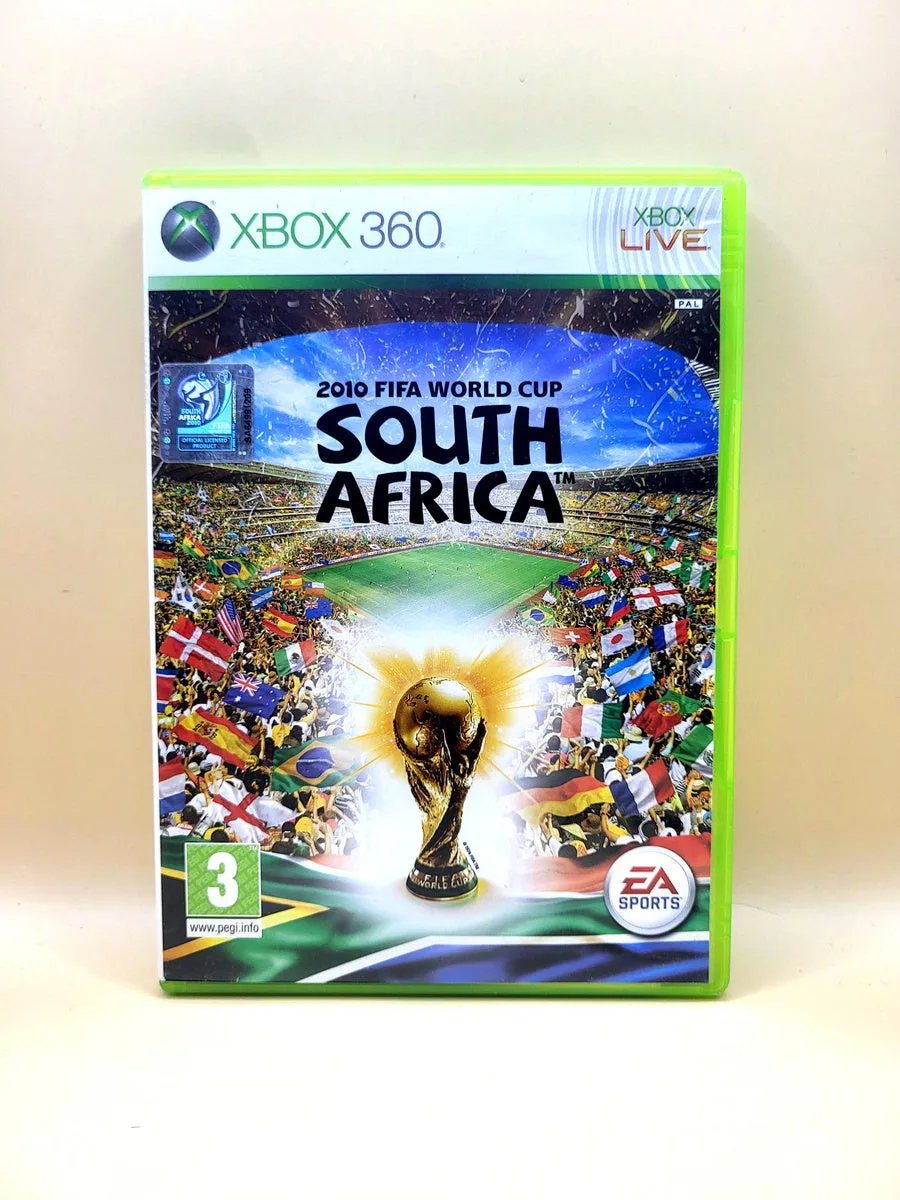
2010 FIFA World Cup South Africa for Xbox 360
2010 FIFA World Cup South Africa for PlayStation 3 and Xbox 360 lets you take 199 national teams into the official qualification campaign and finals. All ten World Cup stadiums in South Africa are included, alongside venues from the different qualifying regions. Flags, confetti, national anthems and the sound of vuvuzelas give the matches a distinctive tournament atmosphere. The game uses the countries and squads as EA recorded them around the 2010 World Cup.
The match engine stems from FIFA 10 but includes changes for international football. Altitude affects fatigue and home advantage, players can suffer injuries away from the ball, and penalties use a new system for accuracy and power. Captain Your Country lets you control one footballer and earn the captain's armband and a place in the national team through strong performances.
You can play individual matches, guide a country through qualification and the finals, or take on historic World Cup challenges. Local matches work with multiple controllers. The former PlayStation Network and Xbox Live features belong to discontinued services and are not offered as functional. Qualification, the World Cup, Captain Your Country and the other local content remain playable from the disc.
Region and language
Our Xbox 360 games are PAL editions and come with a Dutch or English box, unless stated otherwise. By default, you receive the version for the European market. We note it in the product details if the region is different or the box is in another language. In almost all cases, the game is playable at least in English, and often in the other five common European languages too.
2010 FIFA World Cup South Africa supports local matches with multiple controllers on PlayStation 3 and Xbox 360. The local tournaments and challenges are stored on the disc; discontinued network services are not guaranteed.
Manual
2010 FIFA World Cup South Africa for Xbox 360 includes the manual unless the product title states otherwise. If the booklet is missing, the title says “No Manual”. This lets you see before ordering whether the game comes with a manual.
The manuals included with our games usually contain at least English and often around six European languages. The exact languages vary by edition, so Dutch is not always included. The booklet explains the controls and the main rules. You can use it to check how to control the game, which actions are available and how its different features work.
The history of 2010 FIFA World Cup South Africa
EA Sports released 2010 FIFA World Cup South Africa in Europe on 30 April 2010, six weeks before the real tournament's opening match. EA Canada developed the PlayStation 3 and Xbox 360 versions. The Wii and PSP releases came from HB Studios and use a different technical and visual approach, so their features do not automatically apply to these two HD consoles.
The game appeared as a standalone World Cup release between FIFA 10 and FIFA 11. EA included all 199 countries that had taken part in qualification, so you can play an alternative route to South Africa with a nation outside the final group of 32. The revised penalty system, the effect of altitude and the return of Captain Your Country were designed to distinguish the game from a regular FIFA selection containing only national teams.
The release preserves the stadiums, presentation and football data from spring 2010. Later transfers, squad corrections and rules were not updated on the disc. Online matches and network updates offered at the time are no longer reliable features. The value of this version now lies mainly in its broad offline qualification campaign, the complete finals and the distinctive atmosphere of the first World Cup held on African soil.
Similar games for Xbox 360
FIFA 10 revolves around clubs, national leagues, transfers and a complete football season. 2010 FIFA World Cup uses a related match engine but builds everything around national teams, qualification and ten official World Cup stadiums. The revised penalty system and the effect of altitude are clear additions in the tournament release.
FIFA 11 arrived later and refines club football with newer squads and systems such as Personality+. The World Cup game retains the data and countries of 2010 and offers a much broader international campaign in return. FIFA 11 has more for players seeking a club career; this focused structure is for those who want to play from qualification to the world title.
Pro Evolution Soccer 2010 emphasises ball control, formations and club competitions, but has fewer official national-team licences. 2010 FIFA World Cup offers 199 countries and all ten stadiums used in the finals. PES feels more methodical in its build-up play, while FIFA centres on the bustle and presentation of a worldwide event.
UEFA Euro 2008 also follows an official international tournament and includes Captain Your Country. Its scale is smaller, centred on European qualification and the European Championship. 2010 FIFA World Cup extends that idea to six football confederations, 199 countries and stadiums in South Africa, with a new penalty system and altitude effects.
FIFA Street 3 uses small teams, enclosed pitches and exaggerated tricks without the structure of a normal World Cup. 2010 FIFA World Cup plays eleven against eleven in official stadiums and follows qualification, the group stage and knockout rounds. Both feature famous international players, but the rules, spaces and objectives of each match differ greatly.