This product is like new. At NexWave Games, like new means:
Additionally, all discs at NexWave Games are carefully inspected and assessed for quality. When discs arrive, we do not accept any that are so badly damaged that they are unlikely to work. We only accept discs with light scratches at most. Discs with scratches are then treated in our professional disc repair machine. By warming the disc and polishing it with soft brushes, these machines can remove a very thin layer from the disc. This removes the layer containing surface scratches and improves the disc’s readability. This ensures the disc works properly, even on consoles with ageing lasers that have difficulty reading games! Great news for the player.
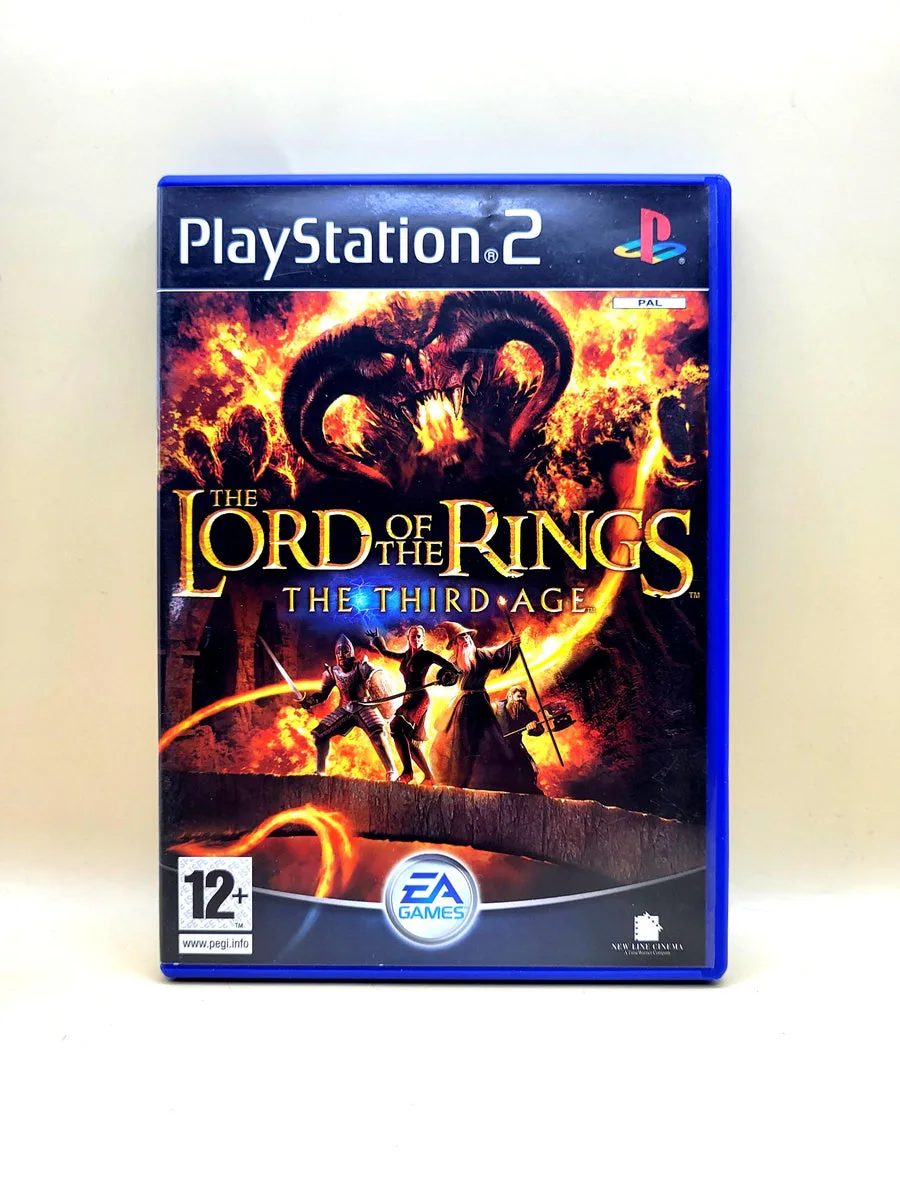
The Lord of the Rings: The Third Age for PlayStation 2
The Lord of the Rings: The Third Age for PlayStation 2 is a role-playing game with turn-based battles in the world of the film trilogy. You begin with Berethor, a soldier from Gondor searching for Boromir. During the journey, companions including the elf Idrial, the ranger Elegost and the dwarf Hadhod join him. Their own quest intersects with familiar events in Middle-earth, from the Mines of Moria to the fighting around Gondor.
You explore areas directly, but during battle you select commands from menus. The visible turn order helps you decide whether to attack, heal or strengthen an ally first. Weapons, armour and accessories change attributes; repeatedly using abilities teaches further techniques within their skill lines. A strong party therefore requires more than a higher experience level. You must also consider who supports a vulnerable ally and which attack suits the opponent.
You can play the campaign alone or share it locally with two players. With a second controller, the other player takes over some characters during battles; the first player continues to control exploration. No Multitap is needed. Progress through the journey also unlocks battles on the side of Sauron's forces. These additional encounters give familiar confrontations another perspective, while the main journey revolves around developing and equipping your own party.
Region and language
Our PlayStation 2 games are PAL editions and come with a Dutch or English box, unless stated otherwise. By default, you receive the version for the European market. We note it in the product details if the region is different or the box is in another language. In almost all cases, the game is playable at least in English, and often in the other five common European languages too.
Manual
The Lord of the Rings: The Third Age for PlayStation 2 includes the manual unless the product title states otherwise. If the booklet is missing, the title says “No Manual”. This lets you see before ordering whether the game comes with a manual.
The manuals included with our games usually contain at least English and often around six European languages. The exact languages vary by edition, so Dutch is not always included. The booklet explains the controls and the main rules. You can use it to check how to control the game, which actions are available and how its different features work.
The history of The Lord of the Rings: The Third Age
Electronic Arts released The Lord of the Rings: The Third Age for PlayStation 2 in November 2004. Development was handled by EA Redwood Shores, which had previously made The Return of the King. In its April 2004 announcement, EA presented it as a new journey through New Line Cinema's three films. The studio therefore used the same film world as its previous action games, but now chose a role-playing game in which decisions each turn determine the battles.
The new protagonists allowed a different route through familiar events. Berethor and his companions do not replace the Fellowship, but become involved in locations and battlefields that film viewers recognise. This design makes room for equipment, supporting abilities and an expanding party. Recognition comes from the world and encounters, while developing the group drives progress during play. Familiar heroes appear alongside the original characters at special moments rather than constantly leading the entire campaign.
Choosing turn-based commands distinguished The Third Age from The Two Towers and The Return of the King. Where those games demand direct reactions and attack chains, this adventure lets you weigh the order and consequences of actions. Local cooperation follows the same principle: two players divide characters within one battle, rather than having two freely roaming heroes. A separate Game Boy Advance version by Griptonite appeared at the same time. That handheld strategy interpretation is not the three-dimensional PS2 campaign offered here.
Similar games for PlayStation 2
Final Fantasy X resembles The Third Age through menu-based battles, a visible turn order and characters with different roles. Development there uses the Sphere Grid, whereas The Third Age links new techniques to using skill lines and to equipment. Spira also tells its own story. Here, familiar film locations in Middle-earth give the journey direction and you can divide battles locally with a second player.
Grandia II combines a travelling party with menu commands and a visible timeline. The right attack can push an enemy back along that bar or interrupt an action. The Third Age focuses more on the displayed turn order, supporting abilities and preparing your party. Both have different roles cooperate, but the rhythm of combat and the way abilities develop call for different approaches.
The Return of the King offers the same film world, recognisable battles and local cooperation. There you control familiar heroes in direct action involving attacks, blocking and combinations. The Third Age follows a new party and makes battles turn-based. Here two players share commands for characters in the same fight. You therefore do not have to dodge simultaneously, but must agree who attacks, restores health or prepares for the next turn.
Baldur's Gate: Dark Alliance connects fantasy creatures, equipment and growing abilities with searching dangerous areas. Combat happens in real time, making keeping your distance and striking at the right moment important. The Third Age pauses the action for commands and divides decisions between turns. Both allow cooperation, but Dark Alliance gives two players a roaming hero each, whereas here the first player controls the shared journey outside battles.
Demon Stone also sends a party featuring a warrior, a mage and other specialists against a fantasy threat. There, as the only player, you switch between three heroes during the action and the computer helps with the other two. The Third Age gives more time for individual commands, equipment and planning recovery. The difference is therefore not just the world: Demon Stone demands quick switches, while this journey creates cooperation through turn choices.