This product is like new. At NexWave Games, like new means:
Additionally, all discs at NexWave Games are carefully inspected and assessed for quality. When discs arrive, we do not accept any that are so badly damaged that they are unlikely to work. We only accept discs with light scratches at most. Discs with scratches are then treated in our professional disc repair machine. By warming the disc and polishing it with soft brushes, these machines can remove a very thin layer from the disc. This removes the layer containing surface scratches and improves the disc’s readability. This ensures the disc works properly, even on consoles with ageing lasers that have difficulty reading games! Great news for the player.
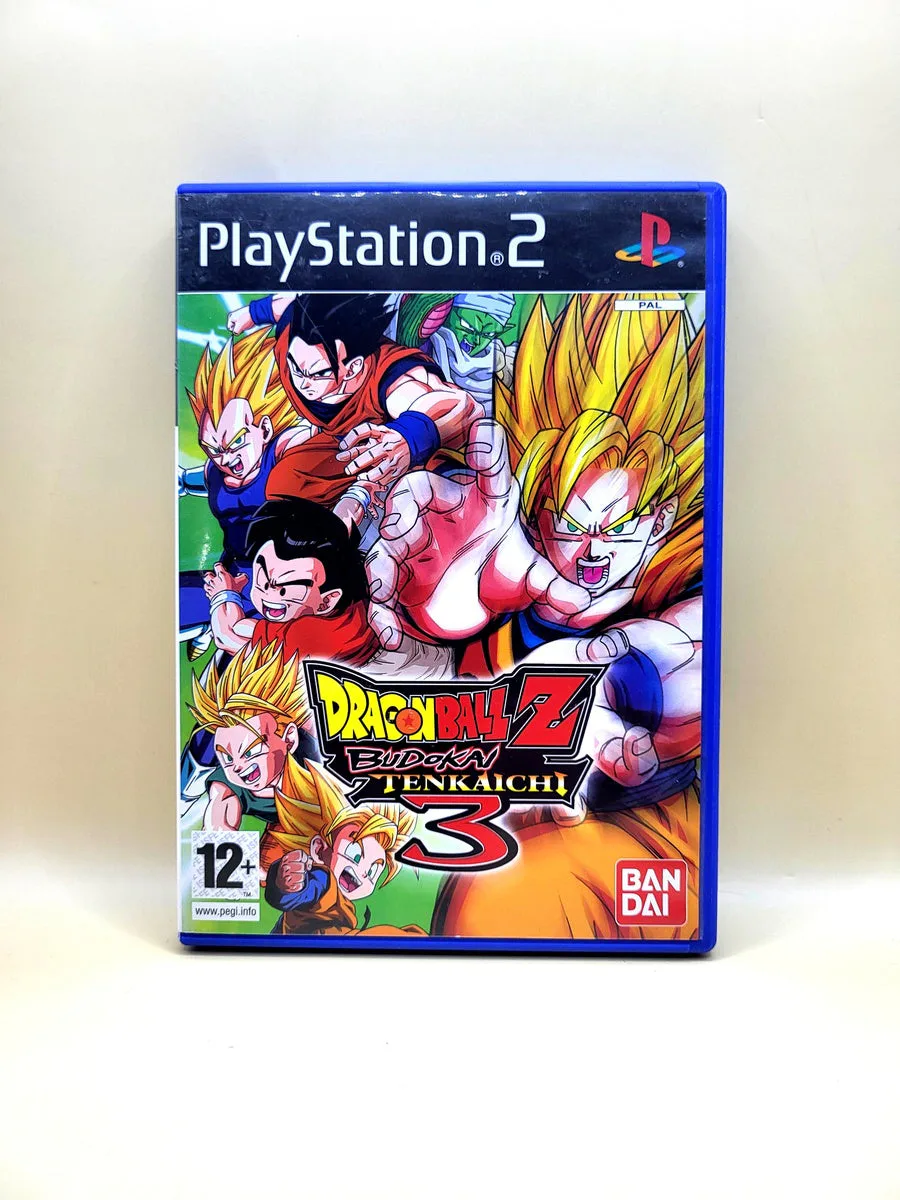
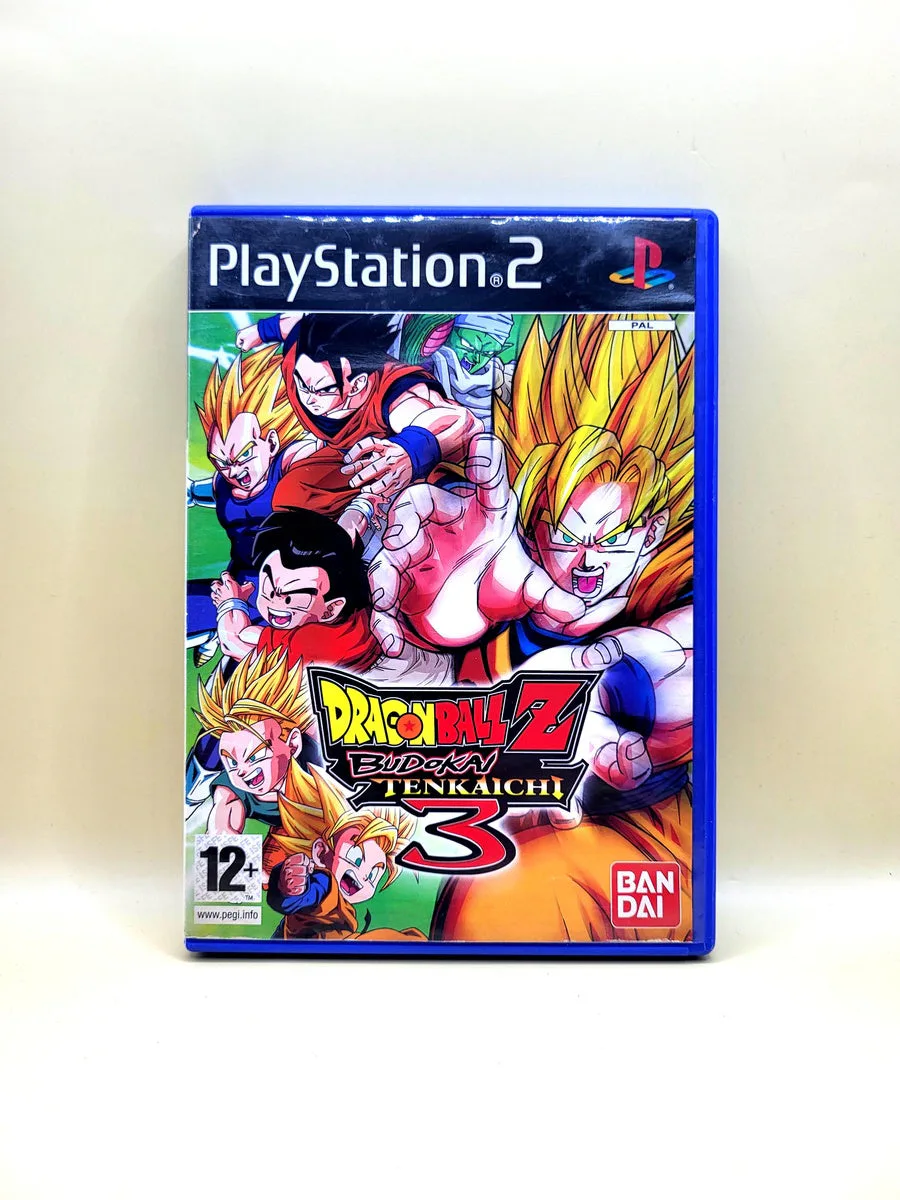
Dragon Ball Z: Budokai Tenkaichi 3 for PlayStation 2
Dragon Ball Z: Budokai Tenkaichi 3 for PlayStation 2 is an arena fighting game with a large selection of warriors and their different forms. You move through three-dimensional battlefields, fly to different heights and combine melee attacks with ki techniques. The camera follows from behind, making positioning and locating your opponent important. Familiar sagas provide confrontations, but you can also set up a local duel.
At close range you use melee combinations; farther away, ki attacks and finding an opening become more important. You must locate your opponent, build energy and avoid being caught unprepared. The space between fighters therefore changes constantly. Firing a major attack is only one part of a duel: approaching, evading and choosing the right distance again also determine whether your plan works.
Dragon History organises story battles, while additional challenges offer different combinations and restrictions. Two players can fight locally in split screen, each with a controller. The PS2 version also has the optional Disc Fusion System, which requires a separate disc of Budokai Tenkaichi or Budokai Tenkaichi 2. Those earlier games are not included. The online feature announced for Wii does not belong to this PS2 disc.
Region and language
Our PlayStation 2 games are PAL editions and come with a Dutch or English box, unless stated otherwise. By default, you receive the version for the European market. We note it in the product details if the region is different or the box is in another language. In almost all cases, the game is playable at least in English, and often in the other five common European languages too.
Manual
Dragon Ball Z: Budokai Tenkaichi 3 for PlayStation 2 includes the manual unless the product title states otherwise. If the booklet is missing, the title says “No Manual”. This lets you see before ordering whether the game comes with a manual.
The manuals included with our games usually contain at least English and often around six European languages. The exact languages vary by edition, so Dutch is not always included. The booklet explains the controls and the main rules. You can use it to check how to control the game, which actions are available and how its different features work.
The history of Dragon Ball Z: Budokai Tenkaichi 3
Spike developed Dragon Ball Z: Budokai Tenkaichi 3 for PlayStation 2 and Wii, released by Atari in 2007. The third entry built on its predecessors’ large arenas and expanded the selection further. The publisher advertised more than 150 playable characters, with different forms included in that total. The figure therefore does not represent that many entirely separate names. The emphasis was on a broad overview of Dragon Ball within one combat system.
Story presentation changed again. Dragon History focused on selected confrontations rather than simply copying Tenkaichi 2’s longer world-map journey. The third entry also added challenges combining new opponents or rules with the existing combat system. Expansion could therefore mean applying the same skills under different conditions. The large selection supplied many combinations, while approaching, defending and choosing the right attack moment remained the practical core.
Atari explicitly distinguished PS2 and Wii extras. Wii received network battles at the time; PlayStation 2 received Disc Fusion as an optional link to the two earlier Tenkaichi discs. This rewarded owners of earlier games without including those discs in the base product. Local content is therefore the relevant focus for this edition. Tenkaichi 3 concludes Spike’s original PS2 trilogy with a broad selection and extra battle challenges, not another platform’s online feature.
Similar games for PlayStation 2
Dragon Ball Z: Budokai 3 and Budokai Tenkaichi 3 both offer many familiar warriors and techniques on PS2. Budokai 3 centres on Dimps’ duels and Dragon Universe; Tenkaichi 3 uses Spike’s larger arenas and selected Dragon History battles. The number three therefore refers to two different series. Tenkaichi 3’s Disc Fusion also does not work with a Budokai 3 disc.
Dragon Ball Z: Budokai Tenkaichi and Budokai Tenkaichi 3 let you pursue opponents at different heights on PS2. The first introduces that arena approach and groups story battles in Z Battle Gate. The third has a larger selection, different challenges and Dragon History. A separate first Tenkaichi disc can also unlock optional Disc Fusion content in the third entry.
Dragon Ball Z: Budokai Tenkaichi 2 and Budokai Tenkaichi 3 share large arenas, transformations and local split-screen duels on PS2. Tenkaichi 2 connects its story through Dragon Adventure’s world map. Tenkaichi 3 chooses Dragon History and extra battle challenges. Its larger selection therefore does not simply replace the same journey: the way you reach and experience story battles differs too.
Tekken 5 also uses three-dimensional fighters and requires timing for combos and defence on PS2. The Budokai Tenkaichi games instead offer much greater distances, flight and ki attacks viewed from behind a fighter. Tekken keeps duels more closely centred on both opponents. Positioning remains important, but does not involve the same pursuit across a large space.
Soulcalibur II also allows sidestepping and thinking about space around an opponent on PS2. Weapons, close fighting distances and dangerous arena edges give this a different meaning from Budokai Tenkaichi, where flight and energy attacks create larger movements. Both reward reading an attack, but your response depends on very different distances and movement options.