This product is like new. At NexWave Games, like new means:
Additionally, all discs at NexWave Games are carefully inspected and assessed for quality. When discs arrive, we do not accept any that are so badly damaged that they are unlikely to work. We only accept discs with light scratches at most. Discs with scratches are then treated in our professional disc repair machine. By warming the disc and polishing it with soft brushes, these machines can remove a very thin layer from the disc. This removes the layer containing surface scratches and improves the disc’s readability. This ensures the disc works properly, even on consoles with ageing lasers that have difficulty reading games! Great news for the player.
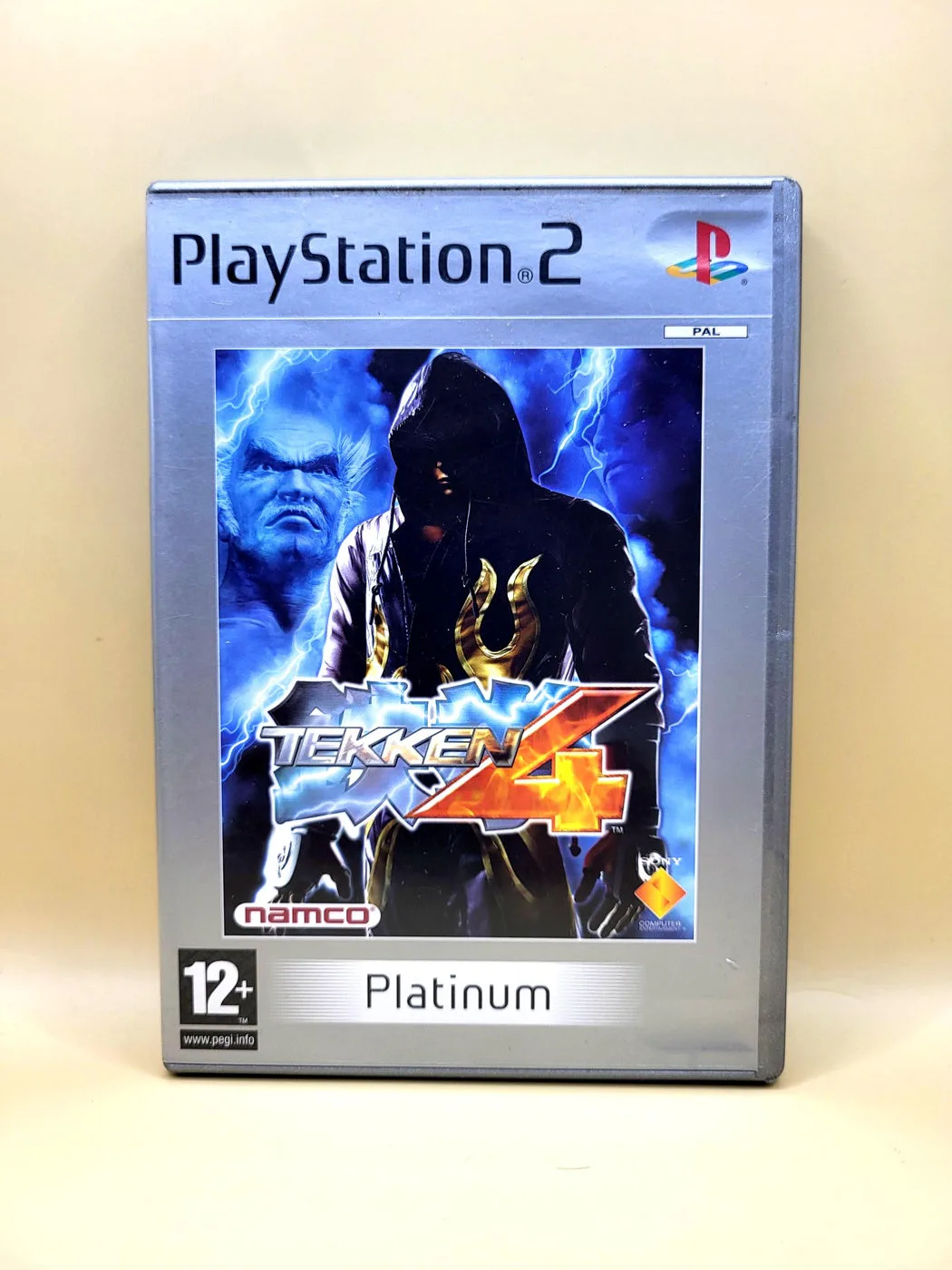
Tekken 4 for PlayStation 2
Tekken 4 for PlayStation 2 is a three-dimensional fighting game in which you choose one character for duels using punches, kicks and throws. Familiar fighters such as Jin Kazama, Kazuya Mishima and King appear alongside newcomers including boxer Steve Fox and Christie Monteiro. The four attack buttons correspond to your character's arms and legs. By combining moves and blocking attacks, you look for an opening in your opponent's defence.
The arena affects how a fight unfolds. Walls, obstacles and changes in elevation make it important to watch the space behind both fighters. You can drive someone against a wall, but can also become trapped more quickly yourself if you keep retreating. Moving sideways helps you avoid a straight attack and reposition. Distance, timing and knowing your own moves remain decisive.
You can follow the story fights, practise in training or challenge a second player locally. The story gives your chosen fighter a personal reason for entering the tournament. Tekken Force adds a different kind of action: you move through separate areas and fight multiple enemies rather than one opponent per round. Alongside the regular duels, the PS2 disc therefore also offers a campaign in which you advance by defeating groups of soldiers.
Region and language
Our PlayStation 2 games are PAL editions and come with a Dutch or English box, unless stated otherwise. By default, you receive the version for the European market. We note it in the product details if the region is different or the box is in another language. In almost all cases, the game is playable at least in English, and often in the other five common European languages too.
Manual
Tekken 4 for PlayStation 2 includes the manual unless the product title states otherwise. If the booklet is missing, the title says “No Manual”. This lets you see before ordering whether the game comes with a manual.
The manuals included with our games usually contain at least English and often around six European languages. The exact languages vary by edition, so Dutch is not always included. The booklet explains the controls and the main rules. You can use it to check how to control the game, which actions are available and how its different features work.
The history of Tekken 4
Namco brought Tekken 4 to arcades in 2001 and to PlayStation 2 in 2002. After Tekken Tag Tournament, the series returned to its continuing story about the Mishima family. Kazuya once again played an important part. The game still used the familiar four attack buttons, but also explored how combat could change when the space around the fighters was no longer a limitless plain.
Walls and changes in elevation gave arenas a more active role. Instead of watching only the distance to the other fighter, you also had to consider a nearby wall or a corner where you could get trapped. Namco adjusted movement as well. These choices changed how players could use familiar techniques and their position. New characters also brought different fighting styles within the same basic controls.
The home version received a more developed story structure and Tekken Force. The latter built on the idea from Tekken 3, but here let you move more freely through three-dimensional areas against multiple enemies. Tekken 5 later reconsidered some choices concerning movement and arenas. Within the PS2 series, Tekken 4 thus remains recognisable as the entry that closely connected environmental layout with regular duels and developed the tournament story further.
Similar games for PlayStation 2
Tekken 5 retains the four attack buttons and the conflict around the Mishima family, but revises movement and arena design again. Tekken 4 places greater emphasis on uneven ground and obstacles within bounded spaces. In both, you learn how distance, defence and combos work together. The place where you pin an opponent down is simply handled differently.
Tekken Tag Tournament lets you choose two fighters and switch during a duel. Tekken 4 keeps regular fights to one character per player and continues the ongoing tournament story. The limb-based controls are familiar, but in Tag you also manage when to switch and your partner's health. Tekken 4 calls for more attention to walls and position.
Soulcalibur II mainly uses weapons, so reach and horizontal or vertical strikes determine distance. Tekken 4 builds its duels around punches, kicks and throws. Both let you move sideways in three-dimensional arenas. In Soulcalibur II, ring-outs can end a round; Tekken 4 uses walls and obstacles as part of the pressure you apply to an opponent.
Virtua Fighter 4 uses three basic buttons for punching, kicking and guarding. Tekken 4 divides attacks among four buttons corresponding to the limbs. In both, training helps you understand timing, distance and defensive choices. The button layout and the way moves connect give learning a character a different rhythm.
Dead or Alive 2: Hardcore combines attacks and throws with counter holds and arenas featuring changes in elevation. Tekken 4 shares the emphasis on positioning within a three-dimensional environment, but uses its own throws, sidesteps and combos. Both require you to read an attack. How you then defend or change your opponent's position differs between systems.