This product is like new. At NexWave Games, like new means:
Additionally, all discs at NexWave Games are carefully inspected and assessed for quality. When discs arrive, we do not accept any that are so badly damaged that they are unlikely to work. We only accept discs with light scratches at most. Discs with scratches are then treated in our professional disc repair machine. By warming the disc and polishing it with soft brushes, these machines can remove a very thin layer from the disc. This removes the layer containing surface scratches and improves the disc’s readability. This ensures the disc works properly, even on consoles with ageing lasers that have difficulty reading games! Great news for the player.
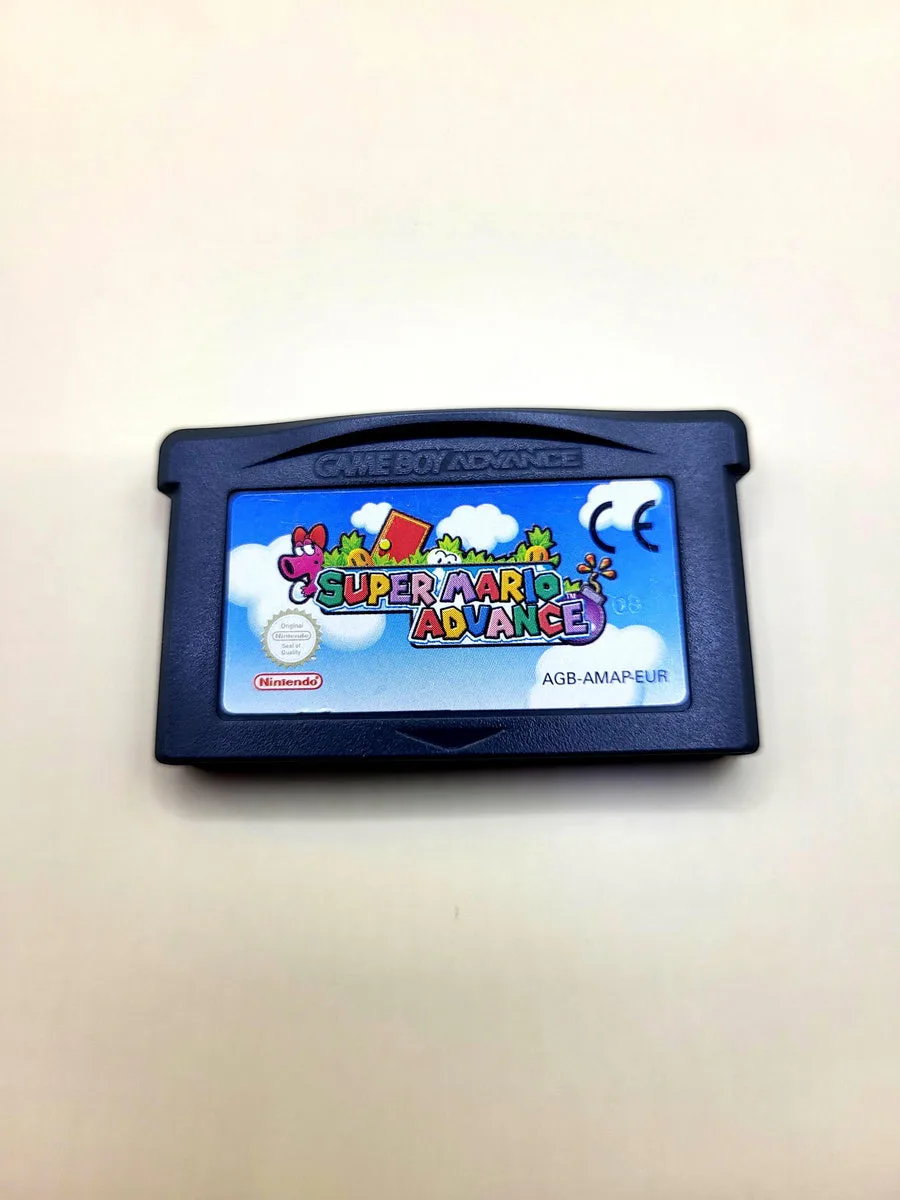
Super Mario Advance for Game Boy Advance
Super Mario Advance for Game Boy Advance brings together two different platform games: an expanded Super Mario Bros. 2 and a reworked Mario Bros. In Super Mario Bros. 2, you travel through Subcon to defeat the evil Wart. For each level, you choose Mario, Luigi, Peach or Toad. Mario is balanced, Luigi jumps high, Peach can briefly hover and Toad lifts objects quickly. Your choice changes how you approach a difficult jump or a group of enemies. The seven worlds include deserts, caves and routes high above the ground.
You mainly defeat enemies by lifting and throwing vegetables, objects or other enemies. You can stand on many opponents without immediately defeating them. That gives you time to aim your next throw but does not automatically make a jumping attack safe. Red Ace Coins encourage you to search side routes. After the main adventure, the Yoshi Challenge opens with hidden eggs, giving familiar levels new goals. Three save files store your progress on the cartridge.
You play Super Mario Bros. 2 alone. In the separate Mario Bros., you flip enemies from underneath and kick them off the screen. Up to four players in total can join locally, each with their own Game Boy Advance and the necessary Game Link cables. Battle works with one cartridge; playing Classic together requires a compatible game cartridge for each participant. The extra systems and cables are not included.
Region and language
Our Game Boy Advance games are European editions, unless stated otherwise. This product contains a loose cartridge for the European market. A box is only included if explicitly stated in the product details. We note any different region in the product details. In almost all cases, the game is playable at least in English, and often in the other five common European languages too.
Manual
With Super Mario Advance for Game Boy Advance, you receive a loose cartridge. A box and manual are not included unless we explicitly state otherwise in the product details. This is the standard way we supply this copy.
The history of Super Mario Advance
Super Mario Advance was released in Europe on 22 June 2001, alongside the Game Boy Advance. Nintendo used two older games as its foundation but turned them into a distinct handheld release. Super Mario Bros. 2 provided the main adventure with four playable heroes and the dreamland Subcon. Mario Bros. added shorter action built around pipes, flipped enemies and coins. The cartridge thus combined a journey through different worlds with a separate game that repeatedly returns to the same compact playing area.
The Super Mario Bros. 2 reworking changed more than the presentation. Larger objects and enemies, Ace Coins and the later Yoshi Challenge gave existing routes extra goals. Voices and revised graphics also made the difference from older releases immediately audible and visible. Lifting nevertheless remained at the heart of the game. The four heroes are not interchangeable pictures: their jumps and lifting strength determine which solution feels best for a particular obstacle.
Mario Bros. made the Game Link connection a distinct part of the package. One cartridge could send a Battle match to other connected handhelds; multiplayer Classic used multiple cartridges. That distinction suited a new portable system seeking to expand local play. Super Mario Advance then became the start of a series of Game Boy Advance reworkings. Later instalments chose different main adventures, including Super Mario World and Yoshi’s Island, while this first game retained its own Subcon adventure.
Similar games for Game Boy Advance
Super Mario World: Super Mario Advance 2 on Game Boy Advance also involves revisiting levels to find secrets. Hidden exits open new routes on the world map, and Mario can ride Yoshi or fly with a cape. The first Super Mario Advance uses four heroes and lifting enemies. Both involve searching within platform levels, but their tools and map structure clearly differ.
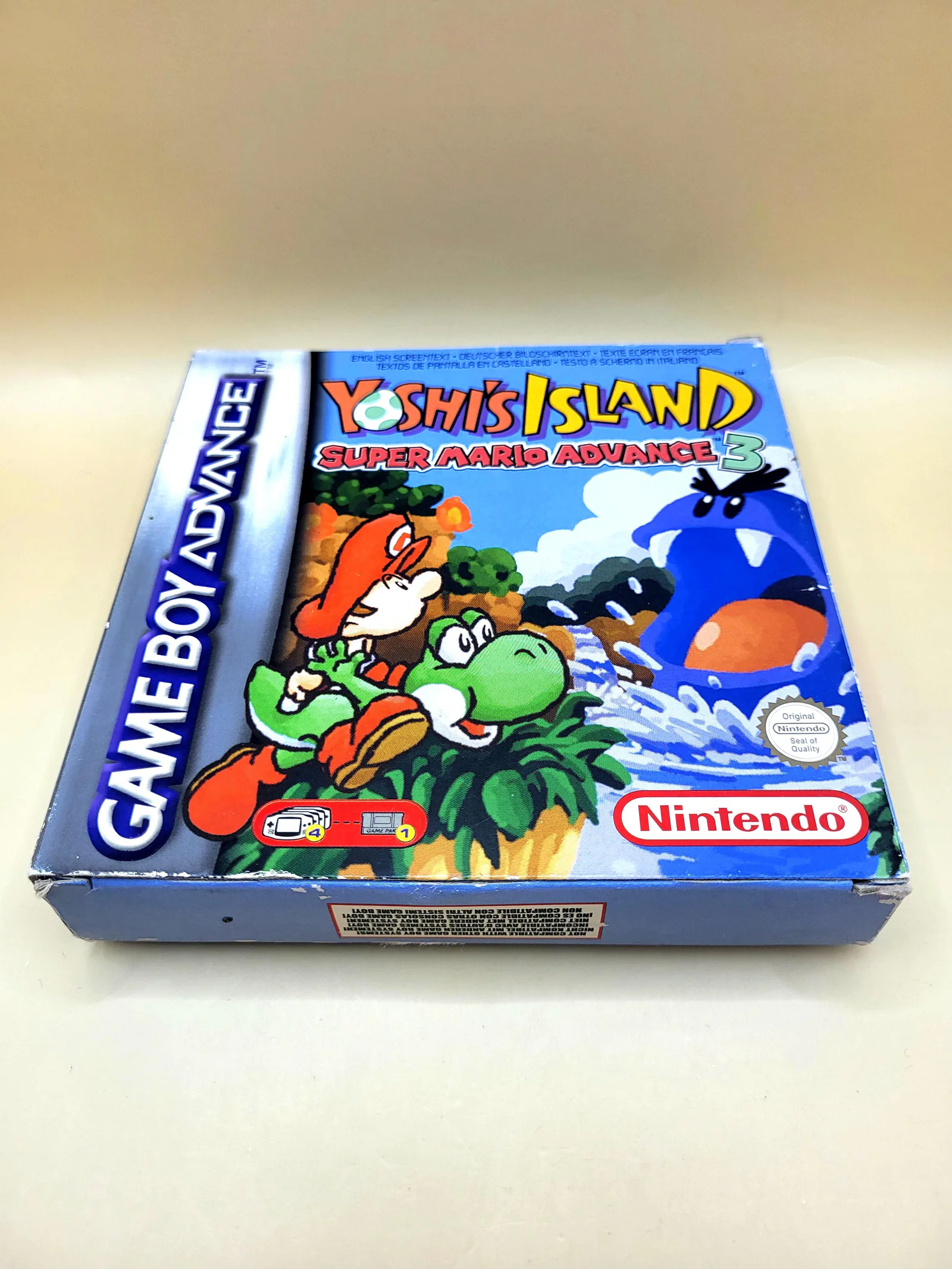
Yoshi’s Island: Super Mario Advance 3 on Game Boy Advance also revolves around careful collecting while jumping. Yoshi carries Baby Mario and uses his tongue and thrown eggs to open routes. Super Mario Advance instead lets you choose between four heroes and lift objects by hand. In both, inspecting a side path carefully helps, but responsibility for Baby Mario gives Yoshi’s journey a different rhythm.
Super Mario Advance 4: Super Mario Bros. 3 on Game Boy Advance also reworks an older Mario adventure with a separate Mario Bros. You use outfits and other power-ups to gain new movements. Super Mario Advance mainly distributes those differences across Mario, Luigi, Peach and Toad. The levels of Super Mario Bros. 2 also ask you to lift enemies much more often than to land on them.
Wario Land 4 on Game Boy Advance also combines platform action with treasure hunting and using objects from the surroundings. Wario’s temporary transformations help him pass obstacles, after which an escape timer can change the return journey. Super Mario Advance keeps its four heroes’ powers largely fixed and has you seek new routes by jumping and lifting. The similarity lies in exploratory play, not in fighting the same way.
Mario vs. Donkey Kong on Game Boy Advance shares the lifting of enemies and careful planning of jumps. It uses those actions to build short key-and-toy puzzles around one Mario. Super Mario Advance gives you longer platform routes and lets you choose a hero to match the obstacle. While Donkey Kong’s toy theft often demands the correct sequence, Subcon also rewards exploring a side route for coins and hidden goals.