This product is like new. At NexWave Games, like new means:
Additionally, all discs at NexWave Games are carefully inspected and assessed for quality. When discs arrive, we do not accept any that are so badly damaged that they are unlikely to work. We only accept discs with light scratches at most. Discs with scratches are then treated in our professional disc repair machine. By warming the disc and polishing it with soft brushes, these machines can remove a very thin layer from the disc. This removes the layer containing surface scratches and improves the disc’s readability. This ensures the disc works properly, even on consoles with ageing lasers that have difficulty reading games! Great news for the player.
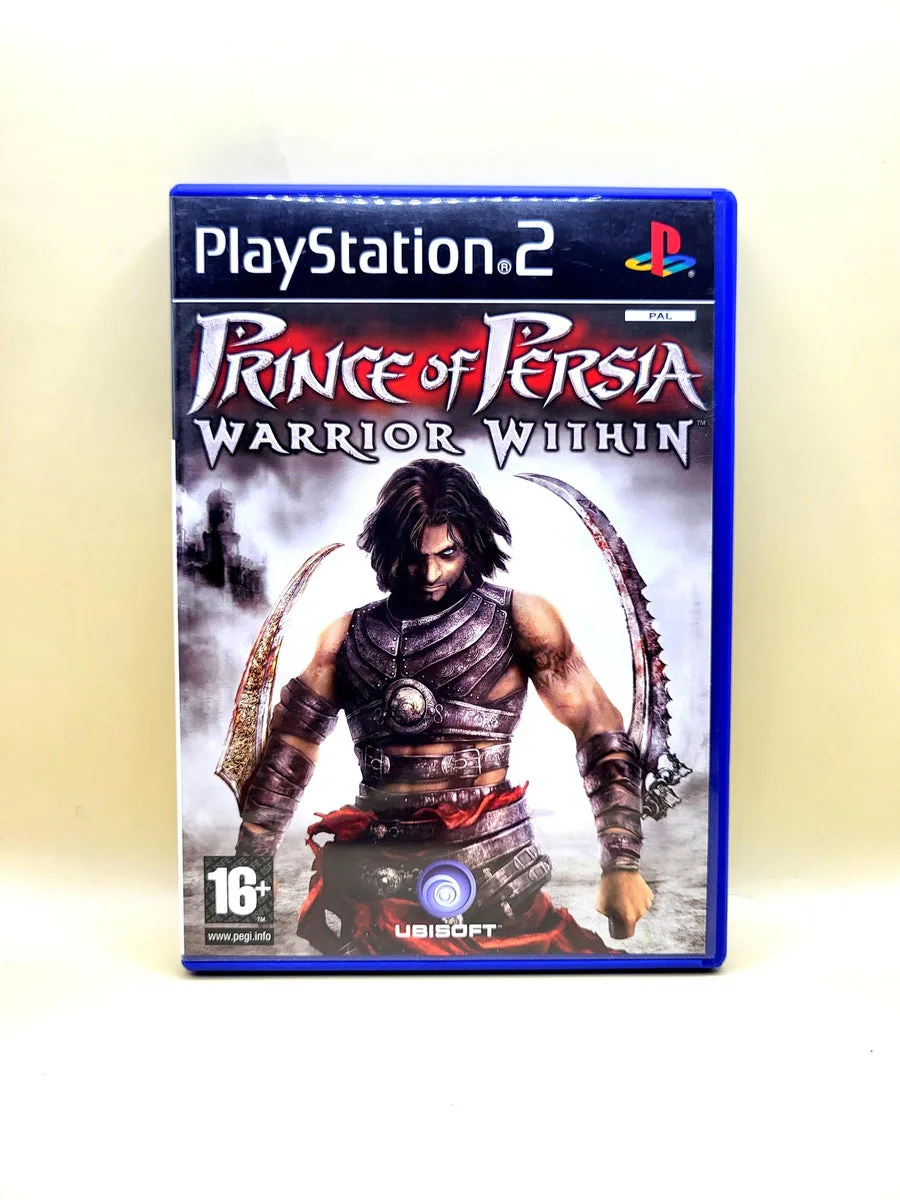
Prince of Persia: Warrior Within for PlayStation 2
Prince of Persia: Warrior Within for the PlayStation 2 is an action-adventure game in which the prince is hunted by the Dahaka. Following his earlier interference with time, he tries to escape a fate that keeps pursuing him. His search takes him to the Island of Time, where the creation of the Sands of Time plays a central role. You investigate an island filled with ruined buildings, mechanisms and dangerous routes.
Wall-running, jumping and balancing remain important, but the prince has more ways to move and fight. For example, you use ropes to extend a route and slide down fabric with your sword. During combat, you can pick up a second weapon and combine attacks. Walls, poles and enemy positions also help you choose another angle of attack. You switch directly between moving, dodging and striking.
Time portals let you visit the same places in different periods. A ruin can therefore offer a different route when you travel to the past. Time powers also help correct recent mistakes. During Dahaka chases, you must quickly link the right jumps and wall moves. Prince of Persia: Warrior Within combines these escapes with battles, route puzzles and returning areas where you increasingly understand how past and present connect.
Region and language
Our PlayStation 2 games are PAL editions and come with a Dutch or English box, unless stated otherwise. By default, you receive the version for the European market. We note it in the product details if the region is different or the box is in another language. In almost all cases, the game is playable at least in English, and often in the other five common European languages too.
Manual
Prince of Persia: Warrior Within for PlayStation 2 includes the manual unless the product title states otherwise. If the booklet is missing, the title says “No Manual”. This lets you see before ordering whether the game comes with a manual.
The manuals included with our games usually contain at least English and often around six European languages. The exact languages vary by edition, so Dutch is not always included. The booklet explains the controls and the main rules. You can use it to check how to control the game, which actions are available and how its different features work.
The history of Prince of Persia: Warrior Within
Prince of Persia: Warrior Within was released in 2004, a year after The Sands of Time. Ubisoft Montreal developed the sequel for platforms including the PlayStation 2. The prince gained an older, harder appearance, and the tone changed with him. In a later retrospective, creative director Jean-Christophe Guyot and designer Kevin Guillemette explained that the team wanted to explore how earlier events affected its protagonist.
The new combat system was central to development. Producer Bertrand Helias explained in 2004 that movement, puzzles and fighting should intertwine more closely. The prince should, for example, move along beams during combat or use a mechanism against enemies. Helias cited swashbuckling adventures and Hong Kong films as inspiration. New moves along fabric and ropes supported that aim of acrobatic action.
The story then used time travel to give familiar areas a different meaning. You saw the island in different periods and returned to places that had changed. The Dahaka added pursuits requiring you to complete climbing routes under pressure. These elements made the sequel more than another sequence of palace rooms: its designers connected the route through the island with time and the threat following the prince. The game became the middle chapter of the later Sands of Time trilogy.
Similar games for PlayStation 2
Prince of Persia: The Sands of Time introduces acrobatic movement and rewinding recent mistakes. The palace and the relationship with Farah shape its journey. Warrior Within uses that foundation for an island with different periods and expanded combat. Both have you read routes through walls, beams and other parts of the environment.
Prince of Persia: The Two Thrones follows Warrior Within and returns the prince to Babylon. Speed Kills and the Dark Prince bring new uses for stealth, combat and climbing. Warrior Within concentrates on the island, time portals and the Dahaka. Their relationship lies in acrobatic action and the consequences of time powers.
God of War gives combat and combining attacks a major role within a mythological adventure. Confrontations, climbing and puzzles alternate there too. Warrior Within places more emphasis on wall-running and different periods of the same setting. Both demand attention to positioning, attack patterns and available space during a fight.
Tomb Raider: Legend has Lara Croft explore ruins using jumps, ledges and mechanisms. That focus on finding a route through a room connects it to Warrior Within. Lara uses different tools and firearms, while the prince works with swords and time powers. Both let the layout of buildings determine how you progress.
ICO uses a castle full of passages and environmental puzzles for an escape with Yorda. Discovering a route through architecture is a clear similarity with Warrior Within. The emphasis differs: ICO centres on helping two characters progress, while Warrior Within combines those routes with expanded combat and fast Dahaka chases.