This product is like new. At NexWave Games, like new means:
Additionally, all discs at NexWave Games are carefully inspected and assessed for quality. When discs arrive, we do not accept any that are so badly damaged that they are unlikely to work. We only accept discs with light scratches at most. Discs with scratches are then treated in our professional disc repair machine. By warming the disc and polishing it with soft brushes, these machines can remove a very thin layer from the disc. This removes the layer containing surface scratches and improves the disc’s readability. This ensures the disc works properly, even on consoles with ageing lasers that have difficulty reading games! Great news for the player.
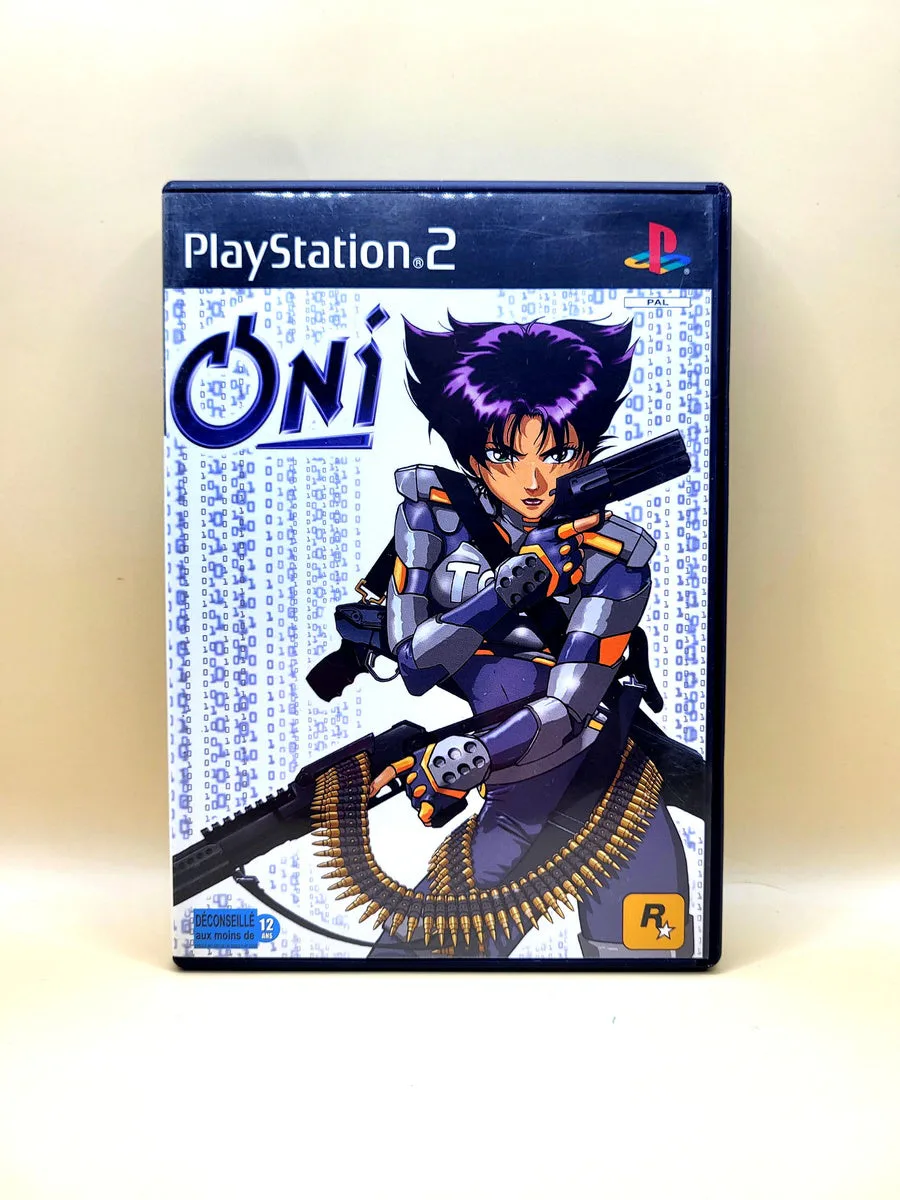
Oni for PlayStation 2
Oni for PlayStation 2 combines a third-person shooter with an extensive fighting system. You play Konoko, an agent of the Technology Crimes Task Force investigating the Syndicate. Her assignments take her to warehouses, laboratories and other buildings in a tightly controlled future world. As her contact Shinatama passes on information, Konoko discovers that her own past does not match what her superiors have told her. The hunt for the criminals therefore also becomes an investigation into her identity and the organisation she works for.
Konoko uses punches, kicks, throws and evasive movements to keep opponents at bay. You can disarm an armed enemy and take their gun, but you only carry one weapon at a time. That makes distance important: a shot creates space, while a well-placed throw can take down a nearby attacker. Ammunition runs out, and a fight can suddenly switch from shooting to hand-to-hand combat. During the adventure, Konoko learns additional moves that you can combine in these situations.
You play alone with a standard PS2 controller; there is no co-operative play or local multiplayer duel. Training lets you practise moving, jumping and fighting before tackling the missions. There, you look for control panels, follow instructions and read the space around you to deal with attacks from different directions. The anime-style characters contrast with the functional buildings. Above all, the alternation between guns and physical movement determines how you approach each encounter.
Region and language
Our PlayStation 2 games are PAL editions and come with a Dutch or English box, unless stated otherwise. By default, you receive the version for the European market. We note it in the product details if the region is different or the box is in another language. In almost all cases, the game is playable at least in English, and often in the other five common European languages too.
Manual
Oni for PlayStation 2 includes the manual unless the product title states otherwise. If the booklet is missing, the title says “No Manual”. This lets you see before ordering whether the game comes with a manual.
The manuals included with our games usually contain at least English and often around six European languages. The exact languages vary by edition, so Dutch is not always included. The booklet explains the controls and the main rules. You can use it to check how to control the game, which actions are available and how its different features work.
The history of Oni
Oni appeared in 2001, during the early years of PlayStation 2. Bungie West developed the original game; Rockstar Canada handled the conversion to Sony's console, and Rockstar Games published that version. This division of work explains why both Bungie and Rockstar belong to Oni's history. The European PS2 release followed in March 2001. This is that original console game, not a later computer release with fan modifications or additional tools outside the game itself.
Within the original team, Michael Evans led the project and Hardy LeBel handled game design. The credits also name David Dunn as architect. That background fits the large buildings in which the action takes place: floors, corridors and open spaces give fights a recognisable spatial structure. Meanwhile, animation and concept art supplied the characters' pronounced anime appearance. The result connected a visual style from animated science fiction with a fighting system in which moving through three-dimensional space remained important throughout.
Not every plan reached the final release. Multiplayer play was envisaged during development, but that component was dropped. A contemporary account mentions both network latency problems and the extra work on separate playing areas. The retail version therefore remained a single-player adventure. This development history makes it important to distinguish early announcements from the game that shipped. Later computer fan modifications do not change what is on this original PS2 disc either: Konoko's campaign combining shooting and unarmed combat.
Similar games for PlayStation 2
Enter the Matrix on PlayStation 2 likewise lets you switch between firearms and close-range fighting. Niobe and Ghost also have Focus to slow time and perform superhuman actions. Oni places more emphasis on learning Konoko's throws and her restriction to a single firearm. Where the Matrix film world explains many stunts, the action here grows out of its own story about technology and control.
Dead to Rights shares disarming and the transition from shooting to fistfights with Oni. Jack Slate can also deploy his dog Shadow and fire in slow motion during dives. Konoko relies on her own movements and has no comparable canine partner. Both PS2 games demand attention to your distance from an enemy, but Oni gives combinations of kicks, throws and evasive moves a larger role in almost every fight.
Like Oni, The Punisher uses a third-person perspective and lets you tackle armed enemies up close. Frank Castle's campaign focuses on gunfights, interrogations and earning points for upgrades. Konoko's approach centres more on combinations of movements and taking over a single weapon. In Oni, you therefore mainly consider which attack suits your position, while The Punisher also rewards how you use enemies and the environment during a mission.
Devil May Cry on PS2 also combines shooting with close-range attacks, but Dante uses swords, pistols and demonic powers. His fights revolve around a different set of airborne combinations and supernatural attacks. Oni keeps Konoko's body and her distance from ordinary opponents at the centre. A disarm or throw immediately changes the situation on the ground here, while Devil May Cry is built more around stylish attacks against monsters.
Ghost in the Shell: Stand Alone Complex shares Oni's futuristic police setting, cybertechnology and anime influences. On PS2, it alternates missions featuring Motoko and Batou and gives hacking a role of its own. Oni follows Konoko through one personal storyline and places more weight on an extensive unarmed fighting system. Both combine shooting and movement, but their exploration of technology therefore takes a different form in the controls.