This product is like new. At NexWave Games, like new means:
Additionally, all discs at NexWave Games are carefully inspected and assessed for quality. When discs arrive, we do not accept any that are so badly damaged that they are unlikely to work. We only accept discs with light scratches at most. Discs with scratches are then treated in our professional disc repair machine. By warming the disc and polishing it with soft brushes, these machines can remove a very thin layer from the disc. This removes the layer containing surface scratches and improves the disc’s readability. This ensures the disc works properly, even on consoles with ageing lasers that have difficulty reading games! Great news for the player.
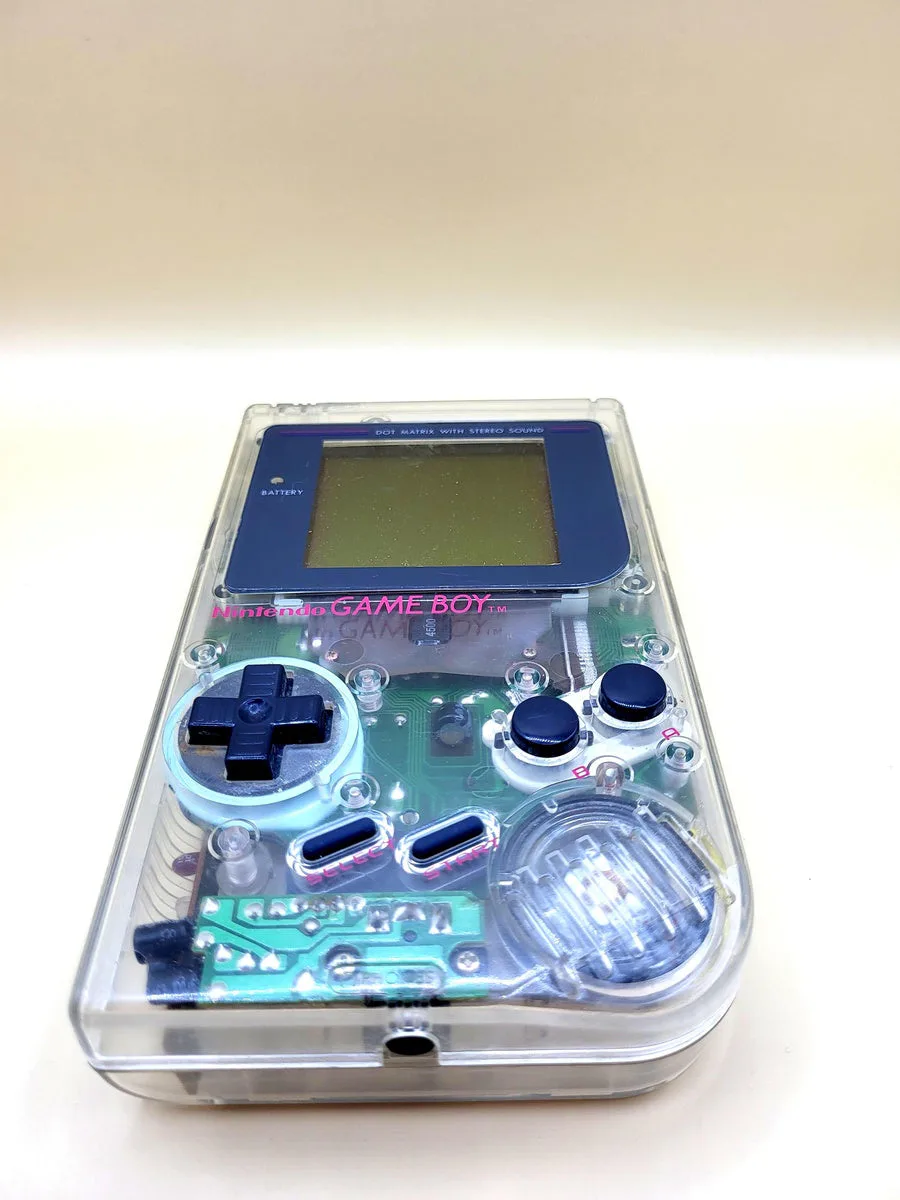
Nintendo Game Boy Classic Transparent
This Nintendo Game Boy Classic has a transparent body revealing parts of its electronics. The classic design combines a monochrome screen with a directional pad, A, B, Start and Select. Insert a Game Boy cartridge at the top and switch on. Standard display uses four shades rather than Game Boy Color's colour image. The original screen is unlit and needs adequate ambient light.
Use cartridges supporting original Game Boy. Game Boy Color-exclusive games and GBA, DS or 3DS software do not work. Game markings and version matter more than a familiar title. Saving varies: some cartridges save progress, others use passwords or restart. There is no internal hard drive or automatic saving for every game. Modern reissues' rewind is not part of this original system.
Game Boy Classic uses four AA batteries. Sound comes from the speaker or compatible headphones. Supported link games need another system, the correct Game Link cable and required cartridges; wireless play is not built in. Transparent colouring does not indicate included games or extras. Batteries, cables, games and accessories are supplied only if explicitly listed. The five titles are original Game Boy examples.
History
Nintendo introduced Game Boy in Japan in 1989 and Europe in 1990. It developed portable gaming with interchangeable cartridges rather than one fixed game per device. Owners could use one handheld for puzzles, platformers and adventures. Tetris became closely associated with its introduction. Monochrome display and battery operation supported use without a television or wall outlet in many places.
The library grew with portable Nintendo series. Super Mario Land introduced a new kingdom and Daisy, Kirby began on Game Boy, and Link's Awakening built a Zelda story on Koholint. Pokémon later made collecting, training and trading central to handheld culture. Game Link connected devices in some games. That ability depended on software, not a general online service.
The nineties brought other colours and smaller Game Boy designs, followed by Color and Advance with their own features and releases. Original Classic retained monochrome display and controls. A transparent body does not change its generation or enable Color-exclusive software. Collections therefore depend on actual console model and cartridge version, even when games share familiar characters or series names.
Five popular Game Boy games
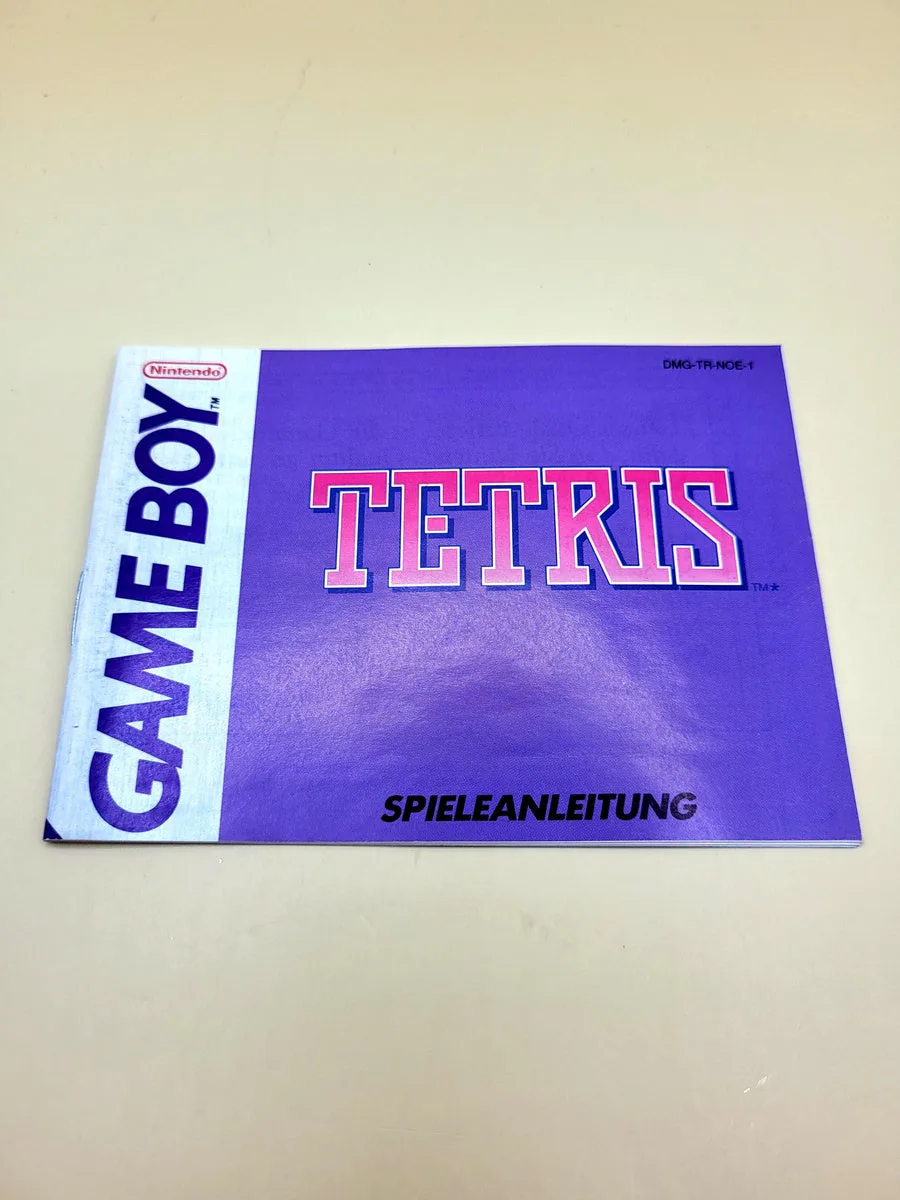
Tetris lets you rotate and place seven different block shapes to complete horizontal lines. Each cleared row creates space as the pace increases. You plan several moves ahead and leave a gap for the long piece. This original Game Boy version centres on awareness and timing. A match against another person requires two systems, two game cartridges and a compatible Game Link cable.
In Super Mario Land you travel through Sarasaland to rescue Princess Daisy from Tatanga. Short platform levels combine familiar jumps with distinctive enemies and the bouncing Superball. Some sections put Mario in a submarine or aeroplane, temporarily turning the adventure into a shooter. Small characters and clear silhouettes suit the original Game Boy screen. This is the first Super Mario Land, not the sequel featuring Wario.
Kirby's Dream Land introduces Kirby as a round character who inhales enemies and spits them out again. By taking in air, he can float over obstacles. You travel through Dream Land to recover the food stolen by King Dedede. Movement, simple attacks and boss encounters form the core of the game. Unlike many later Kirby games, Kirby does not copy the abilities of swallowed enemies here.
The Legend of Zelda: Link's Awakening takes Link to Koholint Island, where he investigates the mysteries of the Wind Fish. You explore villages and dungeons, find instruments and use items to open new routes. Roc's Feather, for example, lets Link jump across gaps. The two action buttons frequently call for a different combination of items. This example concerns the original Game Boy release, without the additional Color Dungeon from Link's Awakening DX.
Pokémon Red sends you from Pallet Town across Kanto to catch Pokémon and train your own team. In turn-based battles you choose attacks and consider the strengths and weaknesses of different types. Gym Leaders, Team Rocket and the Pokémon League give your journey direction. Trading with another player is part of the original design and requires two compatible systems, appropriate game cartridges and a Game Link cable; this version does not use a wireless connection.