This product is like new. At NexWave Games, like new means:
Additionally, all discs at NexWave Games are carefully inspected and assessed for quality. When discs arrive, we do not accept any that are so badly damaged that they are unlikely to work. We only accept discs with light scratches at most. Discs with scratches are then treated in our professional disc repair machine. By warming the disc and polishing it with soft brushes, these machines can remove a very thin layer from the disc. This removes the layer containing surface scratches and improves the disc’s readability. This ensures the disc works properly, even on consoles with ageing lasers that have difficulty reading games! Great news for the player.
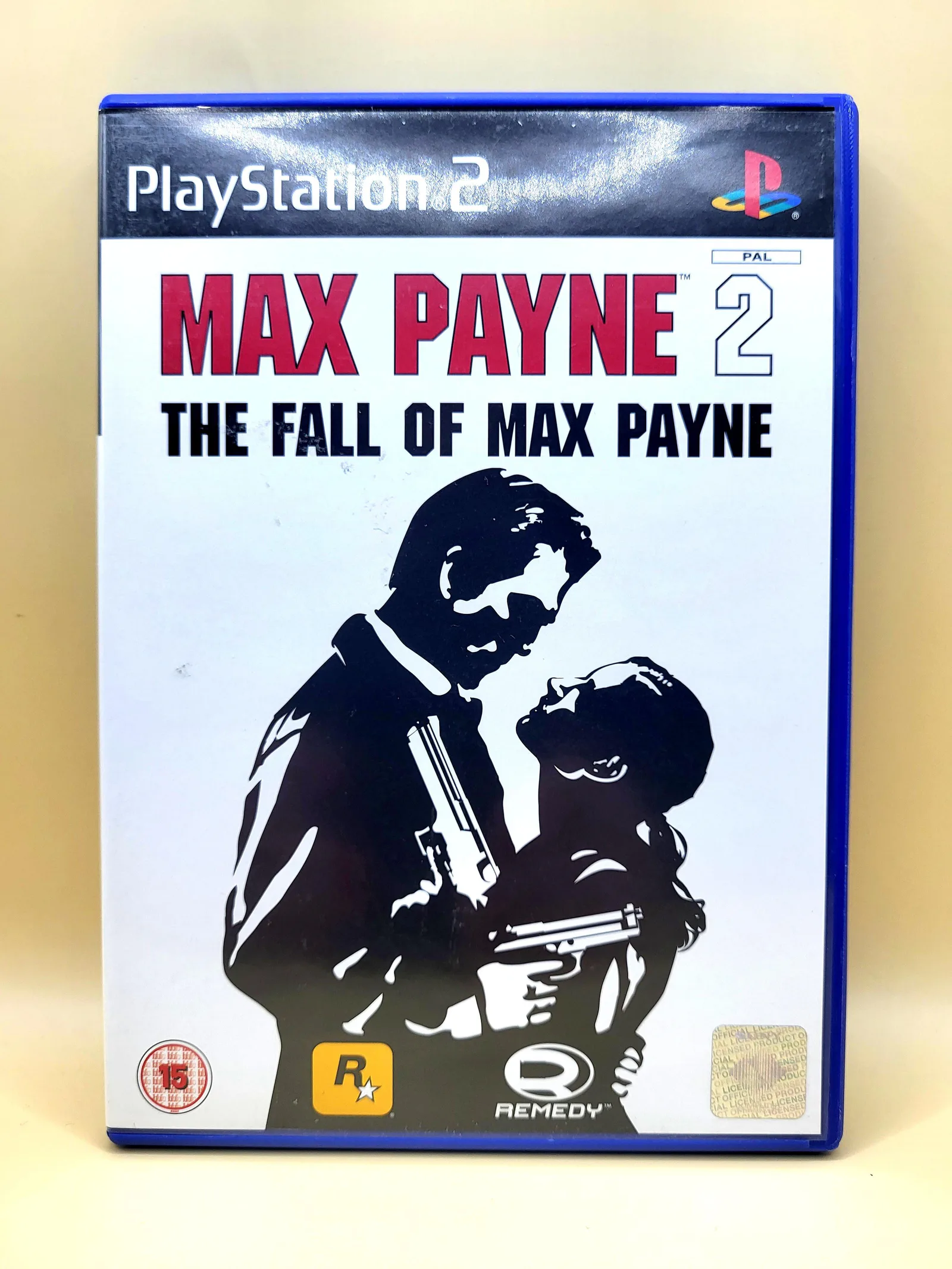
Max Payne 2: The Fall of Max Payne for PlayStation 2
Max Payne 2: The Fall of Max Payne for PlayStation 2 is a third-person shooter that again entangles Max in a New York crime story. His encounter with Mona Sax connects police work, distrust and a personal relationship. You follow a fixed campaign of firefights and story events, interspersed with graphic-novel images and spoken narration. The view behind Max shows his movement, chosen cover and the end of a shooting dive.
Bullet Time slows the world while you keep aiming and firing. Quick successive takedowns can strengthen that slowdown. Shootdodge lets Max fire while diving without consuming Bullet Time; after landing he can keep shooting while ammunition remains in the magazine. You choose between upright movement, a dive to another angle and a short attack from the ground. Available space determines whether that choice works out.
Loose objects react to bullets and explosions, allowing a room to change during a fight. You search for ammunition, weapons and painkillers to progress. The campaign is single-player, following the story rather than an openly explorable city. Listening, examining rooms and choosing when to reload remain important. Slowed action gives more time to act, but does not remove the need to find a safe position.
Region and language
Our PlayStation 2 games are PAL editions and come with a Dutch or English box, unless stated otherwise. By default, you receive the version for the European market. We note it in the product details if the region is different or the box is in another language. In almost all cases, the game is playable at least in English, and often in the other five common European languages too.
Manual
Max Payne 2: The Fall of Max Payne for PlayStation 2 includes the manual unless the product title states otherwise. If the booklet is missing, the title says “No Manual”. This lets you see before ordering whether the game comes with a manual.
The manuals included with our games usually contain at least English and often around six European languages. The exact languages vary by edition, so Dutch is not always included. The booklet explains the controls and the main rules. You can use it to check how to control the game, which actions are available and how its different features work.
The history of Max Payne 2: The Fall of Max Payne
Remedy Entertainment developed Max Payne 2: The Fall of Max Payne as the sequel to the 2001 game. Rockstar Games released the European PlayStation 2 edition in December 2003; Rockstar Toronto handled the PS2 adaptation. Max returned as a New York policeman, with his relationship with Mona Sax at the centre of a noir love story. The developers retained the familiar blend of shooting and personal narration, giving the relationship more weight within events.
Sam Lake wrote the story and James McCaffrey again voiced Max. Timothy Gibbs modelled as Max for the graphic-novel images. This separated the actor providing the voice from the face in the photographed narrative. The comic format remained a way to connect thoughts and events, while dialogue and encounters during play carried the story forward. The result remained a deliberately narrated crime adventure alongside the firefights.
Havok physics let bodies and loose objects react to the action. Bullets and explosions could make a combat space look different from when you entered. Music also gained a recognisable place through Late Goodbye by Poets of the Fall. The sequel thus developed both movement and presentation. This PS2 version is the original console adaptation of that second story, not Max Payne 3 or a later remake of the first two games.
Similar games for PlayStation 2
Max Payne introduces the fugitive policeman, Bullet Time and the combination of shooting dives with graphic-novel narration. Its story begins with his loss and the investigation that pits him against the underworld. Max Payne 2 develops his relationship with Mona and adds more physical reactions from loose objects. The action remains familiar, but characters and encounters take a new course.
Dead to Rights shares a troubled policeman, third-person firefights and slowed action. Jack Slate can disarm opponents and send his dog Shadow to attack and retrieve a weapon. Max Payne puts more emphasis on his own shooting dives and narration. Both use cinematic police action, while Jack’s close-range moves and canine partner provide different choices.
True Crime: Streets of LA combines police work with shooting, fistfights and driving through Los Angeles. Nick Kang can respond to street crimes along the way, and his conduct affects his rating. Max Payne follows a fixed sequence of locations, emphasising shooting and story. Both feature a policeman in a criminal world, but differ in freedom between missions and combat types.
Grand Theft Auto III shares the criminal setting and third-person action, but uses Liberty City as an openly explorable city. Vehicles connect missions and make chases part of travelling. Max Payne builds encounters along a more directed story route, using Bullet Time to change firefights. The main difference is an open city structure versus the construction of individual shooting scenes.
Tom Clancy’s Splinter Cell shares the behind-character view and attention to corridors, doors and enemies. Sam Fisher uses shadows, sound and gadgets to remain unseen. Max Payne centres on shooting and choosing a favourable moment to dive. Both require awareness of space, but avoiding an encounter is far more often the goal in Splinter Cell than resolving it with slowed-down firepower.