This product is like new. At NexWave Games, like new means:
Additionally, all discs at NexWave Games are carefully inspected and assessed for quality. When discs arrive, we do not accept any that are so badly damaged that they are unlikely to work. We only accept discs with light scratches at most. Discs with scratches are then treated in our professional disc repair machine. By warming the disc and polishing it with soft brushes, these machines can remove a very thin layer from the disc. This removes the layer containing surface scratches and improves the disc’s readability. This ensures the disc works properly, even on consoles with ageing lasers that have difficulty reading games! Great news for the player.
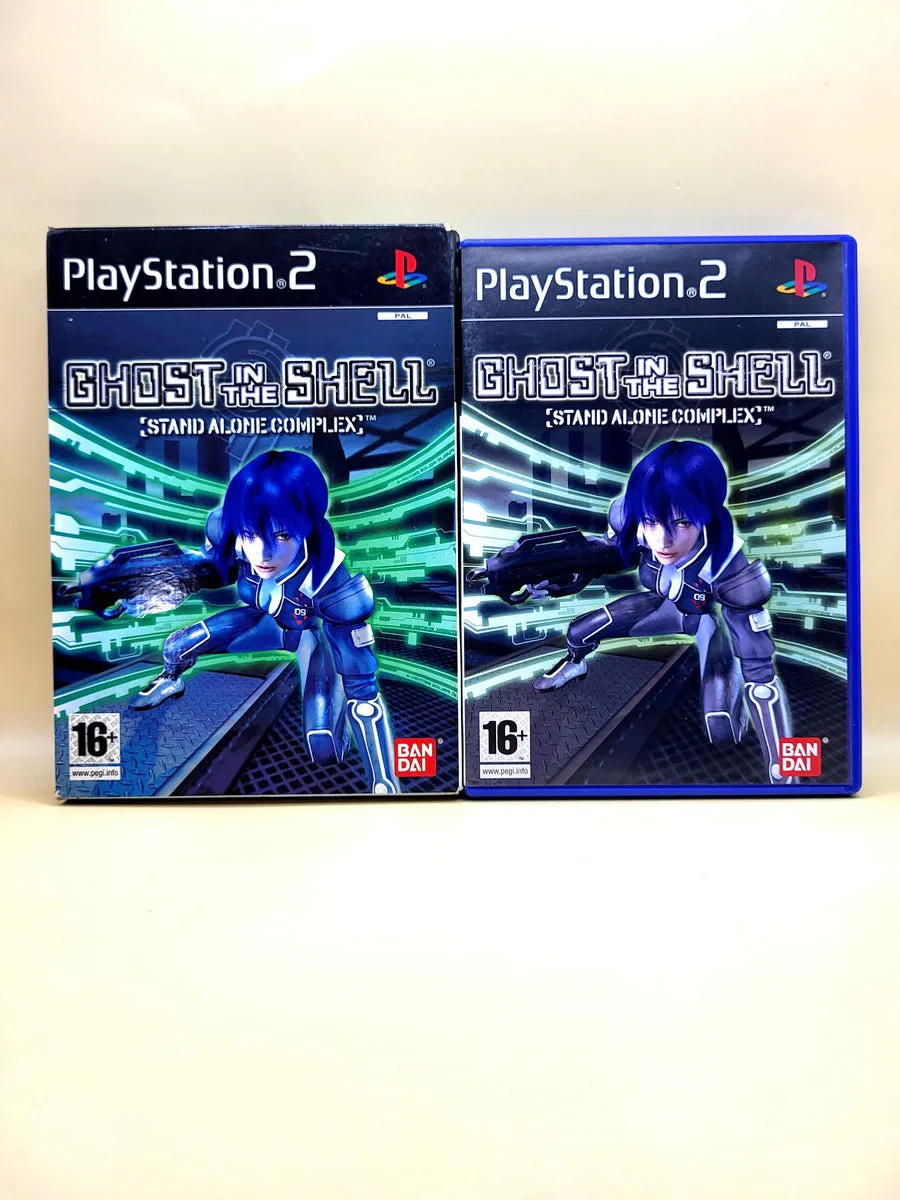
Ghost in the Shell: Stand Alone Complex for PlayStation 2
Ghost in the Shell: Stand Alone Complex for PlayStation 2 is a science-fiction shooter following Section 9 during an investigation into arms smuggling. The case takes Major Motoko Kusanagi and Batou through heavily guarded installations and urban environments. You look over your character's shoulder, seek shelter from enemy fire and switch weapons according to distance. A larger conspiracy lies behind the initial operation, becoming increasingly clear over the individual missions.
Kusanagi's sections emphasise her mobility. You jump between platforms, grab ledges and find paths past obstacles, while Batou more often uses heavier weaponry. Shooting alternates with close-range attacks and operating terminals. Ghost-hacking lets you temporarily take over an enemy and use their position or weapons. This changes a firefight: an opponent behind a defensive line can suddenly cause trouble from within, while your own character remains at a distance.
You play the story campaign alone. There are also separate local battles on one television with split-screen, for up to four players. For three or four participants, you need a PS2 Multitap and a DualShock 2 controller for each player. These matches are not the same as playing through the campaign together. This is Cavia's original PS2 game, with third-person action. The later PSP game bearing the same name is a different adventure with its own gameplay structure.
Region and language
Our PlayStation 2 games are PAL editions and come with a Dutch or English box, unless stated otherwise. By default, you receive the version for the European market. We note it in the product details if the region is different or the box is in another language. In almost all cases, the game is playable at least in English, and often in the other five common European languages too.
Manual
Ghost in the Shell: Stand Alone Complex for PlayStation 2 includes the manual unless the product title states otherwise. If the booklet is missing, the title says “No Manual”. This lets you see before ordering whether the game comes with a manual.
The manuals included with our games usually contain at least English and often around six European languages. The exact languages vary by edition, so Dutch is not always included. The booklet explains the controls and the main rules. You can use it to check how to control the game, which actions are available and how its different features work.
The history of Ghost in the Shell: Stand Alone Complex
Cavia developed Ghost in the Shell: Stand Alone Complex as a separate adventure within the world of the television series of the same name. That series in turn builds on Masamune Shirow's manga about cybernetic bodies, networks and identity. The PS2 game appeared in Japan and North America in 2004. Bandai published the Western version, while Atari handled European distribution. Europe received the game in 2005, as the animated series was also reaching a larger audience outside Japan and its world continued to expand.
The developers translated Section 9's technological possibilities into actions you perform yourself. Cybernetic bodies enable large jumps and direct combat; the network takes shape through terminals and temporarily controlling enemies. The investigation connects the different locations. The campaign mainly follows Kusanagi and Batou, with their different emphases on movement and firepower. Cinematics and conversations explain the connections without having you literally replay the television stories.
The name requires some attention when looking back at the series. A PSP game with the same Western title also appeared in 2005. That was a different production by G-Artists, featuring first-person shooting and its own approach to Tachikoma support. The older Ghost in the Shell for the original PlayStation also revolves around a different kind of robot action. The PS2 edition described here is therefore a distinct link: a story-driven action shooter by Cavia, supplemented by local multiplayer battles outside the campaign.
Similar games for PlayStation 2
Like Ghost in the Shell, Oni combines a cyberpunk setting with shooting and hand-to-hand combat. There, Konoko can use an extensive system of throws and fighting techniques, so losing a firearm need not end a fight. Kusanagi shares that physical mobility, but her PS2 adventure adds taking over enemies and alternating with Batou. The difference therefore lies in deeper fighting combinations versus the additional possibilities of a connected, cybernetic world.
Enter the Matrix likewise lets you combine acrobatic jumps and gunfire in a world where humans and computers intertwine. Its temporary Focus slowdown determines how you perform spectacular movements. Ghost in the Shell builds its variety around Kusanagi's jumps, Batou's firepower and ghost-hacking. Both use film-like scenes to connect missions, but here the campaign stays with a Section 9 investigation rather than following parallel events from the Matrix films.
Headhunter mixes futuristic crime, investigation and firefights with attention to positions and cover. Jack Wade also travels to the next location by motorcycle and earns new permissions through tests. Ghost in the Shell divides its action into self-contained missions and two protagonists with cybernetic abilities. The similarity lies in unravelling a case among armed opponents; the difference lies in street-based police fiction versus Section 9's network technology and jumping ability.
WinBack: Covert Operations likewise has you shoot armed guards from a third-person perspective and advance through installations. Its battles strongly revolve around stopping, aiming and making use of corners. Ghost in the Shell adds much more vertical movement and physical attacks, and hacking can transfer control to an enemy. Both demand that you first find a safe position, but Kusanagi can approach a guarded room in very different ways from WinBack's agents.
Like Ghost in the Shell, TimeSplitters 2 offers local multiplayer battles with different weapons. However, it views the action through the shooter's eyes and also has a campaign that can be played cooperatively. Ghost in the Shell's campaign remains a solo story with third-person action; its local matches are separate. For three or four players on PS2, both games require a Multitap and enough controllers, but the content you can play together differs.