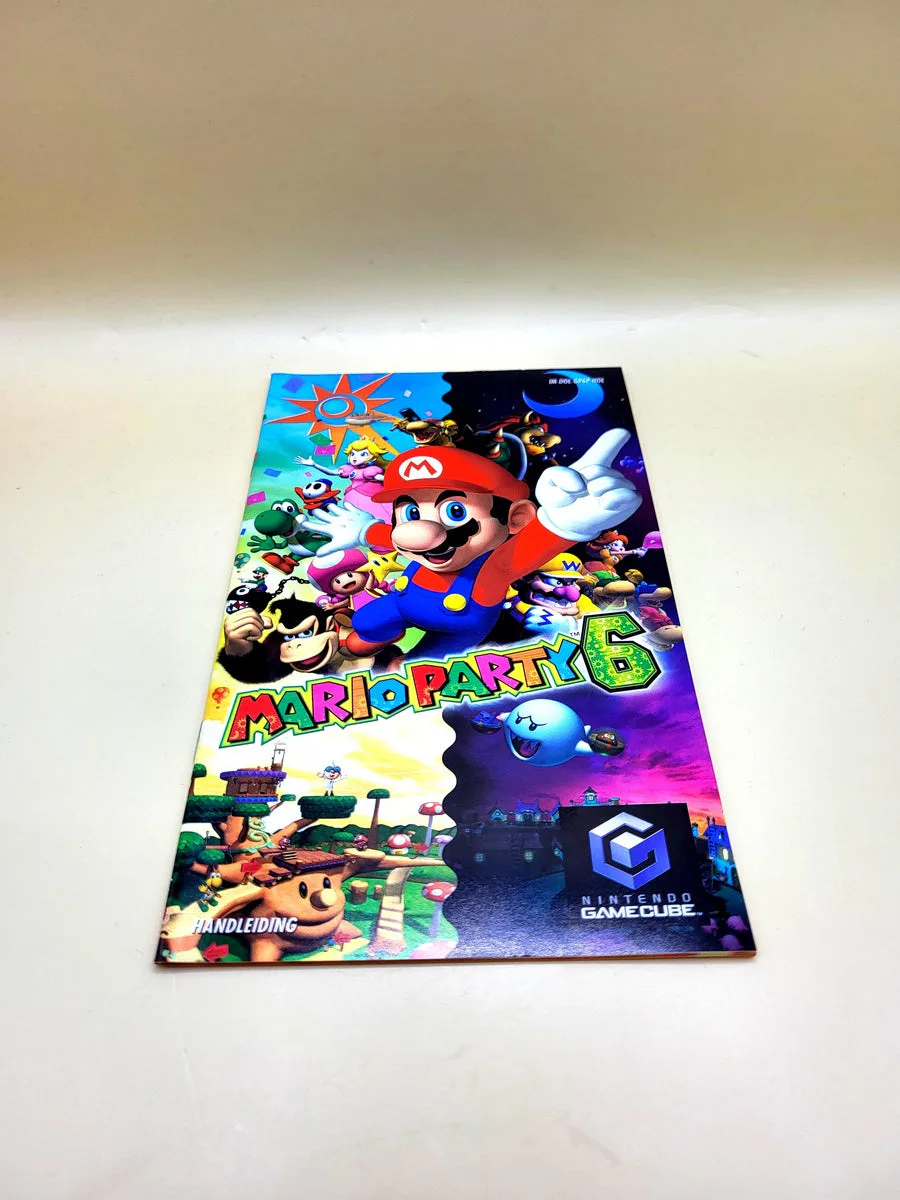
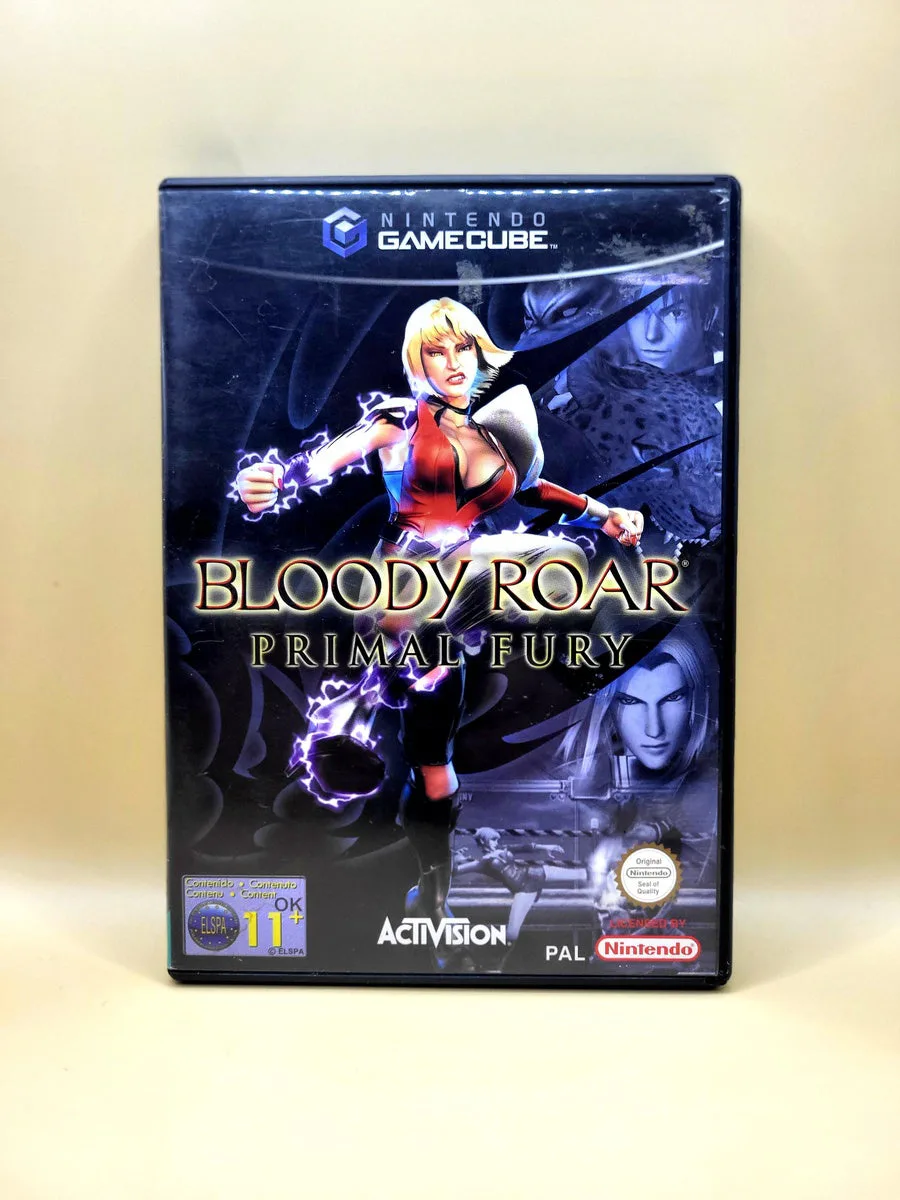
This product is like new. At NexWave Games, like new means:
Additionally, all discs at NexWave Games are carefully inspected and assessed for quality. When discs arrive, we do not accept any that are so badly damaged that they are unlikely to work. We only accept discs with light scratches at most. Discs with scratches are then treated in our professional disc repair machine. By warming the disc and polishing it with soft brushes, these machines can remove a very thin layer from the disc. This removes the layer containing surface scratches and improves the disc’s readability. This ensures the disc works properly, even on consoles with ageing lasers that have difficulty reading games! Great news for the player.
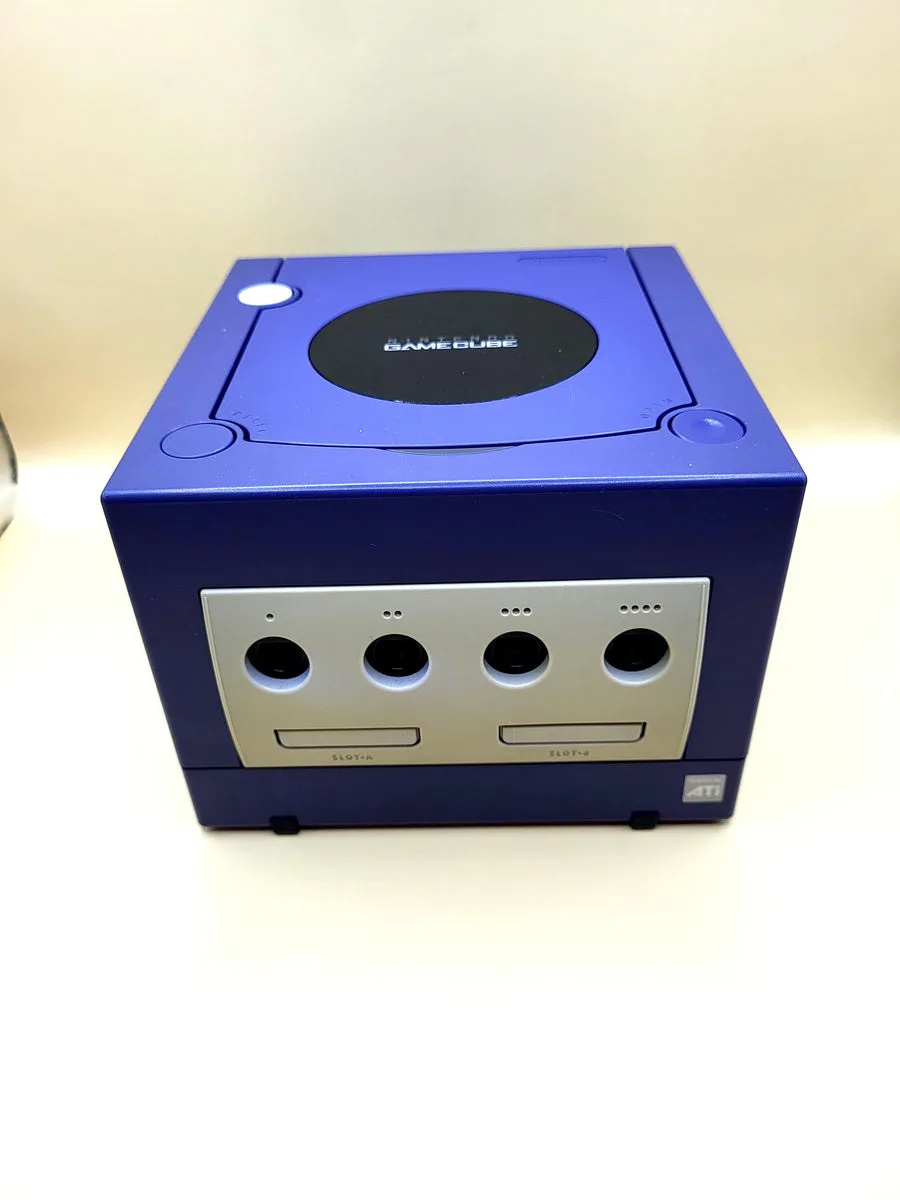
Nintendo GameCube DOL-001 Console
This purple Nintendo GameCube is the DOL-001 model: a compact games console with a lid on top and a handle at the back. Insert an original GameCube disc into the drive and play using a connected controller. Four controller ports on the front let several people play games with local multiplayer without an additional adapter. Four simultaneous players require four controllers and a game that supports them.
The two slots below the controller ports take GameCube memory cards. Many games save your progress there; a controller does not store that data. The system uses small optical discs measuring about eight centimetres and does not read Nintendo 64 cartridges or ordinary DVD films. Games, memory cards and additional controllers are separate products unless explicitly listed with the offer. This product title identifies the purple console, not a game bundle.
The DOL-001 has both an analogue AV output and a digital AV output. That digital connection is not an HDMI port: a modern television may require a compatible cable or converter. The console uses an external power supply. Check which connection cables and accessories are listed for this particular offer before assembling your setup. The games below illustrate what the system can play with its own controller.
History
Nintendo released the GameCube in Japan in 2001, followed by Europe on 3 May 2002. After the cartridge-based Nintendo 64, the company chose its own small disc format. The cube shape, carrying handle and purple finish gave the console a distinctive appearance. Four built-in controller ports remained part of the design. Playing together on the same television was therefore part of Nintendo's presentation of the system from the outset.
The games gave familiar Nintendo series new forms. Super Mario Sunshine added a water device to Mario's movements, while Metroid Prime presented exploration through Samus's helmet. The Wind Waker chose a distinctly illustrated world. Alongside these adventures came games for people sitting together in direct competition, such as Super Smash Bros. Melee and Mario Kart: Double Dash!!. The library thus combined long solo adventures with short matches on the sofa.
Different colours and hardware revisions appeared during the console's lifetime. The DOL-001 has the digital AV output omitted from the later DOL-101, so the model designation matters when choosing cables. The first version of its successor, Wii, supported GameCube games and controllers, but not every Wii model retained those connections. An original GameCube therefore remains a separate system with its own discs, memory cards and cabling, even when familiar games have subsequently been reissued.
Five popular Nintendo GameCube games
Super Mario Sunshine has Mario jumping, climbing and spraying water around Delfino Plaza and the surrounding locations. The F.L.U.D.D. water device helps you hover briefly over gaps or hit targets. The main stick controls movement, while the shoulder buttons affect spraying. It is a single-player adventure in which precise landings and discovering routes matter.
Mario Kart: Double Dash!! puts two characters on one kart: one drives while the other uses items. Choose a pair and switch roles during the race. Two players can also cooperate on the same kart. Local races with four simultaneous players require four connected controllers. The main stick and shoulder buttons keep steering, drifting and item use close together.
Super Smash Bros. Melee brings Nintendo characters together on lively battle stages. Build up damage on opponents, then try to knock them out of the arena. The stick determines direction and movement; button combinations produce different attacks, and the C stick offers quick attacks. Up to four players can fight locally at once, each with a controller. You can also practise and unlock characters alone.
The Legend of Zelda: The Wind Waker follows Link across the sea and through dungeons filled with switches, enemies and puzzles. Sail between islands and use discovered items to reach new places. Its illustrated style gives the world a distinctive look, but beneath it lies a substantial adventure. Use the controller to move Link, aim items and lock onto enemies. This is the original GameCube version.
Metroid Prime lets you explore Tallon IV through Samus Aran's visor. Scanning reveals information about creatures and installations; new abilities open previously blocked routes. Combat includes locking onto targets. The original GameCube controls differ from Wii's pointer controls and later reissues. You switch between walking, aiming, weapons and visors using a distinct button layout. The emphasis is on independent exploration.