This product is like new. At NexWave Games, like new means:
Additionally, all discs at NexWave Games are carefully inspected and assessed for quality. When discs arrive, we do not accept any that are so badly damaged that they are unlikely to work. We only accept discs with light scratches at most. Discs with scratches are then treated in our professional disc repair machine. By warming the disc and polishing it with soft brushes, these machines can remove a very thin layer from the disc. This removes the layer containing surface scratches and improves the disc’s readability. This ensures the disc works properly, even on consoles with ageing lasers that have difficulty reading games! Great news for the player.
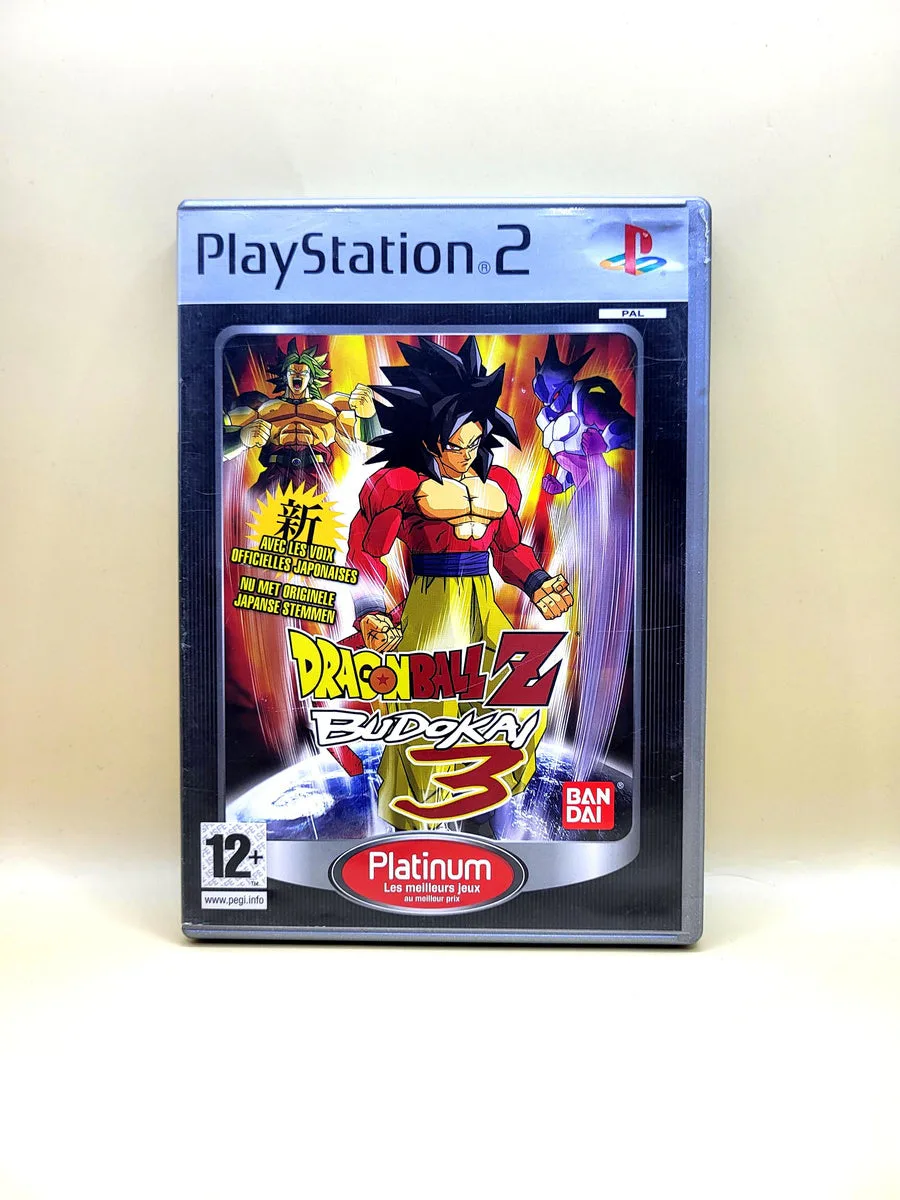
Dragon Ball Z: Budokai 3 for PlayStation 2
Dragon Ball Z: Budokai 3 for PlayStation 2 is a fighting game combining quick combos, ki energy and transformations. You choose a Dragon Ball fighter and attack an opponent with punches, kicks and recognisable energy techniques. Its three-dimensional presentation does not mean freely flying around a large arena as in Tenkaichi. The emphasis is on spacing, timing and linking attacks within a direct duel.
Dragon Universe connects fights through a world map where you fly between events. You follow familiar storylines, gather resources and develop characters. Capsules determine the abilities you bring, so preparation also takes place outside duels. During fights you must watch your energy: a major attack depends on what you build beforehand and what remains possible afterwards. Different opponents help you find your own rhythm.
You play the storylines alone or challenge a second player locally, each with a controller. A Multitap is not required for two-player duels. The offered Platinum edition remains Budokai 3: it is not Budokai Tenkaichi 3 or the later HD Collection. Playable transformations and unlocked techniques belong to its fighting system, while Limited Edition collectibles are not automatically included with this product.
Region and language
Our PlayStation 2 games are PAL editions and come with a Dutch or English box, unless stated otherwise. By default, you receive the version for the European market. We note it in the product details if the region is different or the box is in another language. In almost all cases, the game is playable at least in English, and often in the other five common European languages too.
Manual
Dragon Ball Z: Budokai 3 for PlayStation 2 includes the manual unless the product title states otherwise. If the booklet is missing, the title says “No Manual”. This lets you see before ordering whether the game comes with a manual.
The manuals included with our games usually contain at least English and often around six European languages. The exact languages vary by edition, so Dutch is not always included. The booklet explains the controls and the main rules. You can use it to check how to control the game, which actions are available and how its different features work.
The history of Dragon Ball Z: Budokai 3
Dimps developed Dragon Ball Z: Budokai 3, released by Atari for PlayStation 2 in 2004. It was the third entry in the original Budokai line, following two games that had translated anime combat into directly controlled duels. The new release expanded techniques and character development. Familiar warriors from Dragon Ball Z, GT and the films broadened the selection while the attack and energy system remained recognisable.
Dragon Universe gave single-player play a world map and multiple perspectives on familiar events. Flying between story moments did not replace duels, but connected them to development and discovery. Capsules introduced preparation choices. The same fighter could therefore feel different with other techniques equipped or developed further. Story and character customisation worked together as reasons to return to previously played battles.
From 2005, Spike worked on Budokai Tenkaichi, a different line featuring large arenas and freer flight during combat. The name resembles Budokai, but its design was not simply another numbered instalment. Budokai 3 remains a distinct culmination of Dimps’ original PS2 trilogy. The Platinum reissue changed the product edition, not that identity. Compact duels combined with the journey through Dragon Universe distinguish it from the arena successors.
Similar games for PlayStation 2
Dragon Ball Z: Budokai 3 and Budokai Tenkaichi use the same world for different duels on PS2. Budokai 3 emphasises combos, capsules and a world map between battles. Tenkaichi makes the arena much larger and lets you fly during combat. Its first entry also selects forms beforehand, whereas Budokai 3 has transformations within fights.
Dragon Ball Z: Budokai 3 and Budokai Tenkaichi 2 connect fights through world maps and character development on PS2. Budokai 3’s Dragon Universe leads into more compact duels prepared through capsules. Tenkaichi 2’s Dragon Adventure uses larger flying arena battles. Similar travel and progression do not mean identical controls, viewpoints or fighting distances.
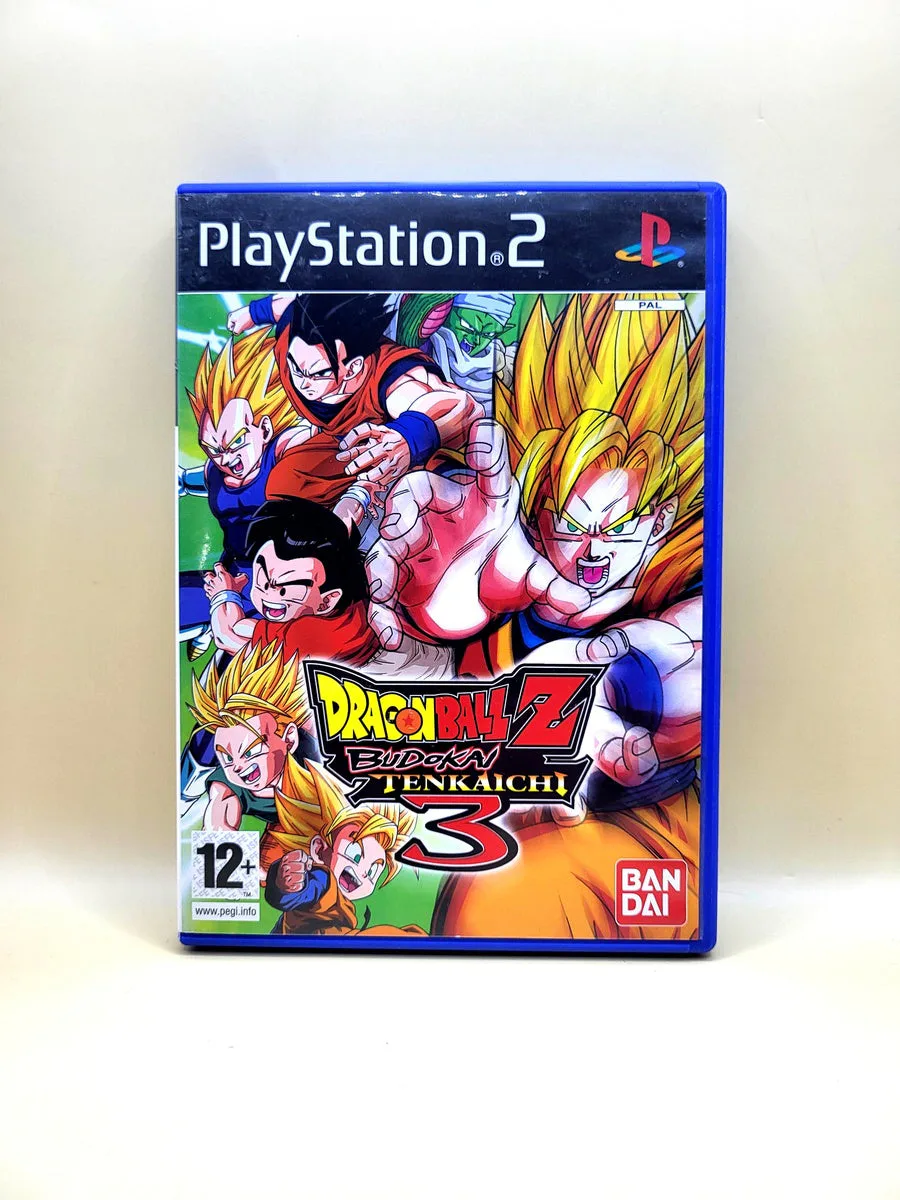
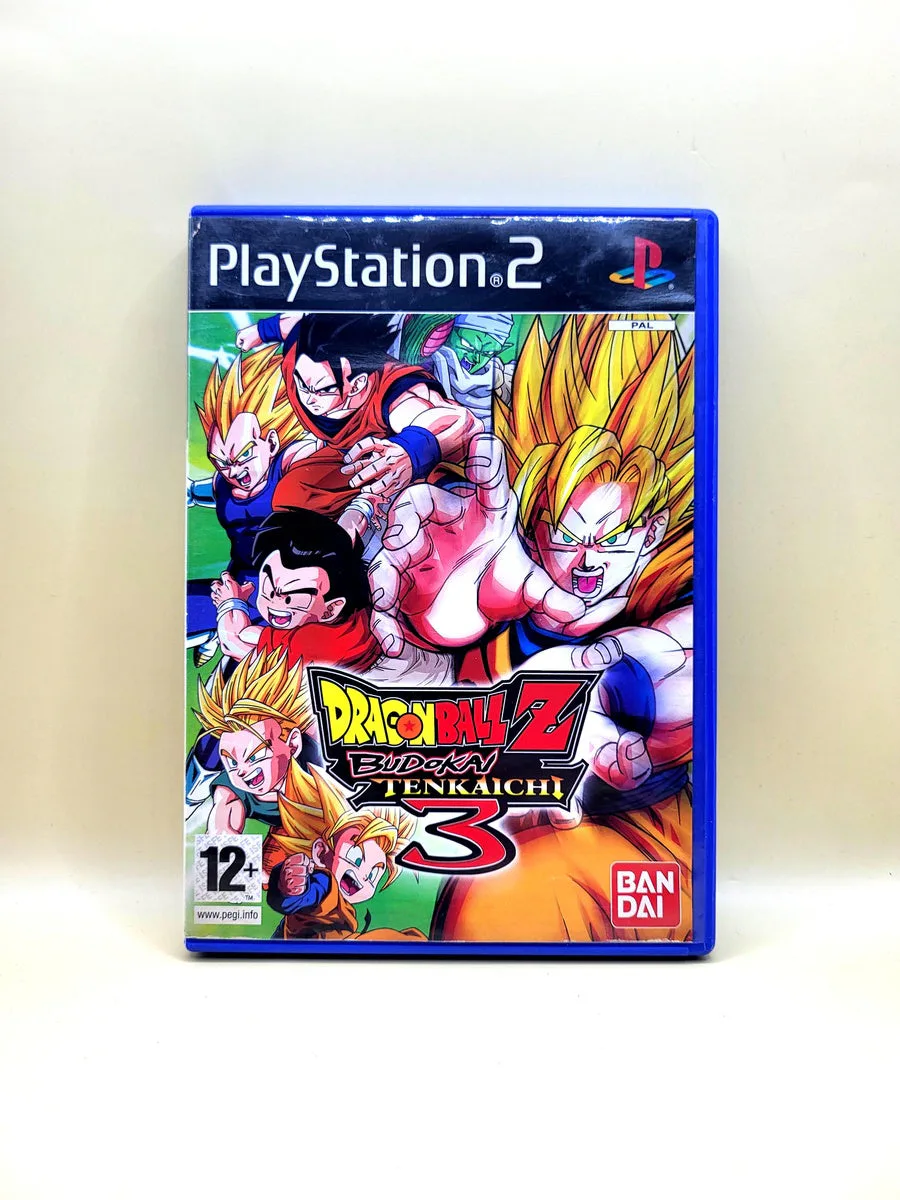
Dragon Ball Z: Budokai 3 and Budokai Tenkaichi 3 both offer many familiar warriors and techniques on PS2. Budokai 3 centres on Dimps’ duels and Dragon Universe; Tenkaichi 3 uses Spike’s larger arenas and selected Dragon History battles. The number three therefore refers to two different series. Tenkaichi 3’s Disc Fusion also does not work with a Budokai 3 disc.
Tekken 5 shares Budokai 3’s direct duels, combos and spacing on PS2. Tekken uses different fighting styles without a ki meter for major energy attacks. Budokai 3 links its techniques to ki, transformations and capsules. The shared emphasis on timing therefore produces different decisions about when to attack and which resources to retain.
Soulcalibur II and Budokai 3 both require spacing, reading attacks and timely defence on PS2. Soulcalibur II gives each fighter a weapon and makes the arena edge dangerous. Budokai 3 uses ki and transformations to affect options. Capsule preparation and Dragon Universe also give its single-player side a different structure from Soulcalibur II’s challenges.