This product is like new. At NexWave Games, like new means:
Additionally, all discs at NexWave Games are carefully inspected and assessed for quality. When discs arrive, we do not accept any that are so badly damaged that they are unlikely to work. We only accept discs with light scratches at most. Discs with scratches are then treated in our professional disc repair machine. By warming the disc and polishing it with soft brushes, these machines can remove a very thin layer from the disc. This removes the layer containing surface scratches and improves the disc’s readability. This ensures the disc works properly, even on consoles with ageing lasers that have difficulty reading games! Great news for the player.
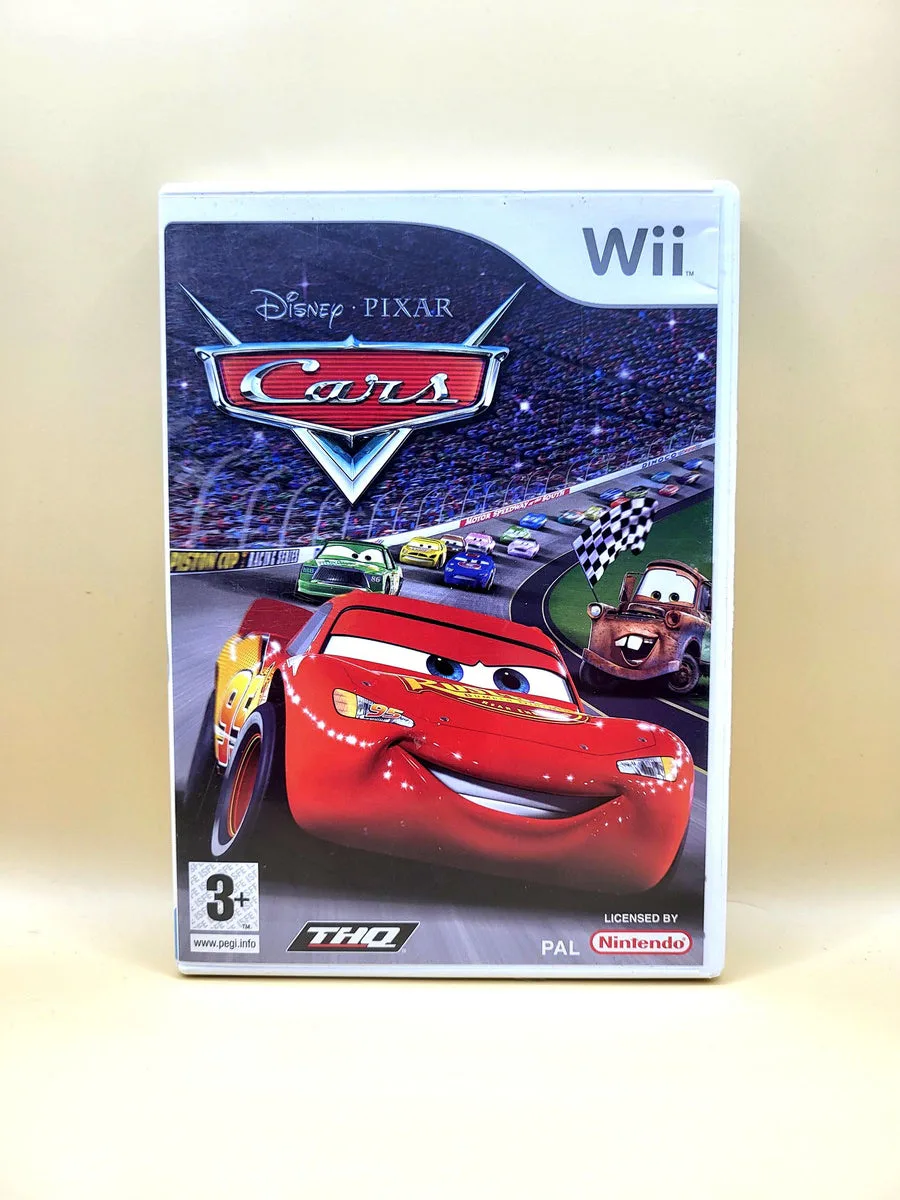
Cars for Nintendo Wii
Cars for Nintendo Wii lets you drive as Lightning McQueen through Radiator Springs and the surrounding desert. The story takes place after the Pixar film and follows his preparations for a new Piston Cup season. Between competitions, you explore the town, look for flashing event markers and collect lightning bolts for bonus points. Familiar residents such as Mater and Doc Hudson connect the races to life around Route 66.
The events alternate road races with Piston Cup races on large circuits and short activities starring other characters. You can jump, tilt onto two wheels and later use powerslides, boost and backwards driving. Tractor tipping focuses on Mater's mischief, while Sheriff chases speeders. Trophies you win help unlock new Piston Cup races. Learning corners is therefore combined with tasks that reveal another side of the film's characters.
You spend bonus points on extra characters, paint schemes and other bonus material. Unlocked events can be replayed separately without travelling through town first. Two players can compete locally in selected races and minigames, each using their own controller; no Multitap is needed. The story itself is single-player. You can choose the full adventure or a shorter, easier version of the story, allowing the scale of the adventure to vary too.
Region and language
Our Nintendo Wii games are PAL editions and come with a Dutch or English box, unless stated otherwise. By default, you receive the version for the European market. We note it in the product details if the region is different or the box is in another language. In almost all cases, the game is playable at least in English, and often in the other five common European languages too.
Manual
The manual is missing from this copy of Cars for Nintendo Wii. That is why the product title says “No Manual”. You receive the game in its box, without the instruction booklet. This makes the contents clear before you order.
The original printed manual usually contains at least English and often around six European languages. The languages vary by edition; Dutch is not always included. This information describes the original booklet and does not mean that it comes with this copy. A copy with a manual is offered separately when available.
The history of Cars
THQ released Cars in 2006 alongside the first Disney and Pixar film of the same name. Rainbow Studios developed the Nintendo Wii edition as well as the Xbox and GameCube versions. Other teams handled the handheld games, so the film title did not mean identical content on every system. On Nintendo Wii, Radiator Springs became a world you could drive around between missions, with the new Piston Cup season providing the ongoing reason for racing.
The designers used events after the film to give familiar locations a new purpose. The town became more than a circuit backdrop: it contained residents, collectibles and entrances to activities. Piston Cup races kept McQueen's sporting ambition visible, while tractor tipping and chases made room for other personalities. The controls added movements that suit living cartoon cars, including jumping and driving on two wheels.
Cars thus laid the foundation for a series of racing adventures beyond the cinema stories. Rainbow Studios returned in 2007 with Cars Mater-National Championship, centred on an international festival. Cars Race-O-Rama followed in 2009 with other locations and further ways to change McQueen. The original game preserves the first version of that formula: a familiar town, trophy races and short excursions into its residents' everyday activities and jokes.
Similar games for Nintendo Wii
Cars: Mater-National Championship is another Nintendo Wii game in a related genre. It emphasises new tracks and a sequel in the same film world, while Disney Pixar Cars mainly centres on film characters, story missions and races in an open hub. Both use recognisable controls and progression, but their different objectives create a different pace, other challenges and a distinct reason to return.
Cars: Race-O-Rama is another Nintendo Wii game in a related genre. It emphasises new tracks and a sequel in the same film world, while Disney Pixar Cars mainly centres on film characters, story missions and races in an open hub. Both use recognisable controls and progression, but their different objectives create a different pace, other challenges and a distinct reason to return.
Mario Kart Wii is another Nintendo Wii game in a related genre. It emphasises karts, items and direct group races, while Disney Pixar Cars mainly centres on film characters, story missions and races in an open hub. Both use recognisable controls and progression, but their different objectives create a different pace, other challenges and a distinct reason to return.
Speed Racer: The Videogame is another Nintendo Wii game in a related genre. It emphasises fast vehicles, stunts and colliding attacks, while Disney Pixar Cars mainly centres on film characters, story missions and races in an open hub. Both use recognisable controls and progression, but their different objectives create a different pace, other challenges and a distinct reason to return.
Madagascar Kartz is another Nintendo Wii game in a related genre. It emphasises karts, items and direct group races, while Disney Pixar Cars mainly centres on film characters, story missions and races in an open hub. Both use recognisable controls and progression, but their different objectives create a different pace, other challenges and a distinct reason to return.